

Commentary & Analysis
COP16: Saudi Arabia's Leading Role in Environmental Diplomacy
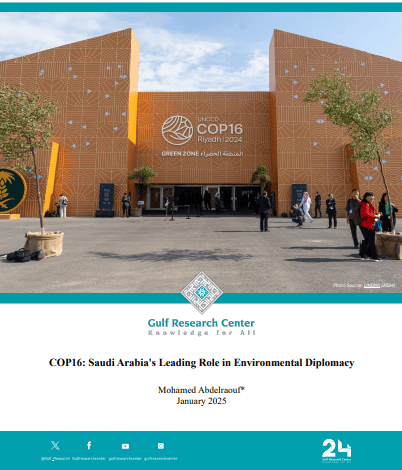
The United Nations Convention to Combat Desertification’s (UNCCD) sixteenth session of the Conference of the Parties (COP16) was held in Riyadh, Saudi Arabia, from December 2-13, 2024, following two weeks of negotiations.
This year’s negotiations in Riyadh marked the 30th anniversary of the UNCCD, one of the three Rio conventions, alongside those on climate change and biodiversity. Land degradation and desertification are critical issues globally and for Saudi Arabia and the GCC countries in particular, as they continue to be some of the most significant environmental challenges in the region, with some Gulf countries suffering nearly 100% desertification according to the UN Environment Programme (UNEP).
COP16 was the largest UN land conference to date, and the first UNCCD COP held in the Arabian Gulf and Middle East and North Africa region. It was attended by around 20,000 delegates from governments, civil society, the private sector, international organizations, and media. In total, the 2024 attendance was three times that of previous UNCCD COP meetings.
Importance of COP 16 for the Region
Desertification is a growing threat for GCC countries, compromising food production and having detrimental effects on the economy, society, and the environment. Desertification is further exacerbated by global climate change, which effects the availability of already scarce water resources and increased temperatures, leading inevitably to more desertification.
Given the circumstances, the hosting of such an important UN global event in the Gulf region highlighted the importance of increased global cooperation on desertification to improve water resilience and help secure its strategic autonomy, competitiveness, and security. Saudi Arabia has already shown its commitment to implementing this convention through initiatives like the Saudi Green Initiative and Middle East Green Initiative in line with the Kingdom’s Vision 2030. Launched in 2021, the Saudi Green Initiative aims to turn 30 percent of Saudi Arabia’s land into nature reserves; plant 10 billion trees; and restore 40 million hectares of degraded land. The Middle East Green Initiative intends to plant an additional 40 billion trees across the region. Saudi Arabia is further leading the way on combating desertification through policy and institutional measures at the national and regional levels, as well as accession to various international agreements and conventions.
COP 16 Outcomes
Within the context of the overall debate on climate change and its impact, COP 16 highlighted the urgency of implementing solutions to address the challenges of desertification, land degradation, and drought, especially in vulnerable regions.
A key outcome of the meeting was the establishment of the Riyadh Global Drought Resilience Partnership initiated by Saudi Arabia with initial pledges of US$12 billion to combat drought. COP 16 also helped to broaden the scope of the UNCCD. Delegates agreed to create two new caucuses: one for indigenous peoples and one for local communities to give a voice to those directly affected by drought and land desertification. Moreover, it expanded the agenda by bringing agriculture and rangelands into the conversation, which will involve agriculture ministries and farmers in future discussions.
Another significant development was the strengthening of the Science-Policy Interface (SPI), increasing the number of independent scientists, and enhancing the role of science in shaping the implementation of the Convention. The decision gives the SPI a more permanent status within the UNCCD. This is with the intention of having more continuous access to scientific data and analysis on which to base decisions (explicitly mentioned), as well as undertaking to build close working links with the other two panels of the Rio conventions, the IPCC (climate), and the IPBES (biodiversity).
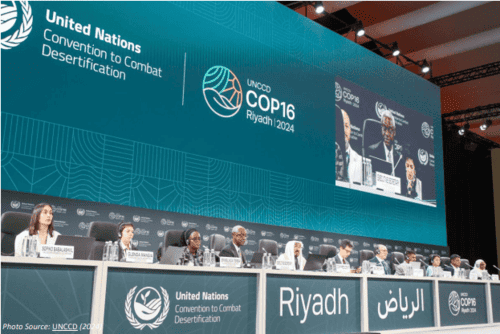
In addition, COP16 supported civil society and confirmed support for convening the Youth Caucus, implementing the Youth Engagement Strategy, and supporting the Land Youth Negotiators Programme. While COP 16 did not give civil society access to contact groups, which was a major priority for many, delegates agreed to ask the Secretariat to study how other multilateral environmental negotiations allow civil society access to the negotiations and report back to COP 17.
The positive outcome was, however, countered by some shortcomings. While the conference underscored the commitment to financially support land restoration and drought resilience initiatives, the meeting failed to establish a legally binding global framework to tackle drought despite four years of work by the ad-hoc intergovernmental group and the 6 options proposed in its report. Africa’s firm demand for such an agreement came up against a great deal of opposition, particularly from developed countries, as is often the case due to fear of the funding commitments that would be linked to it.
Equally, the $12 billion pledge for the Global Drought Resilience Partnership falls well short considering that the UNCCD estimates that at least US$2.6 trillion is needed by 2030 to restore degraded land and build resilience to drought. Thus, negotiations on a global drought framework did not reach a much-needed consensus.
Conclusion
Saudi Arabia’s hosting of UNCCD COP16 was an important milestone in mobilizing efforts to preserve land of all kinds, reduce their degradation, and combat desertification and the effects of drought, as well as an opportunity for policymakers and experts to exchange information and best practices. The overall tone was summed up in the statement by the President of COP16, Saudi Arabia’s Minister of Environment, Water and Agriculture, H.E. Abdulrahman Al-Fadley, that “this meeting marked a turning point in international awareness of the urgent need to accelerate land restoration and drought resilience.” To be sure, COP 16 made some notable progress and as such can be considered as having achieved results as opposed to the setbacks in commitments at the Climate and Biodiversity conference earlier in 2024. At the same time, continued effort and decisions on desertification will still be needed in the coming years.
*Dr. Mohamed Abdelraouf is the Director of the Environmental Security and Sustainability Research Program at the Gulf Research Center.