Commentary & Analysis
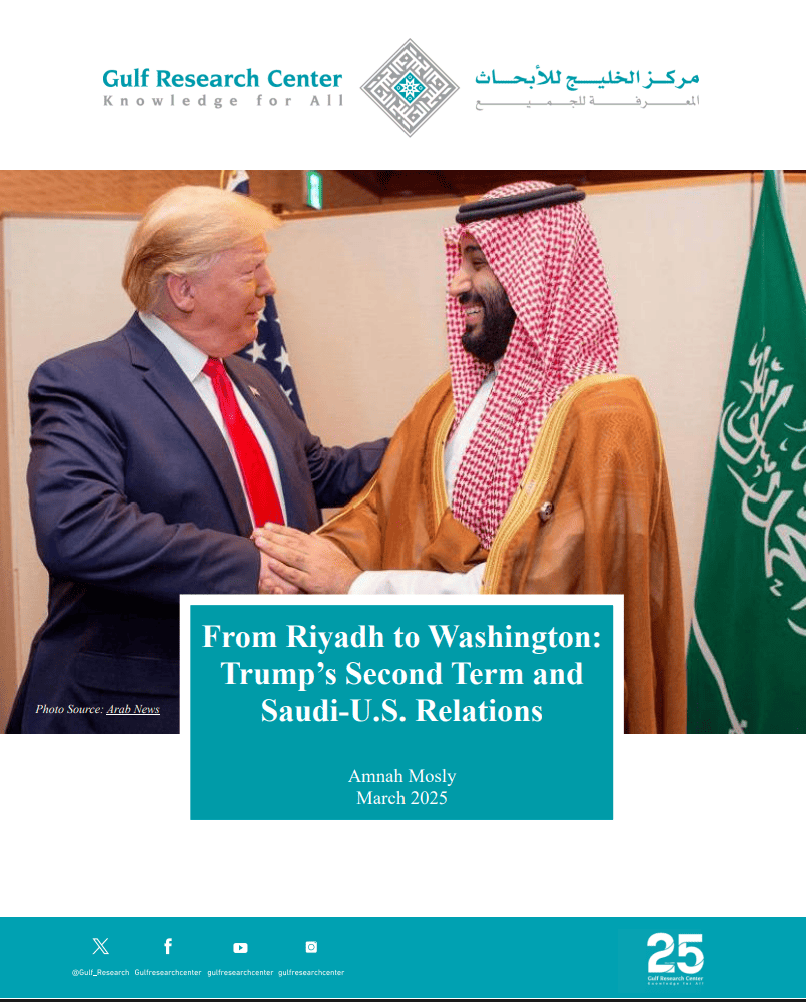
From Riyadh to Washington: Trump’s Second Term and Saudi-U.S. Relations
Introduction
The United States and Saudi Arabia have maintained a complex and strategic partnership for decades, rooted in mutual interests such as energy security, regional stability, and counterterrorism. Moreover, the Saudi-U.S. relationship has weathered numerous geopolitical challenges, including regional conflicts, oil embargoes, and shifts in global power dynamics. Despite occasional strains, the core of the partnership, centered on the U.S. contribution to the territorial security of the Kingdom and Saudi Arabia’s role as a leading oil producer, has remained resilient, adapting to changing circumstances while maintaining a focus on mutual strategic interests.
This policy brief analyzes relations under a second Trump term in light of global changes. Specifically, it provides a comprehensive analysis of U.S.-Saudi relations during President Trump’s first and second terms, highlighting the continuities and shifts that occurred between 2017 and 2025.
Contextual Analysis of Trump’s First Term
Prior to the start of the second Trump administration, U.S.-Saudi relations developed more positively than initially expected under the Biden administration. During the Jeddah Security and Development Summit held in July 2022, President Biden stated that the U.S. would “remain an active, engaged partner in the Middle East” and “[would] not walk away and leave a vacuum to be filled by China, Russia, or Iran.” Much of the debate about the status of U.S. policy in the Middle East had centered around a pivot away from the region and towards Asia. Under President Biden, however, American engagement in the Gulf increased, as evidenced by high-level visits, more dialogue, and cooperation on various issues and mediation efforts.
Saudi Arabia consistently emphasizes its commitment to work constructively with any U.S. administration, regardless of political affiliation or the specific presidential election outcomes. When the 2024 election resulted in the re-election of Donald Trump, there was an initial sense of optimism that relations could maintain their positive trajectory. This was based on the experience with Trump’s first term, where he prioritized maintaining strong ties with the Kingdom—especially in the economic domain.
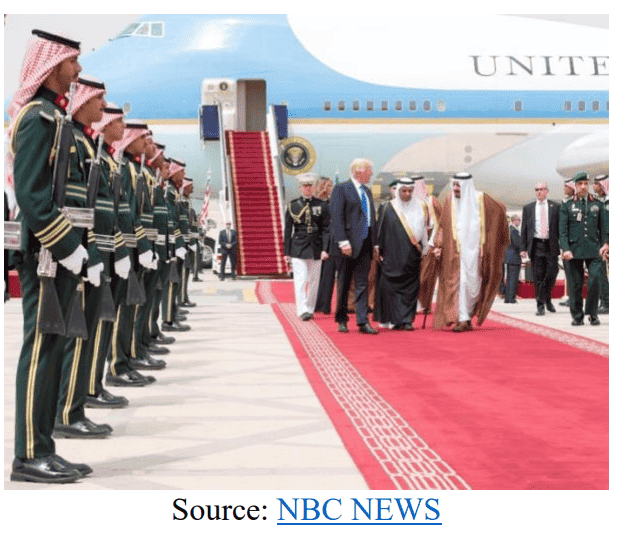
For instance, President Trump chose Saudi Arabia for his first official foreign visit, signaling a commitment to strengthening ties with the Kingdom. During this visit, both nations announced a “Joint Strategic Vision,” aiming to enhance cooperation in various sectors, including defense, economics, and counterterrorism. A Strategic Joint Consultative Group was established to oversee this partnership, with plans for annual meetings to assess progress and identify new areas of collaboration.
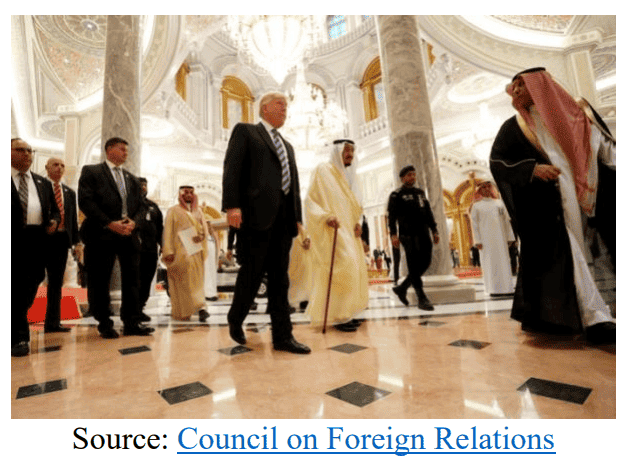
Across both the first term of Donald Trump as well as the term of Joe Biden, the U.S.-Saudi Arabia relationship remained anchored in shared strategic interests, including defense cooperation, counterterrorism, and regional stability. Yet, despite the shared interests, there were also some clear differences during the first Trump administration.
For one, President Trump’s position on Gaza clashed with that of Saudi Arabia and the remaining Arab countries. Trump’s first term involved actions that aligned closely with Israeli interests, including the controversial recognition of Jerusalem as Israel’s capital in 2017 and the closing of the Palestine Liberation Organization (PLO) liaison office in Washington. Both actions were followed by significant pushbacks from the GCC states.
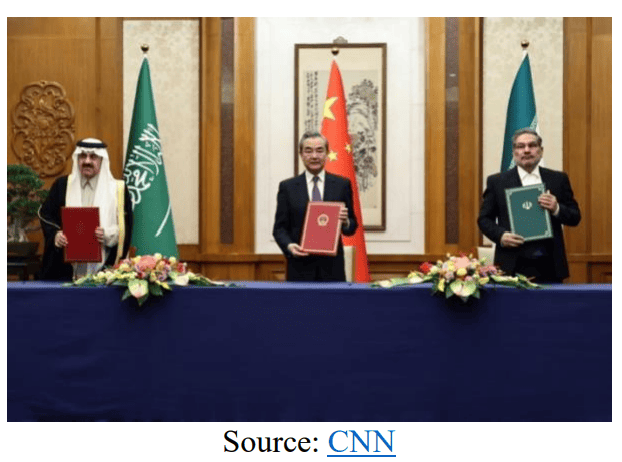
Second, the so-called “no response” of the U.S. to the missile attacks on Saudi Arabia’s Khurais and Abqaiq oil facilities in September 2019 raised questions about the reliability of U.S. security assurances. Third, Washington’s renewed “maximum pressure” policy on Iran stood in increasing contrast with the Kingdom’s efforts in diplomatic engagement with Iran following the agreement to re-establish diplomatic ties brokered by China in March 2023. Finally, U.S. rhetoric on Syria demonstrated a departure from the Kingdom’s vision for the stability of the country.
U.S.-Saudi Relations & Regional Security During Trump’s Second Term
The first two months of the second term of the Trump administration have so far highlighted the fact that topics that marked the first term have remained largely the same. To enhance economic relationship between the two countries, the Kingdom announced an additional investment of $600 billion in the United States over the next four years with the potential for further expansion.
Saudi Arabia’s Minister of Economy and Planning, H.E. Faisal Alibrahim, explained at the 55th annual World Economic Forum (WEF) in Davos, Switzerland, in January 2025, that the announcement “represents investments, procurement from [the] public and private sector, and [is] just a mirror reflection of the strong relationship.” This was followed by statements from Saudi Arabia’s Public Investment Fund (PIF) that it would increase its investments in the U.S., particularly in the fields of technology, real estate, and infrastructure. Already, 40% of PIF investments are allocated to American companies.
PIF’s Governor, H.E. Yasir al-Rumayyam, reaffirmed this commitment at the Priority Summit in Miami in February 2025 while highlighting several major investments that have had a significant economic impact in the U.S., such as Riyadh Air’s $20-plus billion contract with Boeing. He also pointed to the Kingdom’s growing presence through the gaming and technology sectors, through investments with Savvy, Magic Leap, and Google. In addition, H.E. Al-Rumayyan emphasized that PIF’s impact extends beyond financial markets, stating that “the impact of our investments is not only in financial markets but in real companies, creating new innovations, new products, and new services, which really create jobs and economic growth.”
On the political side, President Trump’s first call with a foreign leader was to Saudi Arabia’s Crown Prince and Prime Minister and on his first day back in office, he stated he would go to Saudi Arabia again as his first visit to a foreign country. Then, in February 2025, Saudi Arabia hosted talks between Russia and the U.S., the first meeting between the two sides in three years. Russian Foreign Minister Sergei Lavrov and U.S. Secretary of State Marco Rubio attended the meeting in the presence of Saudi Foreign Minister H.H. Prince Faisal bin Farhan and Saudi Minister of State and National Security Advisor H.E. Musaed AlAiban.
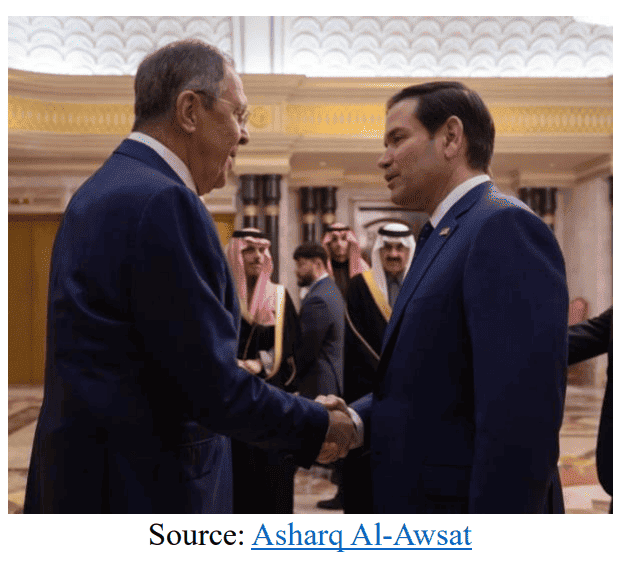
Following the meeting, the U.S. Secretary of State announced that Russia and the U.S. have agreed to work towards ending the war in Ukraine and improve their diplomatic and economic ties. The meeting was also seen as paving the way for a summit between President Trump and Russian President Vladimir Putin, possibly also in Saudi Arabia.
Shortly after, Saudi Arabia welcomed Ukrainian President Volodymyr Zelenskyy in Riyadh for talks on March 11, 2025. President Zelenskyy referred to the talks as a “good meeting,” writing on X that he “acknowledged the Crown Prince’s efforts in bringing true peace closer. Saudi Arabia provides a crucial platform for diplomacy, and we appreciate this.” This was followed by discussions between representatives from Washington and Kyiv regarding a peace framework to end the crisis with Ukraine agreeing to implement a 30- day ceasefire with Russia, pending Moscow’s agreement.
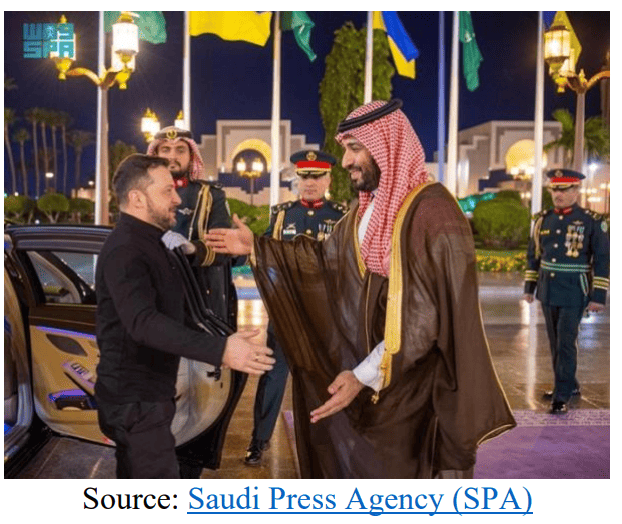
The above examples suggest a level of continuity between the U.S. and Saudi Arabia along the same fundamentals pursued with the first Trump administration. Yet, there are also some indications Trump’s second term will not be a carbon copy of the first with several concerns lingering that could complicate relations for the coming years.
As far as energy issues are concerned, President Trump’s inclination to favor further U.S. oil production alongside his wish to see lower oil prices stands in contrast to Saudi Arabia’s need for higher prices that would allow for the diversification plans in line with Vision 2030 to be implemented. Saudi Arabia does not see itself in a position to significantly expand production to see oil prices fall. At the same time, lower income for the Kingdom would also mean fewer financial means available to maintain investment levels in the U.S., thus standing in contrast to President Trump’s wish to see 1 trillion USD in investment from Saudi Arabia materialize.
Most other concerns are political in nature. The first would be President Trump’s support for Israel, as the war in Gaza remains a critical concern in the Gulf region. Undoubtedly, the war in Gaza will be at the top of Trump’s Middle East agenda. Throughout his campaign, Trump consistently promised to bring the war to an end. However, unwavering U.S. support for Israel—particularly its military actions and policies contributing to Palestinian displacement—has strained relations with Arab and Muslim-majority countries, complicating diplomacy in the region.
In his first major response upon taking office, President Trump receiving Netanyahu and announcing that “The U.S. will take over the Gaza Strip, and we will do a job with it too” after Palestinians are resettled in neighboring countries has added another layer of complexity to diplomacy in the region. The announcement was met with disbelief with all Arab states quickly distancing themselves from the President’s ideas. Saudi Arabia, in an immediate response, stated that its support for a Palestinian state is “firm and unwavering,” calling this position “non-negotiable.” The U.S. President subsequently repeated his call on Egypt and Jordan to “take in two million Palestinians from Gaza.”
This was followed by Netanyahu’s proposal to establish a Palestinian state within Saudi Arabia’s borders, which the Kingdom resolutely rejected. Netanyahu went on to call Palestine a “Saudi state” instead of a “Palestinian state,” and said “unless you want the Palestinian state to be in Saudi Arabia, they have a lot of territory,” as he continued. Egypt condemned the statement, stating that the idea was a “direct infringement of Saudi sovereignty,” and that the Kingdom’s security was a “red line for Egypt.”
Saudi Arabia was also not alone in condemning the United States’ proposal to take over the Gaza Strip after Palestinians are resettled elsewhere. This proposal has been widely rejected, having been opposed by the GCC countries, Jordan, Egypt, and many others. Outside of the Middle East, Russia and China have also opposed the displacement of Palestinians and reiterated their support for a two-state solution. Western countries like France, Germany, Spain, Ireland, and the United Kingdom have reacted sharply to the suggestion, further solidifying the global consensus against it.
In response to all of the above, many in the Gulf remain cautious. Saudi Arabia has consistently emphasized that the two-state solution and the establishment of an independent Palestinian state based on the June 4, 1967 borders with East Jerusalem as its capital is the only solution as there is no other reasonable and humane alternative to this conflict. The Kingdom also views implementing the International Court of Justice’s (ICJ) rulings in the Gaza crisis as critical to adhering to international law and upholding the international rules-based order.
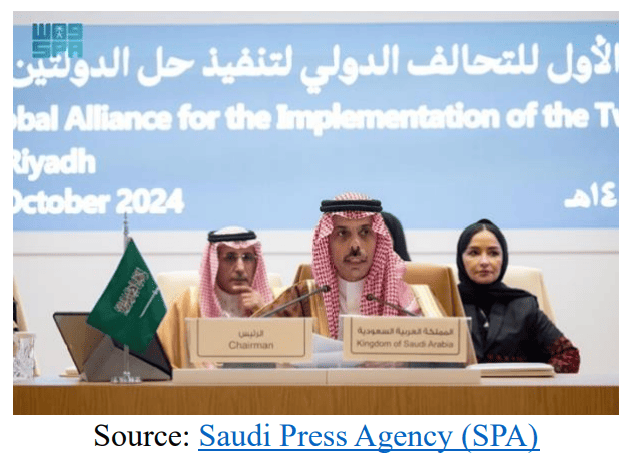
Saudi Arabia has been proactive in charting its own course. Saudi Arabia, in its role as Chair of the Arab-Islamic Ministerial Committee on Gaza - which includes Bahrain, Egypt, Jordan, Indonesia, Nigeria, Palestine, Qatar, Turkiye, the League of Arab States, the Organization of Islamic Cooperation, and with the support of European Union and Norway, spearheaded the launch of the Global Alliance for the Implementation of the Two-State Solution on the sidelines of the 79th session of the United Nations General Assembly in September 2024. The alliance—comprising key regional and international actors, represents a renewed commitment to resolving the Palestinian issue.
In recent developments, Saudi Arabia has continued its proactive efforts to resolve the Palestinian issue. At the Extraordinary Arab Summit held in Cairo on March 4, 2025, Arab leaders endorsed a $53 billion plan to reconstruct Gaza. This initiative aims to rebuild Gaza under the Palestinian Authority administration, countering the U.S. President’s controversial proposal to relocate Gaza’s Palestinian population. Instead, the comprehensive plan focuses on emergency relief, infrastructure rebuilding, and long-term economic development, including the construction of housing units, a commercial harbor, and an airport.
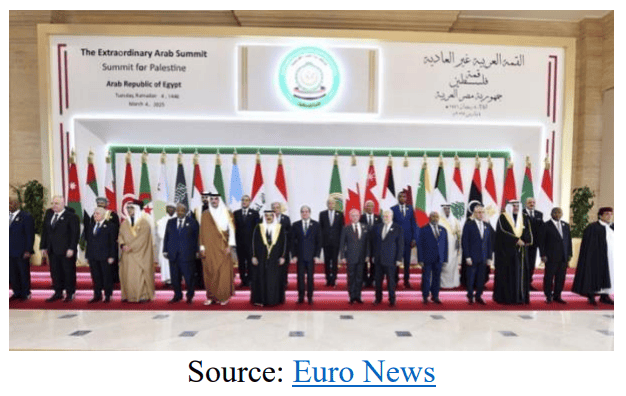
Saudi Arabia’s Foreign Minister, H.H Prince Faisal bin Farhan, represented the Kingdom at the summit, reaffirming Saudi Arabia’s steadfast support for the Palestinian cause. According to the state-run Saudi Press Agency (SPA), “Prince Faisal bin Farhan emphasized Saudi Arabia’s categorical rejection of any infringement on the legitimate rights of the Palestinian people, whether through settlement policies, annexation of Palestinian territories, or attempts to displace Palestinians from their lands. He reaffirmed the Palestinian people’s right to self-determination and the establishment of their independent state based on the 1967 borders, with East Jerusalem as its capital.” Furthermore, Saudi Arabia hosted a meeting of the Organization of Islamic Cooperation (OIC) on March 8, 2025, and endorsed the Arab League counter-proposal.
In the current context, President Trump’s plan to expand normalization agreements between Israel and Arab nations—the so-called Abraham Accords—has thus been called into question. Saudi Arabia initially expressed support for initiatives that could lead to a comprehensive peace agreement, but it has made it clear that any normalization deal with Israel is contingent upon a viable path toward an independent Palestinian state.
In addition to the divergence on issues concerning Palestine and Israel, another concern is the administration’s renewed “maximum pressure” campaign against Iran at a time when Saudi Arabia continues to pursue rapprochement with Iran. Saudi Arabia has been engaging in diplomatic dialogue with Iran, emphasizing the importance of a nonaggressive and non-interventionist approach in regional affairs. Riyadh has been actively communicating with the Iranian government to encourage cooperation on this front, aiming to de-escalate tensions and promote stability. Since then, institutional ties between the two sides have strengthened, enabling regular exchanges between their respective leaderships.
However, in contrast to this diplomatic outreach, the United States continues to apply maximum pressure on Iran, maintaining stringent sanctions and adopting a confrontational stance. Riyadh’s shift toward diplomatic engagement with Tehran is aimed at reducing regional tensions and ensuring stability, with its regional de-escalation efforts shaped by a pragmatic approach that balances diplomacy with security concerns.
However, full economic cooperation remains limited due to the sanctions on Iran. The Trump administration remains focused on restricting Iran’s nuclear capabilities through sanctions and deterrence, but its approach is fundamentally different from that of Saudi Arabia and its Gulf partners, who are advocating for regional security arrangements that include a more comprehensive approach.
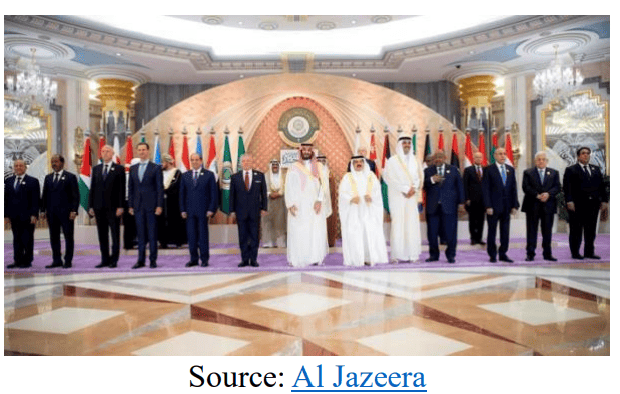
On Syria, the initial U.S. position voiced by President Trump on letting them “fight it out” in Syria stands in clear contrast to Saudi Arabia’ concern about the stability of the country following its push for Syria to rejoin the Arab League in the May 2023 Summit. On one hand, the U.S. approach—focused on disengagement and limiting direct involvement—raises concerns among regional allies about the longterm security vacuum that could emerge. This contrasts with Saudi Arabia’s efforts to reintegrate Syria diplomatically, signaling a preference for regional-led solutions rather than prolonged isolation.
These differences add layers of complexity to President Trump’s administration’s potential foreign policy direction, as well as to achieving their stated goals in the Middle East.
Conclusion and Way Forward
In conclusion, Saudi-U.S. relations have evolved over the decades, adapting to shifting global power dynamics, economic interests, and regional security concerns. Rooted in the historic oil-for-security arrangement established in 1945, the bilateral relationship has remained a cornerstone of Middle Eastern geopolitics and global economic stability.
Under President Donald Trump’s second term, the trajectory of U.S.-Saudi relations is expected to be shaped by a combination of economic collaboration, defense agreements, and regional diplomacy. Trump’s previous tenure saw an emphasis on strengthening ties with the Kingdom, and similar trends may continue as both nations navigate key geopolitical challenges. However, pressing issues such as the ongoing war in Gaza and Washington’s continued support for Israel could introduce friction.
Trump’s controversial stance on the Palestinian issue, particularly his proposal to take control of Gaza and displace its inhabitants, has been met with strong Saudi opposition, underscoring the Kingdom’s non-negotiable stance on Palestinian rights. Given the widespread regional and international rejection of this proposal, it remains to be seen how the U.S. will adjust its policies to address growing tensions, and how different (or similar) President Trump’s second term will be compared to his first.
Beyond political and security concerns, economic engagement remains a pillar of the U.S.-Saudi partnership. Trade, investment, and defense agreements continue to bolster their relationship. The Kingdom’s ability to act as a diplomatic bridge between major global powers is also becoming increasingly evident. Saudi Arabia’s role in hosting U.S.-Russia talks, aimed at resolving conflicts such as the war in Ukraine, illustrates its growing influence in global diplomacy.
This development signals that Saudi Arabia is not only a vital economic and security partner for the U.S. but also an emerging geopolitical mediator capable of facilitating dialogue between rival powers. Rather than signaling a shift away from Washington, the Kingdom’s broader diplomatic engagements reinforce its strategic position as a key player in international affairs.
Moving forward, the U.S. and Saudi Arabia must navigate their differences while capitalizing on their shared interests. Cooperation in trade, defense, and regional stability will continue to define their relationship, but managing geopolitical tensions, particularly regarding Israel and Palestine, will be critical to sustaining a longterm partnership.
*Amnah Mosly is a Researcher at the Gulf Research Center (GRC)