Commentary & Analysis
Bridging Continents for Better Strategic Alliances at Sea
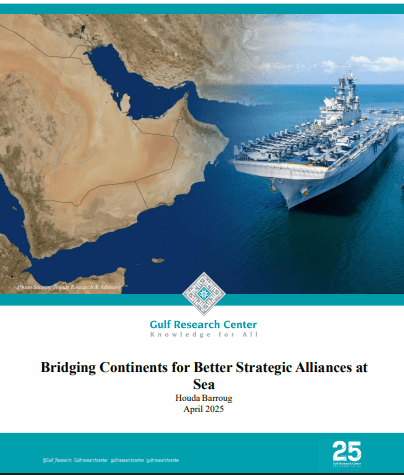
The convergence of global commerce networks and important waterways has brought the importance of maritime security in ensuring international stability to the forefront. Due to their geographical proximity to some of the busiest maritime corridors, the EU and the GCC have a vested interest in guaranteeing their safety, necessitating a collaborative atmosphere in which both regions may use their strengths to confront common difficulties.
Maritime security is critical to both the EU's economic stability and the GCC's geopolitical agenda. The EU has created a comprehensive maritime security plan that focuses on ensuring freedom of navigation, defending important infrastructure, and combating hybrid threats. This includes measures to combat piracy off Somalia and manage migratory patterns in the Mediterranean. The EU's approach stresses international cooperation and cross-sector engagement, bringing together civilian and military players to improve maritime domain awareness. Initiatives such as the Common Information Sharing Environment (CISE) have improved surveillance capabilities in European waterways.
Maritime security is also critically important in the Gulf region. The region's status as a global energy hub exposes it to risks such as piracy, terrorism, and geopolitical issues, particularly with Iran. The Strait of Hormuz, a crucial chokepoint for oil shipments, highlights the need for strong security measures. GCC governments prioritize ensuring freedom of navigation while addressing asymmetric threats through increased naval patrols and intelligence exchange with foreign partners. Despite their regional differences, the EU and GCC have common objectives, such as preserving infrastructure, combatting illegal activities, and ensuring maritime stability. These shared concerns serve as a firm framework for EU-GCC maritime security cooperation, allowing both regions to use their particular capabilities and skills to solve these challenges together.
The EU-GCC maritime security cooperation is entrenched in larger frameworks of political and economic engagement, and it has grown in significance in recent years. The EU's Strategic Partnership with the Gulf, launched in 2022, specifically targets maritime security as a significant area of partnership. This collaboration expands on previous initiatives such as the GCC-EU Joint Action Programme, which provides a structured forum for communication and cooperation. Maritime security has emerged as a major focus in this partnership, reflecting the strategic importance of the Gulf's waterways and their impact on global trade and energy flows.
One of the most visible examples of collaboration is the European Maritime Awareness in the Strait of Hormuz (EMASOH) which aims to promote freedom of navigation and reduce risks of tensions in this key chokepoint. The EU has also expanded its Coordinated Maritime Presence (CMP) concept to include the North-Western Indian Ocean, which could result in a commitment to raising maritime domain awareness and encouraging collaboration with Gulf partners. These initiatives highlight how the EU is using its diplomatic and operational instruments to support GCC efforts to secure maritime channels.
On the GCC side, there is a growing realization of the importance of collaborating with the EU to combat complex security challenges, notably maritime ones. While the US remains the major security actor in the Gulf, GCC governments consider the EU as an important partner in combating.
non-traditional threats such as piracy, trafficking, and maritime pollution. The introduction of frequent security conversations, such as the inaugural GCC-EU Regional Security Dialogue in 2024, demonstrates this growing agreement. These conversations have enabled intelligence sharing, joint training exercises, and discussions about incorporating sophisticated technologies into maritime operations. These measures combine to establish a strong basis for EU-GCC maritime security cooperation.
Both the EU and the GCC face overlapping concerns that demand greater cooperation on maritime security. One of the most important is to ensure freedom of navigation in crucial waterways including the Strait of Hormuz, Bab el-Mandeb, and the Suez Canal. These chokepoints are critical for global energy supplies and trade, and despite current efforts to guarantee their securitization, they remain frequently jeopardized by piracy, terrorism, and geopolitical conflict. For example, attacks on oil tankers in the Gulf seas have highlighted vulnerabilities that both areas must solve together. Moreover, both blocs confront threats from state actors; for example, Iran's operations in the Gulf seas have raised tensions and highlighted the importance of coordinated responses. Nonstate actors also continue to present another key threat as piracy is a chronic concern, particularly along routes between the Gulf and East Africa.
Despite the challenges, there are several opportunities for collaboration. The EU's regulatory framework experience and technological skills can help the GCC modernize its naval forces and surveillance systems. Joint exercises and capacity-building projects can improve interoperability between European and Gulf warships while also establishing confidence among partners. Furthermore, common concerns about environmental dangers, such as oil spills and maritime pollution, provide opportunities for collaboration beyond standard security measures.
The strategic implications of EU-GCC collaboration on maritime security go beyond the immediate concerns about piracy and freedom of navigation. At its root, this collaboration represents a broader alignment of interests between two blocs that are becoming more reliant in terms of trade, energy flows, and geopolitical stability. Engaging with the GCC on maritime security strengthens the EU's reputation as a global actor capable of addressing difficult concerns beyond its immediate area.
For the GCC members, closer ties with Europe provide an opportunity to diversify their security partnerships at a time when reliance on traditional friends such as the United States is being reassessed. The EU's emphasis on multilateralism is consistent with the GCC's ambitions for regional stability through collective action. Furthermore, by collaborating on maritime security, both regions can counteract foreign influences from states such as China and Russia who want to expand their presence in the Gulf seas.
This collaboration has ramifications for broader regional dynamics. EU-GCC cooperation promotes stability in vital waterways, which helps to ensure global energy security and economic resilience. It also conveys a message about the need for rules-based international order at sea, which is a guiding element in both regions' global governance methods. In this sense, maritime security serves not only as a practical area of cooperation but also as a symbol of Europe and the Gulf's common values and strategic priorities.
* Houda Barroug is a Researcher at the Gulf Research Center (GRC)