Commentary & Analysis
From Isolation to Engagement: U.S.-Iran Nuclear Talks Resume in Oman
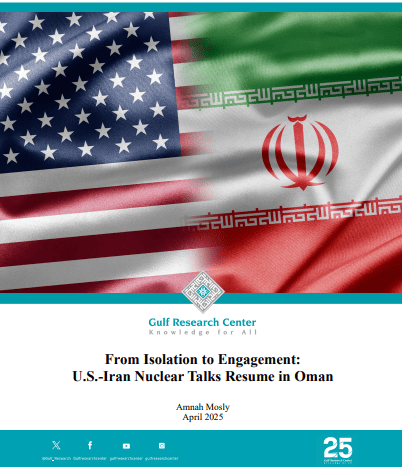
On April 12, 2025, the United States and Iran embarked on a potentially pivotal diplomatic endeavor concerning reviving dialogue over Iran’s nuclear program, holding indirect but “constructive” talks in Muscat, Oman. These discussions, mediated by Oman’s Foreign Minister H.E. Badr Albusaidi, marked the first substantive engagement between Tehran and President Donald Trump’s administration since his return to the White House. This renewed dialogue comes during a time of regional volatility and global uncertainty, underscoring the high stakes involved.
Foreign Minister Abbas Araghchi, a “seasoned diplomat and key architect of the 2015 accord,” led the Iranian delegation, while Trump’s Middle East Special Envoy Steve Witkoff headed the U.S. team. “The current focus of the talks will be de-escalating regional tensions, prisoner exchanges and limited agreements to ease sanctions (against Iran) in exchange for controlling Iran’s nuclear program,” according to an Omani source.
The Muscat talks were held “in a constructive and mutually respectful atmosphere,” according to Iran’s foreign ministry. This opening round, conducted in separate rooms with messages exchanged via Oman’s foreign minister, focused primarily on establishing a common negotiation framework. While not the direct engagement initially favored by Washington, this structure followed Tehran’s demand for an indirect format. Following more than two and a half hours of dialogue, the delegations reportedly spoke directly for “a few minutes,” symbolically significant given the absence of formal diplomatic relations since the 1979 Iranian Revolution.
Iran’s Foreign Minister stated, “Our intention is to reach a fair and honorable agreement from an equal position,” and that the negotiations were “just a beginning.” The White House echoed this cautiously optimistic tone and labeled the talks “very positive and constructive,” emphasizing that “These issues are very complicated, and Special Envoy Witkoff’s direct communication today was a step forward in achieving a mutually beneficial outcome.”
This latest diplomatic push comes amid heightened regional instability, including the ongoing conflict in Gaza, Houthi attacks on Red Sea shipping lanes, and growing hostilities between Israel and Iran. From a U.S. perspective, President Trump’s administration is looking for a foreign policy achievement, especially amid ongoing trade disputes and the continuation of the conflicts in both Gaza and Ukraine. While President Trump is enforcing a “maximum pressure” policy regarding Iran, it seems that the rhetoric has been toned down, as he stated hours before the talks that “I want Iran to be a wonderful, great, happy country. But they can’t have a nuclear weapon.”
At the heart of the negotiations lies the unresolved issue of Iran’s rapidly advancing nuclear program. Following Trump’s 2018 withdrawal from the Joint Comprehensive Plan of Action (JCPOA), commonly known as the Iran nuclear deal, Tehran intensified its nuclear program. The Biden administration’s efforts to revive the deal were inconclusive, and with President Trump back in office, the U.S. has reiterated that “Where our red line will be, there can’t be weaponization of your nuclear capability.” Iran continues to insist that its nuclear activities are purely for civilian purposes. Nevertheless, the rapid expansion of its enrichment program has heightened international concern.
Despite the absence of a formal breakthrough, the agreement to reconvene on April 19 signals a tentative yet meaningful step forward. The momentum gained from these preliminary discussions could lay the groundwork for broader talks. However, President Trump has warned of military action should diplomacy fail, raising the stakes for continued engagement.
While Oman’s role as a neutral mediator is characterized as effective, and the GCC, as a whole, has been playing a constructive and pragmatic role, prioritizing de-escalation and conflict mediation as the core of their approach when it comes to regional developments. In March 2024, the GCC member states released their Vision for Regional Security, highlighting their security as “indivisible” based on the GCC Charter and Joint Defense Agreement. The document underlined the GCC’s effort “to mediate differences through negotiations, diplomacy, and dialogue, and avoid resorting to forces of threats in order to ensure regional security and stability and preserve the development trajectory of the GCC states.” In this context, it further referred to “strengthen[ing] internal capabilities, deepen[ing] regional and international partnerships, and support[ing] cooperation and coordination mechanisms at regional and international levels, to enhance the concept of shared strategic interests” including “establishing a platform for direct negotiations to bridge differences between parties to conflict.”
In this context, the GCC states have also been firmly establishing themselves as important political and economic power brokers not only regionally but also at the international level. This is evident in the GCC states’ role in mediation and de-escalation efforts, including with Syria, Türkiye, Iraq, Sudan, and Yemen, as well as in Gaza and between Ukraine and Russia, where prison exchanges have benefitted from Arab Gulf involvement. Most notably is the Saudi-Iran rapprochement brokered by China. Saudi Arabia’s Ministry of Foreign Affairs expressed in a statement the Kingdom’s welcoming of Oman hosting the U.S.-Iran talks, “affirming the Kingdom’s support for these efforts and for adopting dialogue as a means to resolve all regional and international disputes,” and expressed its hope that “the outcomes of the Iranian-American talks will lead to joint efforts to enhance security, stability, and peace in the region and around the world.”
The GCC’s approach is rooted in safeguarding regional stability, with the focus remaining on addressing key concerns: upholding the principle of non-interference in internal affairs, ensuring freedom of navigation, and protecting sovereignty in external relations with global actors. Four core positions of the GCC states stand out. First, the GCC have consistently advocated a policy of non-interference in Iran’s political system as they believe that this is the sole right and responsibility of the Iranian people. Second, the GCC countries do not support the use of their airspace or territories for launching any military operations in the event of any confrontation between Iran and the United States. Third, the GCC emphasize that peaceful political negotiation and dialogue is the most viable path to resolving disputes. Accordingly, maintaining diplomatic relations with Iran is viewed as a pragmatic strategy to reduce tensions, avoid unnecessary escalations, and preserve and safeguard regional stability. This approach allows the GCC to engage with Iran while at the same time raising issues of concern. Finally, the GCC states underscore the importance of a firm commitment from Iran and all relevant countries to commit to the absence of any nuclear military program that threatens the security and stability of the Gulf region. Additionally, the Arab Gulf states maintain that any negotiations should be conducted directly with the Iranian state rather than with non-state armed groups.
*Amnah Mosly is a Researcher at the Gulf Research Center (GRC)