Commentary & Analysis
Turning East: Redefining the EU-Central Asia Relationship
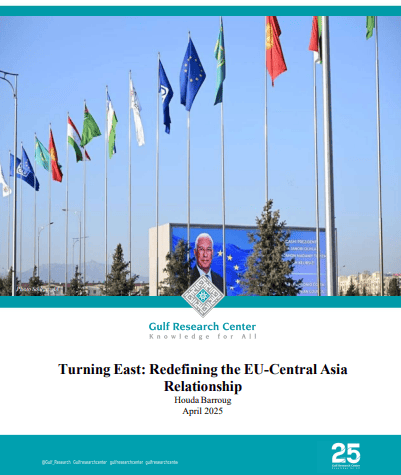
The first-ever EU-Central Asia summit that took place in Samarkand, Uzbekistan, on April 3-4, 2025, represents an important moment in the relationship between the two blocs. The gathering marked a significant step forward in the partnership, bringing together top EU leaders such as European Commission President Ursula von der Leyen and European Council President António Costa, as well as presidents from all five Central Asian countries—Uzbekistan, Kazakhstan, Kyrgyzstan, Tajikistan, and Turkmenistan. The conference highlighted both regions' political commitment to deepening their ties, indicating a strategic shift in EU engagement away from exclusively humanitarian assistance and toward commercial and infrastructure partnerships.
In recent years, the EU has increased its engagement with Central Asia, owing to shifting global geopolitics and the region's growing relevance as a strategic hub. Central Asia's emergence as a crucial region for sustainable development, trade routes, and energy diversification has catapulted it to the forefront of international competition among major countries such as the US, China, and Russia. The EU's strategic pivot toward Central Asia is part of a larger drive to increase its influence in Eurasia through soft power, sustainable development initiatives, multilateral engagement, and strategic investments under the Global Gateway initiative. As Central Asia navigates this complicated geopolitical landscape, its partnership with the EU will play an important role in influencing regional stability and global events.
The EU's relationship with Central Asia has progressed through several stages, reflecting changes in its goals and regional circumstances. In the 1990s, the EU concentrated on assisting the newly independent governments of Kazakhstan, Kyrgyzstan, Tajikistan, Turkmenistan, and Uzbekistan in their post-Soviet transitions by pushing economic reforms and creating stability through programs like Transport Corridor Europe-Caucasus-Asia (TRACECA,) which improved regional connectivity.
The EU shifted itsfocusto security following the September 11, 2001, attacks on the United States, introducing projects like Border Management Programme in Central Asia (BOMCA) and the Central Asia Drug Action Programme (CADAP) to enhance border control and combat drug trafficking while continuing to balance collaboration with the countries’ governments. However, the Andijan massacre in Uzbekistan in 2005 halted some of the progress, as the EU imposed sanctions for human rights violations, straining its relations with Uzbekistan and revealing the conflict between its ethical goal and pragmatic objectives.
Another important milestone in the EU-Central Asia relationship was the EU and Central Asia: Strategy for a New Partnership document, released in 2007. It represented the first comprehensive framework designed to institutionalize the EU's engagement with Central Asia. It stressed security, stability, energy cooperation, and respect for human rights as top concerns. Unlike previous ad hoc initiatives, this strategy represented a deliberate approach to establishing collaborations across many industries. It also implemented tools such as political discussion and regional cooperation frameworks. While grandiose in scope, critics highlight challenges in implementation due to limited resources and conflicting influences from Russia and China.
It was not until 2019 that the EU modified its Central Asia strategy to reflect evolving regional and global dynamics. The revised policy moved away from general frameworks and toward a more personalized approach that acknowledged each Central Asian state's distinct needs. It prioritized connectivity, resilience, climate action, and sustainable development while remaining focused on governance changes. Unlike its predecessor, this strategy was developed after extensive talks with regional stakeholders, indicating a more inclusive approach. However, several experts saw it as an incremental update rather than a paradigm shift in policy.
The first-ever EU-Central Asia Summit now elevates cooperation to that of a strategic partnership, as evidenced by the signing of the Samarkand Declaration and a €12 billion investment package through the EU's Global Gateway initiative. The summit stressed practical objectives such as essential raw resource exploration, digital infrastructure upgrading, green energy development, and transportation connections. Notably, the European Investment Bank (EIB) announced intentions to establish a regional office in Tashkent and inked memoranda for infrastructure and environmental projects worth €365 million. The inaugural summit also addressed broader geopolitical problems, including support for peace in Ukraine and UN-led efforts to stabilize Afghanistan. While avoiding direct allusions to Russia and China, the EU highlighted the importance of fighting sanctions circumvention via Central Asian territories.
The cooperation born out of the Summit centered on key areas that reflect shared priorities for economic integration and sustainable development. Digital and transport connectivity have emerged as essential cornerstones of this alliance, with the EU investing considerably in initiatives such as the Trans-Caspian International Transport Route to improve trade routes that bypass Russia. With €100 million dedicated to satellite internet initiatives aimed at closing the digital gap and connecting Central Asia to global markets, digital transformation has also surfaced as a priority in the two blocs’ cooperation framework.
Energy and vital raw resources are equally important in EU-Central Asian cooperation. The EU has pledged €6.4 billion to renewable energy projects, including hydropower and green hydrogen efforts, to facilitate the region’s transition to clean energy. Central Asia's rich stocks of vital raw resources, such as rare earths, have piqued the EU'sinterest, with agreements in place to encourage sustainable resource extraction and secure supply chains for European industry. These efforts are supplemented by larger investments in climate resilience and water management, demonstrating the EU's commitment to solving environmental issues while also expanding economic links with the region.
With the intense geopolitical competition and shifting global power dynamics as backdrops of the EU’s engagement with Central Asia, the partnership carries with it significant strategic implications. Central Asia's geostrategic location as a bridge between Europe and Asia, combined with its large quantities of important raw materials and energy supplies, makes it an essential partner for the EU. The EU's investment in the Trans-Caspian Transport Corridor and renewable energy initiatives will enable the region to minimize its reliance on Russia and China while securing alternate trade routes and energy sources.
This approach is consistent with broader European efforts to oppose Russian influence following its invasion of Ukraine and to provide a sustainable alternative to China’s Belt and Road Initiative (BRI.) The EU's emphasis on multilateral collaboration, such as regional frameworks and Enhanced Partnership and Collaboration Agreements (EPCAs,) reinforces its reputation as a credible partner dedicated to mutual development rather than transactional geopolitics.
Furthermore, the EU's investments in digital infrastructure and renewable energy demonstrate a long-term commitment to promoting resilience and sustainability in Central Asia. These initiatives aim not just to fulfill current economic requirements, but also to establish the EU as a regional leader in climate action and technical innovation. By prioritizing governance improvements and inclusivity in its relationships, the EU hopes to distinguish itself from other big nations while supporting stability and prosperity. Thisstrategic pivot demonstratesthe bloc'sintention to become a prominent geopolitical actor in Eurasia, employing soft power to form long-term ties.
Also against the backdrop of the EU-Central Asia Summit is the EU-GCC Summit that took place in October 2024 and the upcoming GCC-Central Asia Summit. The EU-Central Asia Summit holds various implications for larger cooperation between these various blocs. As the GCC and Central Asia engage, various aspects of their engagement should be examined. The GCC's emphasis on economic diversification and investment corresponds to Central Asia's demand for infrastructural development and access to cash. The summits can complement one another by encouraging collaboration in fields such as renewable energy, logistics, and tourism. Furthermore, the three blocs may work together to address common concerns such as climate change, water security, and food security, supporting sustainable development across the Eurasian terrain.
Despite its ambitions, the EU will face several challenges in implementing its Central Asian strategy. One of the most important concerns is dealing with the region's internal division. While the five Central Asian governments share landlocked geography and a reliance on raw material exports, their wealth, governance structures, and goals differ greatly. These inequalities may impede efforts to promote cohesive regional collaboration via frameworks such as the Global Gateway initiative. Furthermore, limited institutional capability and pervasive corruption in the region threaten the successful implementation of EU-funded projects, thus potentially diminishing their effectiveness.
External pressures from rival forces compound these issues. Russia retains major cultural influence over the Central Asian states due to historical relationships, and China leads infrastructural development through the BRI. The EU must compete with these established players while distinguishing itself through sustainable investments and governance-focused initiatives. Another major problem is balancing its moral objective (supporting democracy, human rights, and the rule of law) and practical engagement with authoritarian regimes. Striking this balance will be crucial for retaining credibility while avoiding alienating local governments that may oppose reform. Specific policies for individual countries and regional coherence will be necessary to overcome these challenges and ensure long-term relationships.
* Houda Barroug is a Researcher at the Gulf Research Center (GRC)