
Commentary & Analysis
Saudi Arabia and the U.S.-Iran Nuclear Talks: A Strategic Imperative for Engagement
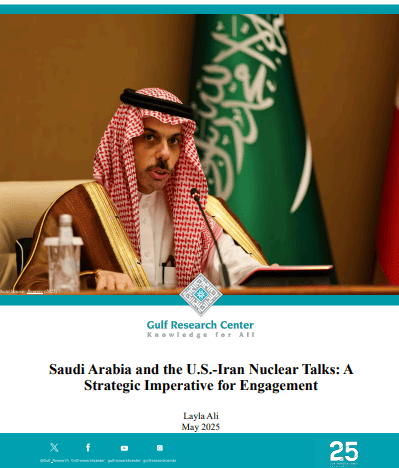
As nuclear discussions between the United States and Iran continue, most recently with a fifth round of negotiations held in Rome on May 23, 2025, facilitated by Omani officials, Saudi Arabia cannot afford to remain a passive observer to a process that carries significant implications for regional power dynamics and national security. The Kingdom’s core interests, security, sovereignty, and strategic equilibrium, are directly impacted by the contours and outcomes of any potential agreement between Washington and Tehran.
Regardless of whether the discussions ultimately succeed or falter, the outcome has far-reaching implications. It is also the case that the Iranian nuclear file is no longer simply a technical or bilateral matter. It is intertwined with broader questions of regional security, power dynamics, and the strategic ambitions of major players. For Saudi Arabia, staying informed and involved in the content and direction of the U.S.-Iran talks is therefore not merely a diplomatic necessity; it is a national security imperative.
The issues under discussion, particularly those related to Iran’s pursuit of uranium enrichment and a full nuclear fuel cycle, are complex and highly sensitive. Should the talks stall or collapse, a range of outcomes could ensue. These might include renewed economic pressure or, in a less desirable scenario, heightened regional tensions with the potential for escalation. In such cases, the implications for Saudi Arabia are considerable.
The Kingdom may also find itself expected to play a more active role in supporting collective measures to uphold regional stability, whether through enhanced enforcement of economic frameworks or through diplomatic coordination in the event of broader tensions in the Gulf. Accordingly, it would be prudent for Saudi Arabia to prepare for multiple contingencies. This entails not only maintaining close awareness of the progress of negotiations, but also formulating a flexible and forward-looking policy approach that ensures the protection of national interests under any eventual outcome.
Scenarios of Success and the Principle of Strategic Balance
Should the negotiations lead to a successful outcome whereby Iran is recognized as having the right to enrich uranium and operate advanced nuclear facilities for civilian purposes, this would naturally prompt a careful strategic assessment by Saudi Arabia. The Kingdom has consistently underscored the importance of equity and mutual respect in any regional nuclear framework.
In this context, it is important that any arrangement upholding Iran’s peaceful nuclear rights also ensures that other regional states, including Saudi Arabia, are afforded the opportunity to develop their own civilian nuclear capabilities under the same international standards and safeguards. This is not a question of rivalry, but rather one of maintaining strategic balance and fostering regional trust.
A scenario in which one state is granted extensive nuclear privileges while others are constrained, risks reinforcing asymmetries that could affect the region’s long-term stability, politically, strategically, and symbolically. Ensuring a fair and balanced approach would therefore be vital to sustaining both non-proliferation norms and regional confidence.
Saudi Arabia has affirmed its sovereign and inalienable right to develop research, production, and use of nuclear energy for peaceful purposes, in full conformity with the Treaty on the NonProliferation of Nuclear Weapons (NPT) and without discrimination. This right is a fundamental principle enshrined in the NPT, and the Kingdom remains committed to upholding its obligations under the treaty while ensuring that its pursuit of nuclear energy is dedicated exclusively to peaceful, transparent, and internationally recognized purposes.
Reasserting Regional Sovereignty and Agency
The current geopolitical landscape is marked by a shifting international order and an evolving U.S. approach to the Middle East. While the Saudi-U.S. relationship remains strong and strategic, as evidenced by the recent visit of U.S. President Trump to Riyadh, it must also continue to adapt to changing dynamics. The United States' decision to engage directly with Iran outside traditional multilateral frameworks may offer new avenues for negotiation, but it also necessitates greater transparency and reassurance for regional partners.
In this context, Saudi Arabia has a right, as well as a responsibility, to articulate its position with clarity. No nuclear arrangement that impacts regional security should proceed without thorough consultation with the Gulf states. The Kingdom has consistently emphasized that regional stability is a collective concern and that any understanding involving Iran must take into account the perspectives of neighboring countries, particularly those that have experienced the consequences of asymmetric threats and regional interference.
Over the past several years, Saudi Arabia has demonstrated a clear intent to move beyond a reactive stance and play a more active role in shaping regional outcomes. The experience of previous nuclear negotiations has made it evident that exclusion from such critical discussions can carry significant strategic costs. In this context, the Kingdom is intent on being engaged in any process that determines how agreements are monitored, verified, and implemented, especially when these decisions influence the broader security and strategic balance of the region.
It is equally important that any resulting agreement provides assurances that Saudi Arabia’s security, economic interests, and technological ambitions will not be undermined. Saudi Arabia’s pursuit of peaceful nuclear capabilities, for example, remains firmly grounded in its national development agenda and long-term energy diversification objectives. However, these ambitions cannot be viewed in isolation from the broader regional environment. If Iran is afforded expanded nuclear capabilities under international recognition and oversight, then there must be space for Saudi Arabia to pursue similar objectives within an equally transparent and responsible framework.
For this reason, Riyadh has taken a measured approach in recent months, closely observing the trajectory of U.S.-Iran engagement while withholding final decisions on its own nuclear program. Yet this posture of strategic patience cannot be indefinite. Should the United States extend meaningful concessions to Iran, the Kingdom will have a legitimate expectation to receive reciprocal treatment and cooperation on the basis of fairness, mutual respect, and regional stability. As the trajectory of the U.S.-Iran nuclear discussions continues to unfold, the implications for Saudi Arabia’s security, regional role, and long-term technological development remain key. Regardless of whether the talks lead to a definitive agreement, face setbacks, or result in an extended and uncertain process, it is essential that Saudi Arabia, as well as the other GCC states, remains closely informed and constructively engaged.
Layla Ali is a Researcher at the Gulf Research Center (GRC)