Commentary & Analysis
Understanding the Drivers and Impacts of Sub-Saharan Africa Labor Migration to the GCC
Introduction
The global labor landscape is undergoing significant change, marked by deteriorating economic conditions, uneven recovery from the Covid-19 pandemic, new vulnerabilities, and multiple crises. As labor market imbalances are growing, there is a surge in migration of workers from Sub-Saharan Africa (SSA) to the Gulf Cooperation Council (GCC) nations, including Saudi Arabia, the United Arab Emirates (UAE), Oman, Kuwait, Qatar, and Bahrain.
Driven by their quest to diversify their economies beyond oil to non-oilsector activities, these nations are actively seeking a dynamic workforce to power new industries and ensure sustained growth. Concurrently, Sub-Saharan Africa faces a demographic explosion, with a large wave of young people entering the job market, creating substantial pressure. This combination of factors— the GCC's demand for skilled labor and SubSaharan Africa’s growing workforce—is fueling an unprecedented movement of people between these regions. While the GCC has historically relied on migrant labor from South and Southeast Asia and other Arab countries, a notable shift is underway. Lower labor costs and the potential for a readily available workforce in Sub-Saharan Africa are attracting GCC employers, leading to increased recruitment from the continent. Formal agreements between GCC and Sub-Saharan African countries are further solidifying this trend, establishing new patterns of recruitment. However, the realities of SSA migrants in the Gulf remains undertheorized.
This policy paper explores the motivations of Sub-Saharan Africans seeking opportunities in the Gulf, the mutual economic benefits, the evolving social and cultural fabric of GCC societies, and the critical challenges and risks faced by these migrant workers.
Statistical Trends: Migration Numbers
and Origins While the number of Sub-Saharan African migrants in the GCC is on the rise, they still constitute a smaller segment of the region’s diverse expatriate population compared to the long-standing and substantial presence of migrants from South and Southeast Asia. The sheer scale of international migration to the Gulf is underscored by the fact that, as of 2020, the GCC countries collectively hosted approximately 30 million foreign nationals. It's crucial to recognize that the majority (64%) of individuals born in Sub-Saharan Africa who migrate choose to remain within the continent, a testament to the significance of intra-regional migration within Africa itself. Nevertheless, migration to the GCC remains a noteworthy and growing trend.
According to a Gulf Labor Markets and Migration factsheet, in Saudi Arabia, the GCC’s largest nation, the 2022 census recorded 715,000 nationals hailing from Sub-Saharan African countries, representing 5.3 percent of the Kingdom’s total foreign population. In contrast, data from Kuwait in 2023 indicates a smaller proportion, with Sub-Saharan Africans comprising only 1.2% of all residency permit holders. Qatar and the UAE do not offer population data disaggregated by nationality of migrants.
Unlike other nationality groups from Arab and Asian countries, Sub-Saharan African migrants in the GCC are mostly women. A prominent trend reveals Ethiopia as a key source of migrants to the GCC, most notably in Saudi Arabia. The 2022 census in Saudi Arabia documented 222,600 male and 488,900 female Ethiopian migrants, highlighting a distinct gender imbalance within this particular migrant group. Uganda, Kenya, Nigeria, Eritrea, Chad, and Somalia also stand out as significant origin countries.
Motivations for Migration from Sub-Saharan Africa
a. Economic Imperatives
The promise of significantly higher earnings in the GCC is a primary driver of migration from Sub-Saharan Africa. While the global youth unemployment rate remains elevated at 13%, one third of Africa’s youth remain unemployed. The opportunity to earn about five times more in the Gulf is compelling, representing a chance for a better life. This economic reality powerfully motivates individuals from SSA to secure a brighter future for themselves and their families. Exacerbating the income disparity is the crushing weight of unemployment, particularly among SubSaharan Africa’s burgeoning youth.
The lack of productive and decent jobs remains the largest labor market challenge for young people in Sub-Saharan Africa. The proportion of youth not in employment, education, or training (NEET) in SSA was 1 out of every 5 in 2023, that is 21.9% just slightly above the global youth NEET rate of 20.4 percent. The severe scarcity of jobs means that the number of young people entering the workforce far surpasses available opportunities. This lack of viable employment acts as a powerful “push” factor, compelling individuals to seek work beyond their national borders. The GCC, with its legacy of oil-fueled prosperity and ambitious diversification projects, offers the allure of higher wages and improved living standards.
Migration represents an escape from unemployment and meager earnings, coupled with high poverty rates and limited economic opportunities, and a chance to build a more stable and prosperous life within and outside the continent. The tangible success of those who have migrated, sent money home, and returned with greater financial security only amplifies the perception of the GCC as a destination for economic advancement. Sub-Saharan Africa's relentless population growth further intensifies these economic pressures, with the swelling labor pool outpacing job creation. This imbalance drives the need for opportunities abroad, fueling the compelling economic logic of seeking work in the Gulf.
b. Socio-Political Dynamics
Driven by the allure of higher incomes, a complex web of socio-political crises across Sub-Saharan Africa is compelling a desperate exodus of people. Fragility, violent conflict, heightened repression, constriction of fundamental freedoms, and widespread insecurity are forcibly displacing countless individuals and communities, driving them to seek refuge and safety elsewhere. Weak governance, and economic mismanagement in numerous countries exacerbate these sociopolitical pressures, creating a climate of fear and uncertainty, and driving large-scale forced migration to the Gulf and other parts of the world.
Although the Middle East and North Africa (MENA) remains the least peaceful region for the ninth consecutive year, GCC countries like Qatar, Kuwait, Oman, and the UAE are significantly more peaceful, according to the Global Peace Index 2024. In SubSaharan Africa, the state of peacefulness continues to deteriorate. Over the last five years, 36 of the 44 countries in the region have had some level of involvement in at least one external conflict. The Sahel, Great Lakes, and the Horn of Africa remain conflict hotspots where insurgencies, political instability, and economic challenges abound. For many in these sub regions, the GCC represents a haven of stability and opportunity, offering a chance to escape the turmoil and insecurity at home.
Economic Benefits for GCC Countries
a. Labor Force Contributions
Migrant labor is indispensable to the economic growth and development of all the Gulf countries, with Sub-Saharan African migrants forming a significant and increasingly vital part of this workforce. With a capital-rich but labor-scarce landscape, Gulf nations depend on this vital workforce to bolster and stimulate economic growth and development. Although migrant workers in the GCC region amount to less than 10 percent of all migrants worldwide, they constitute a significant part of the population of their host countries. The GCC countries are situated among the top twenty countries worldwide where nonnationals outnumber citizens, evidenced by Saudi Arabia and the UAE's status among the top ten countries accommodating the largest migrant populations in the world.
Doubtlessly, migrants are crucial in addressing critical labor shortages across various sectors essential to these countries’ continued progress and daily operations. Sub-Saharan African migrants in the GCC are primarily concentrated in essential, though often undervalued, low-to-medium-skilled occupations across various sectors. Domestic work remains a significant employment, particularly for women from countries such as Ethiopia, who provide indispensable services within GCC households. The domestic sector remains by far the largest employment sector of female migrants in the Gulf region. However, even as domestic work continues to be a prevalent sector, there are emerging indications of diversification. For instance, a notable percentage of female Kenyan migrants in Bahrain are entering governmental and private sector roles, suggesting a potential shift towards more highly skilled occupations for certain nationalities.
Notably, migrant labor makes substantial contributions to the construction sector where over 90 percent of the workers are migrant workers, critical to the massive infrastructure development and ambitious construction projects that are reshaping the region’s landscape. Furthermore, Sub-Saharan Africans are increasingly employed in the healthcare sector, meeting the growing demand for medical professionals and support staff in the region. They also constitute a significant presence in serviceoriented industries like hospitality and retail, which are key drivers of tourism and domestic consumption within the GCC economies. Additionally, many are employed in the security sector, helping to maintain law and order.
b. Impact of Remittances
Sub-Saharan African migrants in the GCC not only contribute toward shaping the economic landscape of their countries of residence; they also generate a substantial flow of remittances back to their home countries, contributing an economic lifeline for millions of households and small businesses. These inflows often represent a crucial source of foreign income, frequently surpassing the levels of official development assistance (ODA) received by many Sub-Saharan African countries. For millions of families throughout the region, remittances are essential, providing the financial means for basic needs, education, and healthcare. In numerous instances, particularly for smaller, poorer, and more fragile economies, remittances are absolutely critical in maintaining economic stability and alleviating poverty.
World Bank data indicates a consistent upward trend in remittance flows to Sub-Saharan Africa, with an estimated 1.9 percent increase to a staggering $54 billion in 2023. The GCC countries are significant contributors to remittance flows to Sub-Saharan Africa, with major recipients including Ethiopia, Kenya, Nigeria, Ghana, Uganda, Tanzania, and Rwanda. In 2023, total remittance flows from the GCC to SSA reached $28.3 billion, with most outflows coming from Saudi Arabia ($12.5 billion), the UAE ($8.2 billion), and Qatar ($3.7 billion). These financial flows not only provide crucial support to individual households but also bolster the overall GDP and economic development of the sending countries by injecting vital foreign exchange and stimulating local economies.
Social and Cultural Impacts on GCC Societies
a. Cultural Exchange and Diversity
The movement of people from Sub-Saharan Africa to the GCC region ignites dynamic cultural exchange and enriches the growing diversity of GCC societies. Deep historical ties, predating modern migration, have long connected Africa and the Gulf states through multifaceted channels, encompassing vibrant economic interactions, collaborative educational initiatives, humanitarian aid, and profound religious connections. The annual pilgrimage to Saudi Arabia, for instance, draws millions of Africans to the Gulf, fostering direct interaction and the potential for deeper cultural understanding. Up to 166,000 pilgrims, about 9.5 percent of the total 2.3 million people that participated in the 2018 Hajj were from Sub-Saharan Africa.
Furthermore, the linguistic and cultural bonds shared by many Arabic-speaking African countries and the Gulf nations suggest a pre-existing cultural affinity, facilitating smoother exchange. Indeed, the Red Sea, far from acting as a barrier, represents a zone of historical and cultural convergence, given the rich intertwining of languages, religions (especially Islam, a significant force in both regions), and shared identities across these areas. This deep-rooted historical and religious common ground offers a robust foundation for meaningful cultural exchange and mutual understanding between Sub-Saharan African migrants and their host societies in the GCC.
b. Demographic Transformations
The GCC countries already exhibit a striking demographic transformation, a direct consequence of their long-standing reliance on foreign labor. As of 2020, foreign nationals constituted over half of the total resident population in the six GCC member states. Some of them display truly extraordinary figures, with Qatar, for example, having an immigrant share reaching a remarkable 87.9 percent. Similarly, in the UAE, international migrants accounted for nearly 87.1 percent of the population by July 2020. Kuwait also demonstrates this profound shift, with non-Kuwaitis comprising about 70% of the population over the same period.
Against this backdrop of an already heavily international demographic landscape, the influx of Sub-Saharan African migrants adds another layer of complexity. While Sub-Saharan African migrants may currently represent a smaller portion compared to those from South and Southeast Asia, their growing presence undeniably contributes to the increasingly rich multicultural and multi-ethnic tapestry of GCC societies. The sheer scale of international migration to the GCC has already fostered remarkably diverse communities, and the arrival of migrants from Sub-Saharan Africa further deepens this demographic complexity, creating societies unlike any other in the world.
Towards mutual benefits for both regions
a. Challenges
While migrants from Sub-Saharan Africa contribute significantly to the demographic and cultural landscape of GCC nations, their integration is often hindered by multifaceted challenges. These challenges are rooted in systemic and structural factors that affect migrant workers’ ability to integrate and participate fully in host societies. Issues include discrimination based on nationality and race, as well as occasional violence and mistreatment. GCC countries are undertaking efforts to reform labor laws, however, reforms often benefit highly skilled workers and investors more, leaving lower-skilled migrants with limited improvements in their legal safeguards and working conditions. Despite initiatives such as nondiscriminatory minimum wage policies in Qatar, nationality-based wages persist, reflecting structural racial discrimination. In Kuwait, systemic issues like institutional corruption and structural injustice have marginalized migrant workers, who may face severe penalties for attempting to leave exploitative employers.
The Kafala system - a sponsorship-based employment model widely used across the GCC where the kafeel (sponsor) adopts a paternalistic role vis-à-vis the migrant worker - has been another source of discrimination including for East African migrants in Saudi Arabia. Under this system, the employer becomes responsible for the worker’s legal and employment status, influencing the latter’s ability to change jobs or to leave the country. Therefore, migrants have limited leverage to negotiate more favorable working conditions and wages. This is especially so in domestic work, construction, hospitality, and agriculture, underscoring the need for reform.
Beyond the kafala system, labor camps – accommodations provided for migrant workers particularly in construction and infrastructure projects – are often associated with substandard living conditions, overcrowding, and insufficient access to basic amenities. Even skilled migrants from Sub-Saharan Africa in Kuwait report racialized wages and unequal treatment. Hostile attitudes, racism, and xenophobia toward migrant workers have reportedly increased in some GCC countries, particularly during the Covid-19 pandemic, making it difficult for migrants to secure or enforce legal protections.
Recruitment agencies in Africa contribute to the negligence of migrant’s working conditions. Some agencies use nefarious tactics or false promises to lure vulnerable families to work in the Gulf for symbolic or no pay. To address this, the Kenyan government has taken measures to deregister or deny registration for agencies that were noncompliant in a bid to ensure ethical recruitment and curb labor exploitation.
Sub-Saharan countries and GCC member states are actively working to address these issues and offer advantageous terms to migrant workers. For instance, Kuwait and Ethiopia signed a bilateral labor agreement to create a cooperative working environment that preserves the rights and interests of Ethiopian laborers while expanding access to employment opportunities. This is a growing trend across the Gulf states and their African partners, who are looking to strengthen regulatory frameworks in the labor market. Within the GCC, a series of ‘Kafala reforms’ have been launched over the last decade. However, they have been inadequate in protecting the rights of migrant workers in the region.
b. Opportunities and Way Forward
Migration of Sub-Saharan Africans to the GCC is a multifaceted narrative of economic necessity intertwined with human resilience, shaped by stark disparities in opportunity and the considerable burden of socio-political instability in their countries of origin. Within the GCC states, these migrants are an indispensable workforce, their labor fueling diversification initiatives and contributing substantially to the gross domestic product (GDP) across pivotal sectors— construction, healthcare, hospitality, security, retail, and domestic work.
It is important to acknowledge the crucial contributions of Sub-Saharan African migrants to the GCC economies. They play a vital role in sectors such as domestic work, hospitality, agriculture, and construction, which are essential for the region's growth and economic prosperity. Their labor supports the ambitious development projects and daily operations of GCC nations.
For SSA migrants in the Gulf, the remittances they send home serve as a crucial lifeline for countless families, playing a vital role in poverty reduction and the promotion of economic stability across numerous countries.
As GCC countries continue to diversify their economies and attract global talent, addressing the systemic barriers to integration becomes increasingly important. This requires comprehensive policies that not only protect the rights of migrant workers but also enable an inclusive environment that supports their integration into host societies. Such policies can enhance social cohesion and ensure that the benefits of migration are shared more equitably, benefiting both the host countries and the migrant communities.
Addressing challenges underpinning this dynamic in SSA-GCC labor migration necessitates comprehensive and far-reaching reforms to labor laws in both regions. The goal should be to dismantle existing exploitative systems and ensure equal legal protection for all workers, irrespective of nationality.
Stronger and more effectively enforced safeguards for migrant workers, including genuine access to justice mechanisms, are vital to securing their wellbeing and upholding their fundamental human dignity. While labor migration laws have been enacted, for example between Kenya and Saudi Arabia, the implementation thereof remains wanting. Bridging the gap between policy and implementation is therefore crucial. In this regard, enforcement of unregulated recruitment practices, and increasing consular support for migrants in host countries will be important.
A long-term vision is imperative, encompassing initiatives designed to foster meaningful social integration, actively challenge discriminatory practices, and genuinely acknowledge the enduring contributions of migrant communities, thereby cultivating more inclusive and equitable societies across the GCC.
Future research should prioritize in-depth investigations into the distinct experiences of various Sub-Saharan African nationalities within individual GCC countries, meticulously examining the nuances of their migration journeys, employment conditions, and integration patterns. A thorough understanding of these specificities is essential for developing targeted and impactful policies that effectively address the challenges and maximize the mutual benefits of this significant migration phenomenon for both the African and Gulf regions.
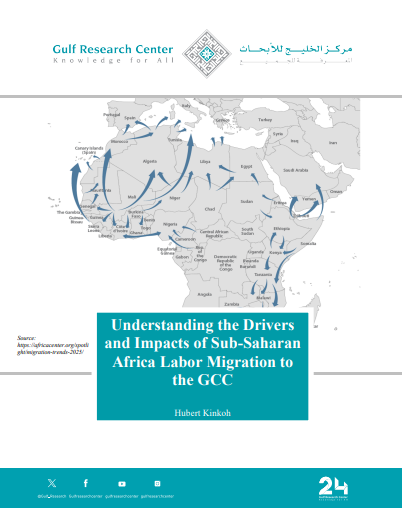
Source: https://africacenter.org/spotlight/migration-trends-2025/