

Commentary & Analysis
The GCC-ASEAN Summit in Kuala Lumpur: Strategic Symbolism or Substantive Shift?
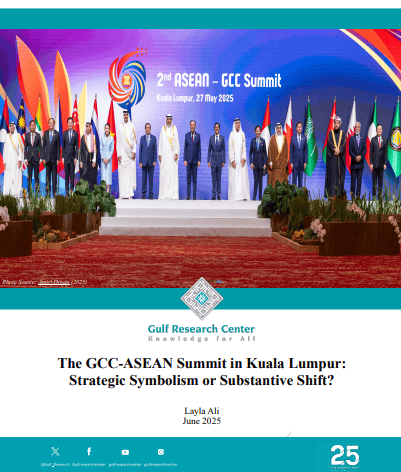
The second ASEAN-GCC Summit and the inaugural ASEAN-GCC-China Trilateral Summit, held in Kuala Lumpur on May 26-27, 2025, marked another milestone in the evolving architecture of transregional diplomacy. Bringing together Southeast Asian and Gulf leaders, with China joining the trilateral format for the first time, the meetings came at a time of growing geopolitical fragmentation and economic uncertainty. Although heralded as a milestone in inter-regional engagement, the summits underscore both the ambitions and the limitations of current efforts to transform these relationships into structured, strategic partnerships.
The foundations of ASEAN-GCC cooperation were laid only recently with the inaugural summit hosted by Saudi Arabia in 2023. This second meeting in Kuala Lumpur suggests a level of momentum and political will from both sides. The presence of high-level representatives, including Qatari Emir Sheikh Tamim Al-Thani, the crown princes of Bahrain and Kuwait, and Saudi Foreign Minister Prince Faisal bin Farhan, reflects the attention and direction with which the GCC approaches its pivot toward Asia.
The joint declaration issued at the summit emphasized economic cooperation, free trade negotiations, and the need to diversify supply chains, particularly relevant as both blocs seek to hedge against the disruptions seen in recent years. With total ASEAN-GCC trade valued at $130.7 billion in 2023 and a new target set at $180 billion, the economic rationale for deeper engagement is clear. Yet, while the figures are notable, they must be put into context: the GCC is only ASEAN’s seventh-largest trading partner. Raising the strategic profile of this relationship will require institutional commitment beyond summits.
The endorsement of the ASEAN–GCC Framework of Cooperation (2024–2028) is a step in the right direction. It outlines joint actions across political, security, economic, social, and cultural domains, which, if implemented effectively, could address the chronic lack of institutionalization that has long plagued ASEAN-GCC ties. The agreement to explore a Free Trade Agreement and conduct a feasibility study is particularly key, especially in a moment when both regions are seeking to expand South-South trade and reduce their overdependence on traditional Western markets.
The China Factor and the Trilateral Dimension
What sets this round of meetings apart is the inclusion of China in the inaugural ASEAN-GCCChina Trilateral Summit. This development highlights an increasingly multipolar approach to regional diplomacy. China’s participation amplifies the strategic weight of the summit, offering an alternative vision for global order at a time when confidence in U.S. economic leadership is waning, particularly in light of the new round of global tariffs imposed by President Donald Trump since April 2025.
The trilateral joint statement highlighted two key themes: a commitment to deepening cooperation in combating transnational crime, cyber threats, and extremism, and a shared concern over the instability in the Middle East. Agreement on these issues reflects a growing recognition among ASEAN and GCC countries, and China of the intersection between economic growth and security. However, while the language was ambitious, concrete mechanisms for cooperation, such as joint task forces or intelligence-sharing platforms, were absent.
From the Gulf perspective, this trilateral format with China should be viewed not as a departure from Western alliances but as part of a broader balancing strategy. GCC states remain firmly committed to maintaining stable ties with powers like the United States, but the inclusion of China reflects a pragmatic recognition of Beijing’s growing role in regional and global economics. For ASEAN member states, who straddle key maritime chokepoints like the Strait of Malacca and operate amid growing U.S.-China competition, engaging both Beijing and the Gulf simultaneously represents a careful act of strategic calibration.
The strategic location of ASEAN member states, particularly in the maritime corridor between the Gulf, the Indian Ocean, and the South China Sea, adds a vital geoeconomic layer to the partnership. The Strait of Malacca, like the Strait of Hormuz, is a critical artery for global energy flows. Maritime security, anti-piracy coordination, and logistical infrastructure could be fertile ground for deeper GCC-ASEAN cooperation.
Given the Gulf’s ambitions to become a transcontinental trade hub, the logic of extending diplomatic and commercial ties eastward is compelling. However, realizing this vision will require investments in logistics, port connectivity, and regulatory alignment. Future summits should prioritize these areas and move toward concrete deliverables, such as pilot projects, logistics corridors, or ASEAN-GCC business councils.
Strategic Convergence or Diplomatic Optics?
While the declaration issued by ASEAN and the GCC touched on a wide range of sectors like Islamic finance, food security, energy transition, digital economy, smart transport, AI, manufacturing, and halal services, the breadth of topics also betrays a familiar challenge: the dilution of focus. Without clear priorities and actionable roadmaps, such agendas risk remaining at the level of well-intentioned rhetoric.
To avoid this, both blocs must move to establish working groups, timelines, and follow-up mechanisms. As the declaration notes, strengthening private sector coordination and governmentto-business dialogue is crucial. Chambers of commerce, regional development banks, and sovereign wealth funds should be mobilized to operationalize these goals. Similarly, the idea of linking ASEAN and GCC land transport systems, while visionary, requires feasibility assessments and infrastructure financing models that go far beyond communiqués.
One of the more promising areas of convergence is digital economy cooperation, where both regions stand to benefit. ASEAN countries have seen rapid growth in fintech, e-commerce, and digital infrastructure, while the Gulf states have prioritized digital transformation as part of their respective economic diversification agendas. Joint initiatives in cybersecurity, AI regulation, and digital payments could yield real results and build institutional trust.
Moreover, the reference to sustainable development and multilateralism as shared values hints at the potential for joint advocacy in global forums. As middle-power groupings navigating an uncertain world order, ASEAN and the GCC could benefit from presenting united positions on issues like WTO reform, climate finance, and equitable vaccine distribution, areas where traditional power centers have faltered.
Moving Beyond Symbolism
It is tempting to view this summit as a success based purely on participation and declarations. Yet, beyond announcements of shared intent, few immediate breakthroughs or innovations emerged. The real test lies in what happens next, particularly in the months following the adoption of the cooperation framework. While the potential for meaningful cooperation is undeniable, the challenge lies in converting that potential into structured, institutionalized action.
To break this cycle, both sides should agree on annual ministerial-level reviews, establish dedicated secretariats or liaison offices, and create inter-regional task forces focused on key areas such as green energy, halal certification standards, and digital integration. Moreover, cultural and educational exchanges, though often overlooked, can build long-term people-to-people ties that reinforce diplomatic efforts.
In a world shaped by growing uncertainty, the ASEAN-GCC and ASEAN-GCC-China summits represent a conscious pivot toward a multipolar future. Both ASEAN and the GCC aim to recalibrate their external relations, diversify economic partnerships, and enhance their strategic autonomy. But symbolism and summitry are not substitutes for substance. The ambition is evident; what remains to be seen is whether both sides can summon the political will and institutional capacity to transform this vision into reality.
If they succeed, the ASEAN-GCC axis could emerge as a key pillar of the evolving global order, one shaped not by great power diktats but by agile, middle-power coalitions anchored in mutual respect, economic opportunity, and shared global responsibilities.
Layla Ali is a Researcher at the Gulf Research Center (GRC)