
Commentary & Analysis
Rethinking Korea-Africa Relations: Toward Strategic Partnership for Shared Growth
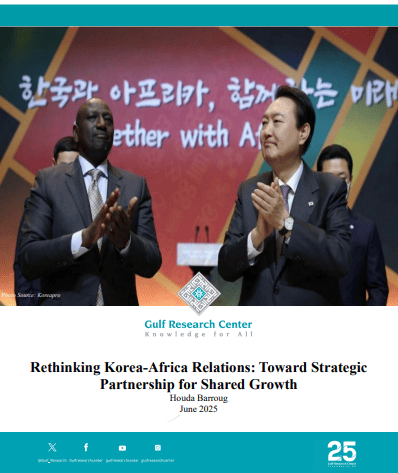
The importance of addressing Korea's engagement in Africa has never been more evident, as both regions are actively pursuing new opportunities for robust, mutually beneficial collaboration. The recent surge in Korea-Africa cooperation, concretized by the first-ever Korea-Africa Summit in 2024, signals a shift in the partnership momentum. Themed “The Future We Make Together: Shared Growth, Sustainability, and Solidarity,” the summit gathered leaders from 48 African countries and key figures from Korean government communities, including former South Korean President Yoon Suk Yeol. The Summit marked the departure from humanitarian-focused cooperation to focus on strategic, multifaceted partnerships.
Korea's leadership in digital technology, infrastructure, clean energy, and innovation is directly aligned with Africa's vision and goals for inclusive growth and transformation. At the same time, Africa's rapidly expanding markets, abundant resources, and young demographics provide Korea with unparalleled opportunities for economic diversification as well as regional and global influence. This convergence seeks to reflect a new type of international partnership- one that promotes mutual benefit, trust, and a common vision for a more connected and inclusive future.
Recent agreements, such as Korea's $10 billion pledge in development aid and $14 billion in export financing by 2030, demonstrate the significance of this strategic shift. These investments, which target the sectors of technology, sustainable development, food security, and critical minerals, are aimed at harnessing Africa's potential as a key engine of global growth while cementing Korea's role as a "Global Pivotal State" and a credible alternative to traditional regional powers.
The Korea-Africa relationship has been shaped by a complex interplay of history, economics, shifting geopolitical currents, and development goals. Diplomatic relations began to develop in the 1960s, as newly independent Africa emerged and Korea, in the aftermath of the Korean War, sought allies in the framework of Cold War tensions and influence and support in international forums against North Korea. By the late 1970s and 1980s, South Korea's rapid economic growth had enabled it to broaden its outreach, focusing on substantive agreements and presidential visits that put in place a groundwork for practical collaboration in trade and technology.
The period following the end of the Cold War saw an acceleration of these relationships, with South Korea leveraging its own development narrative and success story to establish credibility and trust with African partners. South Korea emerged from the destruction of the Korean War and decades of poverty to become a global economic powerhouse in just a few generations—a process known as the "Miracle on the Han River." This success story, characterized by rapid industrialization, technical innovation, and the establishment of globally competitive industries, served as a compelling model for emerging countries, including those in Africa. South Korea actively used this narrative, both after the Cold War and now, to form alliances based on common goals for economic growth and modernization. This culminated in the establishment of the Korea International Cooperation Agency (KOICA) to channel development cooperation.
With Korea's desire for new markets and resources and Africa's growing global influence, economic relations have emerged as a key pillar in recent years. For Korean officials, the newly operational African Continental Free Trade Area (AfCFTA) is a game-changer that can help establish Africa as the world's largest single market and a key player in global supply chains. Korean businesses are investing heavily in infrastructure, automobiles, mining, clean energy, and ICT. Nevertheless, there are still challenges: trade is concentrated in a few countries, and the lack of FTAs or preferential access schemes inhibits economic exchange from reaching its full potential.
Korea aims to distinguish its approach from that of larger powers by emphasizing development cooperation and soft power. KOICA's footprint has expanded to include capacity-building initiatives, technical assistance, and scholarships, focusing on Africa's priorities from public policy and ICT to healthcare and agriculture. Korean aid is increasingly focused on digital transformation and green growth, with new efforts supporting research and development collaborations and infrastructure projects crucial for Africa's mineral exports and integration into global value chains.
Politically, Korea has increased its engagement, most clearly during the inaugural Korea-Africa Summit in 2024 and subsequent high-level dialogue and forums, highlighting its intention to foster a position as a responsible, active middle power and a bridge between Africa and the broader international community. The current administration's strategy blends a typical conservative focus on countering North Korean influence with a liberal emphasis on economic partnership and development cooperation, reflecting both regions' shifting interests.
African leaders, in turn, perceive Korea as an appealing partner- distinguished from both past colonial powers and perhaps even an alternative to China when needed- appreciating its pragmatic attitude to collaboration and technological capability; most importantly, appreciating its success story, though it cannot be replicated wholesale, given the local contexts and institutional realities of the continent.
Despite these strides, the relationship faces ongoing obstacles, notably the absence of an FTA framework, inadequate sectoral and geographic diversity, and existing trade imbalances. Korean stakeholders recognize the need for deeper local knowledge, cultural understanding, and in-depth engagement to better tackle these obstacles and guarantee that projects are sustainable and mutually profitable. Moreover, competition from other Asian actors, particularly China, remains fierce, but Korea is cautious to promote itself as a complementary- rather than competing- partner, highlighting its unique development experience and ability to adapt to African requirements rather than imposing its own model.
Looking ahead, Korea-Africa cooperation looks promising. To realize its potential, Korea must develop an approach that does not focus on resource exploitation. It must increase its understanding of the continent’s context, promote local ownership, and contribute to capacity building in all initiatives. On such a footing, their collaboration is poised to become a forwardthinking international cooperation capable of handling shared challenges and unleashing new opportunities for growth and development.
* Houda Barroug is a Researcher at the Gulf Research Center (GRC)