
Commentary & Analysis
Turning Point or Setback? The Future of GCC–Iran Relations
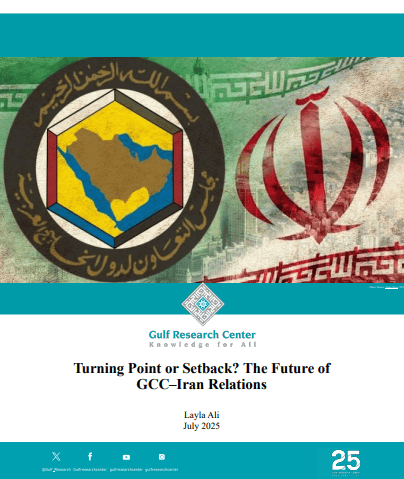
On June 23rd, Iran’s attack targeting the U.S. airbase in Qatar, while directed at American assets, struck a nerve with GCC countries far deeper than what may have been anticipated. Although the physical damage was been limited, the symbolic and political implications for the Gulf Cooperation Council (GCC) countries were serious. The incident marked the first time that Iranian aggression extended to Qatari territory, triggering widespread concern across Gulf capitals, not just about Tehran’s intent, but also about the broader framework of regional security that the GCC and Iran have cautiously been trying to build.
The Weight of Context
This attack did not occur in a vacuum. It happened in the midst of gradually improving diplomatic engagement between Iran and the Gulf countries.
High-level meetings, such as the GCC ministerial meeting with Iran’s foreign minister in Doha last October, which took place on the sidelines of the 3rd Asia Cooperation Dialogue Summit, have opened up a space for dialogue, focusing on issues such as the escalating tensions in the region and their serious implications for both regional and international peace and security. Saudi Arabia and Iran restored diplomatic ties in 2023, after a seven-year rupture, and Gulf countries, including the UAE, Bahrain, Oman, and Kuwait, had been cautiously re-engaging with Tehran. As a result of the informal ministerial meeting, the parties agreed to pursue a joint action plan aimed at enhancing communication channels, de-escalating flashpoints, and fostering confidence-building measures. This fragile détente was slowly fostering an atmosphere where longstanding disputes could be addressed through diplomacy and dialogue, rather than brinkmanship.
Had the Iranian missile strike on Qatar occurred three years ago, amid the heightened tensions of 2019–2020, it would have been far more difficult to manage diplomatically. Today, because of the groundwork laid through renewed diplomacy, the attack is being handled with restraint. However, that should not diminish its seriousness. Gulf states have already clearly communicated to Tehran that such actions against Gulf sovereign territory cannot be tolerated, even if they are directed at U.S. forces.
Beyond the breach of sovereignty, the missile strikes also struck at the heart of the region’s economic stability. By demonstrating the vulnerability of Gulf territory to direct military strikes, the attacks undermine investor confidence and raise serious questions about the region’s ability to safeguard critical infrastructure. In a region where economic diversification and global investment are central to long-term stability, the perception that key states can be targeted with relative impunity jeopardizes the credibility of Gulf security assurances. This carries far-reaching implications, not only for foreign direct investment and regional trade but also for the broader narrative of the Gulf as a safe, predictable, and stable partner in the global economy.
Iran’s attack thus introduces a broader dimension to Gulf regional security. It exposes the volatility of relying solely on diplomatic progress without concrete mechanisms for crisis prevention, communication, and mutual restraint. It also reflects the consistent absence, and the growing need, for a credible multilateral mechanism dedicated to regional security. Without such a framework, even moments of diplomatic progress remain fragile and vulnerable to sudden escalation and miscalculation.
From a Gulf perspective, the attack cannot be dismissed as mere collateral damage in U.S.-Iran hostilities. It raises serious concerns about Iran’s strategic calculus and its grasp of the evolving regional dynamics. The incident further underscores the risk that Gulf territories could be drawn into future confrontations or exploited as arenas for proxy escalation, should tensions between Iran and other powers intensify again.
Expectations for a Constructive Path Forward with Iran
For Iran-GCC relations to advance meaningfully, it is therefore essential to establish mutual confidence and reaffirm shared commitments to regional stability. In light of recent events, particularly the developments of June 23rd, a renewed effort is needed to restore trust and prevent further escalation. This is not solely about military restraint; it is about rebuilding a framework for regional cooperation based on respect, dialogue, and shared interests.
To move forward the following has to be included: A Clear Acknowledgment of Concerns: Recognizing the gravity of the June 23rd incident would demonstrate Iran’s willingness to engage in good faith with its Gulf neighbors. Whether through public or discreet diplomatic channels, a gesture of acknowledgment would be a prudent starting point in addressing legitimate regional security concerns.
Assurances of Non-Escalation: It would be important for Tehran to signal clearly that actions threatening the security or sovereignty of GCC states, regardless of intended targets, will be avoided moving forward. Such assurances would contribute significantly to confidence-building efforts across the region.
Establishing a GCC–Iran Security Dialogue: There is merit in pursuing continued and more structured consultations between the GCC and Iran, with a view to establishing a joint security dialogue or working group focused on concrete issues such as deconfliction mechanisms, maritime security, and crisis prevention. Institutionalizing these exchanges would help reduce misunderstandings, build mutual confidence, and promote greater transparency.
While Iran’s emphasis on defending its sovereignty is understandable, particularly amid external pressures, it is equally vital that such actions do not inadvertently compromise regional safety or stability. Responsible regional leadership involves careful calibration of national actions within a broader collective context.
This is a moment that calls for strategic patience and mutual understanding from both Iran and the GCC. Given their geographic proximity and intertwined economic and environmental futures, collaboration is not a luxury; it is a necessity. Addressing regional security through inclusive dialogue, rather than unilateral narratives, will help protect long-term regional interests. The discourse surrounding Iran-GCC relations must be reframed to align with the region’s rapidly shifting dynamics, with greater focus placed on enforcing responsible military behavior, upholding territorial sovereignty, and establishing credible, institutionalized mechanisms for deconfliction.
Charting a Path Forward: A Call for Responsible Engagement
The challenges to regional security are not new, but recent events have heightened their urgency and exposed the fragility of existing mechanisms. Still, these developments need not derail the broader aspiration for a stable and inclusive security architecture in the Gulf.
The GCC remains committed to a vision that includes Iran as a constructive regional partner, one that shares responsibility for peace, de-escalation, and mutual respect. For this vision to materialize, the commitment must be reciprocal. If Iran is to play a constructive role as a key regional stakeholder, this will require consistent engagement grounded in mutual respect and a shared commitment to stability.
Gulf states, while maintaining their established defense partnerships, continue to welcome the prospect of cooperative security arrangements that are based on dialogue, confidence-building, and respect for sovereignty. The events of June 23rd serve as a stark reminder that these efforts remain vulnerable and must be reinforced with urgency and resolve.
There is still space for cautious optimism, but it must now be informed by clarity, measurable assurances, and a sustained commitment to avoid actions that could further undermine regional stability. Only through such an approach can the region move beyond cycles of tension and toward a more predictable and peaceful future.
Layla Ali is a Senior Research Associate at the Gulf Research Center (GRC)