Commentary & Analysis
The FIBA Asia Cup in Jeddah, Saudi Arabia
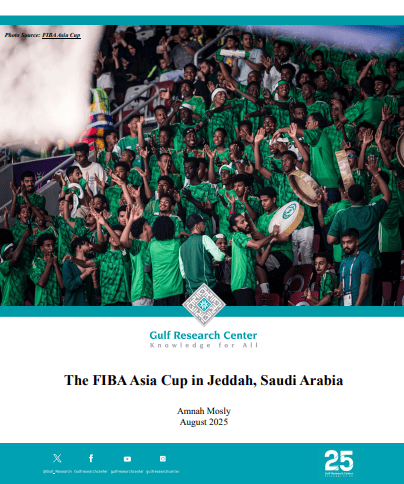
The 31st edition of the FIBA (International Basketball Federation) Asia Cup, hosted in Jeddah, Saudi Arabia, from August 5-17, 2025, represents another important addition to Saudi Arabia’s sports calendar. While football remains the country’s most popular sport, the hosting of basketball’s premier continental tournament reflects an effort to broaden the Kingdom’s sport portfolio, diversify public interest, and position Saudi Arabia as an emerging player in multiple arenas. The Asia Cup thus offers an opportunity to project the Kingdom’s image to the international community while inspiring domestic enthusiasm for a sport whose appeal is steadily growing in the Kingdom.
The hosting of the Asia Cup fits within a broader national strategy that views sports not only as entertainment but as a driver of tourism, investment, and global visibility. Vision 2030 sets out to reduce economic dependence on oil and enhance the quality of life through cultural, recreational, and social engagement. In this context, basketball’s inclusion in the Kingdom’s major event calendar demonstrates the government’s intent to develop diverse sports, expanding beyond football, motorsport, and combat sports.
Basketball in Saudi Arabia has historically occupied a smaller space compared to football, but recent years have seen steady progress. Domestic clubs such as Al-Ittihad and Al-Ahli have long competed in the Saudi Basketball League, while participation in regional competitions like the FIBA West Asia Super League has introduced higher standards and international exposure. The sport’s development has been supported by an expanding network of training facilities, the professionalization of local leagues, and targeted youth programs.
Saudi Arabia is steadily expanding its grassroots basketball programs to boost participation and raise the overall standard of play. Initiatives such as the Saudi Amateur Basketball Association and Ball’In Schools focus on expanding the sport’s reach, organizing competitions, and developing young talent. The Kingdom has also welcomed NBA players, including LeBron James and Isaac Okoro, as part of a grassroots development program in Saudi Arabia aimed at inspiring the next generation. Overall, since 2018, there has been a 54% increase in basketball participation thanks to the range of grassroots programs run by the Saudi Basketball Federation, reflecting the impact of these programs and the gradual integration of basketball into everyday recreational life across the country.
These efforts are aligned with broader Vision 2030 initiatives that promote physical activity, healthy lifestyles, and community engagement. The choice of Jeddah, already recognized for hosting Formula 1, international tennis tournaments such as the Next Gen ATP Finals, and major football fixtures, as the stage for the Asia Cup positions the city as a central hub in Saudi Arabia’s sports diplomacy.
Saudi Arabia entered the 2025 FIBA Asia Cup with both a competitive ambition and a symbolic mission: to demonstrate that it could not only host the tournament but compete credibly on the court. Drawn into Group C alongside China, Jordan, and India, the national team opened its journey against one of Asia’s traditional powerhouses. The result was a narrow 93–88 loss to China, a match in which the Saudis fought back from a 15-point deficit to make the final minutes a genuine contest. That fighting spirit carried into the second group match against Jordan, where Saudi Arabia secured a dramatic 77–73 victory.
The win was more than a statistical success; it was a symbolic breakthrough, reaffirming the host nation’s capacity to rise to the occasion and providing a moment of unity for fans across the Kingdom. The group stage concluded with an 84–59 triumph over India. The results secured second place in Group C and a place in the knockout phase, ensuring that Saudi Arabia’s campaign would extend into the tournament’s quarterfinals.
The significance of these performances extends far beyond the win-loss column. For a young, rapidly growing basketball program, competing with established teams strengthens the national sporting identity and fosters pride. It offers role models for youth, many of whom are encountering elite basketball in a live setting for the first time. These narratives reinforce Vision 2030’s commitment to youth empowerment and align with broader objectives of increasing sports participation rates, especially among young Saudis and women.
Hosting the Asia Cup also functions as an exercise in cultural diplomacy. The arrival of teams, officials, and fans from across Asia has provided an opportunity to demonstrate Saudi Arabia’s hospitality, modern infrastructure, and event management expertise. Jeddah’s King Abdullah Sports City has been a focal point, presenting readiness to host competitions at international standards. Media coverage, both domestic and international, has highlighted not only the competitive action but also the welcoming atmosphere, contributing to a gradual shift in the negative perceptions about the Kingdom. In this sense, basketball has facilitated people-to-people contact, enabled cross-cultural understanding, and reinforced the message that Saudi Arabia has been rapidly advancing its domestic sectors.
Looking ahead, the long-term success of basketball in Saudi Arabia will depend on several interconnected factors: sustained investment in grassroots programs, the professionalization of domestic leagues, and the integration of gender-inclusive policies that expand access to the sport. The momentum from the Asia Cup could be leveraged to establish regular high-level competition in the Kingdom, attract further international partnerships, and maintain the interest of an engaged fan base. Measurable progress might be reflected in improved FIBA rankings, stronger performances in regional club competitions, and the consistent presence of Saudi teams and players on the continental stage.
Ultimately, the FIBA Asia Cup 2025 in Jeddah is both an achievement and a catalyst. It captures the essence of Saudi Arabia’s sports diplomacy: combining the ambition to compete at the highest levels with the determination to project a modern, capable, and connected national image. As Vision 2030 advances, basketball’s rise alongside football and other sports will serve as a testament to the transformative power of strategic investment, inclusive development, and the unifying language of athletic competition.
*Amnah Mosly is a Researcher at the Gulf Research Center (GRC)