

Commentary & Analysis
The Global Plastics Treaty: Optimism amidst Frustration
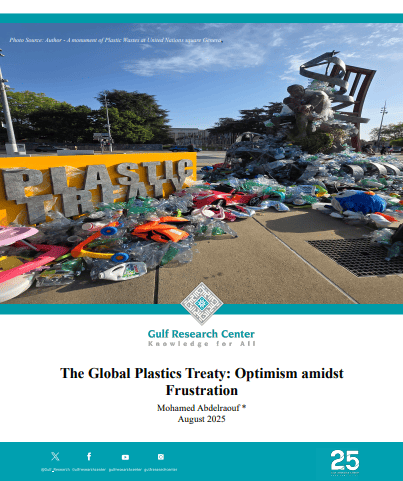
The Resumed Fifth Session of the Intergovernmental Negotiating Committee to Develop an International Legally Binding Instrument on Plastic Pollution, including in the Marine Environment (INC-5.2) was held in Geneva, Switzerland, fromAugust 5 to 15, 2025, attended by over 2,600 delegates, representing 183 Member States and about 400 observer organizations, including academia, NGOs, waste pickers, indigenous peoples, women, youth, as well as fossil fuel and chemical industry lobbyists. Seventy Ministers and Vice Ministers, as well as 30 other high-level representatives, also attended and participated in informal roundtables on the margins of the session.
Of the approximately 10 billion tonnes of plastic produced since the 1950s, studies show that over 8 billion tonnes are now waste, with between 10-15 million tonnes of plastic leaking into the marine environment each year. This number is expected to more than triple by 2050. As plastic pollution becomes ever more visible and serious both on land and in waterways, in 2022, the UN Environment Assembly (UNEA) adopted Resolution 5/14, intiating the process to develop an international legally binding instrument to end plastic pollution. This resolution mandated the creation of an Intergovernemntal Negotiating Committee (INC) to draft the treaty, focusing on the full life cycle of plastics, from production to disposal.
The resumed fifth session of the Intergovernmental Negotiating Committee (INC5.2) presented member states with their second chance to reach an agreement, given that they were unsuccessful at the fifth session in Busan, Republic of Korea, in December 2024. With ever-mounting levels of plastic waste, scientifically proven to be poisoning ecosystems and flooding human bodies, delegates met in Geneva hoping to overcome significant differences in order to stem the tide of plastic pollution and deliver on their mandate from the United Nations Environment Assembly (UNEA). Working in contact and informal groups for most of the meeting, they exchanged views and engaged in textual negotiations based on a Chair’s Text issued in December 2024.
The most inflexible issues in the negotiations concerned whether or not the UNEA mandate covered issues related to sustainable production of plastic, the raw material used to make plastic products, and who would be responsible for financing the implementation of the future treaty. On financing, they debated the inclusion of a proposed new categorization of countries, singling out “parties with a capacity” to contribute finances for implementation in the most vulnerable countries. This group could include developing countries that have plastic production and/or manufacture plastic products and have benefitted from the profits from these sales. Delegates were also re-discussing the UNEA language setting out the scope, which is the full life cycle of plastic, with many supporting this approach and a few insisting on “renegotiating.”
The Geneva meeting revealed two clear opposing camps with deep divisions between the two sides . The "ambitious" parties, including the European Union, Canada, Australia, and many Latin American and African countries, as well as island nations, want to eliminate polluting plastics from the planet and, more importantly, significantly reduce global plastic production. The other camp, which primarily includes oil-producing countries, rejects any restrictions on the production of plastic, a derivative of crude oil, and any ban on particles deemed harmful to the environment or global health.
Many delegates expressed disappointment about the lack of clarity and the “untransparent” working modalities that plagued the meeting, particularly the development of the two Chair texts, which some felt were “imbalanced.” In the end, INC Chair Luis Vayas (Ecuador) had little choice but to adjourn the meeting, announcing that there would be a further resumed meeting at a date yet to be determined. What remained unclear was which document further negotiations would be based on.
The meeting’s failure was a great disappointment especially environmental scientists and activists. The Scientists’ coalition, for instance, had called for an effective plastics treaty highlighted the need for the future treaty to cover the full life cycle of plastics. Meanwhile , te international council of chemicals associations urged delegates to promote circularity of plastics and invest in innovation and product design to accelerate the transition to a circular economy.
The disappointment comes from the fact that the INC-5.2 was not just another meeting. It was a second chance to adopt a treaty. Like an obstacle course, the path to a treaty was fraught with organizational, procedural, and substantive hurdles including scope, production, financing of plastic products. The fact that no agreement was reached leave an uncertain path forward.
The consequence of the failed talks leaves no clear path for nations to collectively address the mountains of plastic that are filling landfills, clogging oceans and showing up in chunks on beaches and other public places.
Not everyone left Geneva empty-handed, however. While the mandate was not completed, it is not the end of the story. First, a solid majority still exists that want an eventual deal. Second, it has to be acknowledged that multilateralism is not an easy process. Since the adoption of resolution 5/14 only three years have passed while the Paris climate agreement took decades to materialize. Third, there are lessons to be learned from INC-5.2 in order to adopt a different, inclusive, and more transparent process going forward.
It is now time to regroup, assess positions, and determine where there is common ground or room to compromise. The process remains in the balance, without clarity on key issues.
The work must continue and cannot stop as plastic pollution will not stop either. Therefore, the high expectations for an ambitious agreement should be kept in the hope that , once adopted, a treaty will be able to evolve and strengthen over time, like other multilateral arrangements.
* Dr. Mohamed Abdelraouf is the Director of the Environmental Security and Sustainability Research Program at the Gulf Research Center.