

Commentary & Analysis
Values, Symbolism, or Strategy? Europe’s Fault Lines on Palestinian Statehood
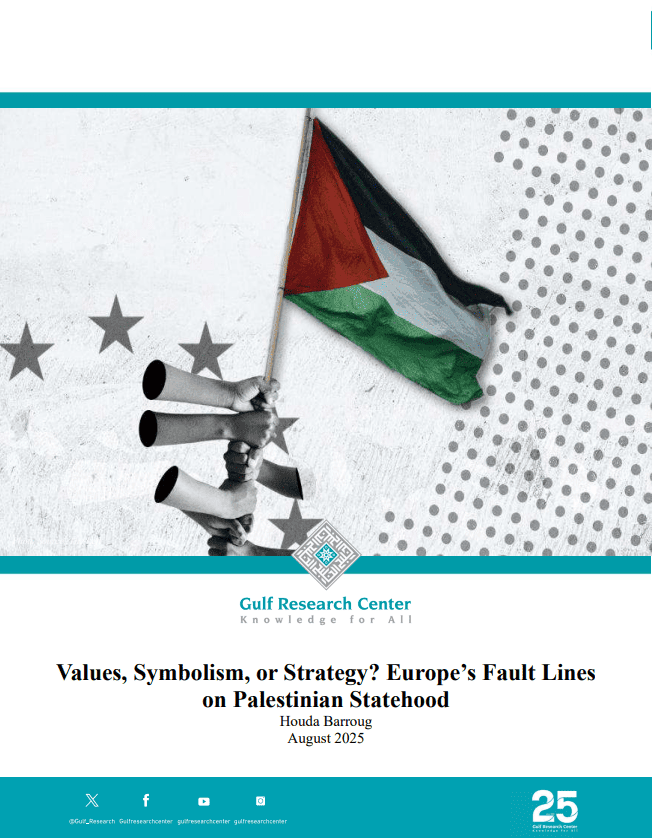
European stances on the question of Palestinian statehood were never straightforward. For decades, the prospect of recognizing Palestinian statehood remained on the fringes of continental debates—a steady, sometimes uneasy presence driven by the ebb and flow of global and regional dynamics. Recently, the question has become a vital and contentious theme in European foreign policy, with the number of member states willing to recognize Palestinian sovereignty increasing significantly in a short period.
Currently, the EU is experiencing a slight, but unprecedented shift towards the recognition of Palestinian statehood. Eleven of the EU's 27 member nations have openly recognized Palestine, with France, the UK, and Malta expected to join in September, bringing the total to fourteen. This surge reflects the most significant momentum the bloc has witnessed on this issue, fueled by the Gaza war, increased humanitarian pressure, and a growing awareness that Europe must act when the United States is reluctant to do so. Simply, recognition has moved from the periphery to the core of European diplomacy.
Drivers Behind the Shift: Why Now?
Though not necessarily novel, this wave of reflection still reflects the urgency to respond to the momentum built by civil society and international community as Israel continues its offense and utter abuse of international law. Most importantly, it reflects the long-awaited need for the EU to match its call and insistence on international norms and human rights.
This is particularly the case for France and the UK, which have long conditioned their engagement on abiding by and respecting European norms and values. For these states, recognition serves to bridge the credibility gap between Europe's self-image as a champion of international law and its consistent silence in the face of Gaza's genocide.
The first waves of recognition took place long before the contemporary bloc took its current shape. Sweden’s recognition in 2013, followed by Ireland and Spain in May 2024, marked the fresh urgency within the bloc and initial shifts in momentum.
France will be the first G7 and permanent UN Security Council member to recognize Palestine, suggesting the prospect of additions among previously indecisive Central EU states such as Belgium and Luxembourg, and other Western powers such as Canada and Australia. France’s decision to recognize Palestine has already shaken EU dynamics and policy change: though initially staunchly opposed to recognition, Germany’s Friedrich Merz suspended arms exports to Israel for use in Gaza. Italy remains uncertain of the efficiency of the recognition. Denmark, on the other hand, is considering sanctions on Israel as EU presidency holder. The domino effect reached Australia as it recently announced joining France in its recognition of Palestine in September.
Combined with these renewed moral imperatives, there are practical considerations: restoring EU credibility in the face of US disengagement, defending domestic political capital, and sustaining influence in vulnerable, challenging global alliances. Other states seek humanitarian urgency (Ireland and Spain,) and others consider defense partnerships, energy collaborations, or migration patterns, eventually adopting cautious positions (Austria and Netherlands.)
A Glimpse into EU division and dynamics
The EU's rift on Palestinian recognition reflects opposing geopolitical interests and visions of Europe's position in international affairs, rather than a mere disagreement over moral discourse. For governments such as Spain, Ireland, and the soon-to-be France and UK, recognition has become a means of closing the growing gap between the EU's self-image as a defender of international law and its apparent inaction in the face of persistent abuses in Gaza. In this perspective, recognition is not a reward for a future peace accord, but rather a tool for rebalancing unequal negotiations, signaling to Israel that the status quo would no longer be tolerated without cost.
In contrast, Germany, Italy, and various Central European governments view immediate recognition as strategically counterproductive. Their policy assessments weigh the risk of contradicting important allies, particularly the US and Israel, against the unknown advantages of this recognition in terms of conflict resolution, security, and economics. Understandably, countries with extensive defense industry ties to Israel and Zionist alliances approach recognition with extreme vigilance.
Others, whose politics are influenced by strong pro-Palestinian communities, see domestic political benefit in taking a public, values-driven stance. These assessments are variable, as public opinion fluctuates in response to images from Gaza, civil society pressure, and the perception of a standstill in US-led mediation. What this has led to is two strategic interpretations of Europe’s leverage: one that sees recognition as a driver for peace and stability, and another that believes it would end Europe's, though limited, still valuable role as a mediator.
Implications and Consequences
A growing number of EU member states are pushing for recognition, which serves as both a diplomatic tool and a stress test for the bloc's normative power claims. For advocates in Europe, recognition is also used to restore EU action at a period of American diplomatic disengagement and deepening Israeli hardening stance and defiance. These governments seek to recoup lost credibility at home and on the global stage by tying their actions to specific humanitarian and legal rationales, frequently stressing the need to respect international law as civilian casualties in Gaza rise.
However, the implications are not one-sided. The move also reveals and exacerbates gaps throughout the continent: unanimity on values exists only in discourse, while strategic priorities and coalition frameworks—energy partnerships, defense connections, migratory flows—pull member states in opposing ways. For those refusing recognition, the overarching concern is not the moral rationalization, but the safeguarding of diplomatic capital with the US and Israel, and the fear that unilateral moves would hinder the EU's growing limitations in influence with both parties to the dispute.
Externally, Israel faces increasing diplomatic isolation and open criticism from key EU capitals— a development that has the potential to change the balance of the transatlantic partnership. Israel's condemnations, ambassadorial withdrawals, and retaliatory measures have so far failed to halt the trend, and in some instances have strengthened the resolve of European countries anxious not to be regarded as involved in the Gaza war's human cost. At the same time, the moves by France, Spain, and others signal that countries outside the EU should also reevaluate their diplomatic strategy, raising the stakes even higher.
Future Prospects
Looking ahead, the developments in Europe's approach to Palestinian statehood have the potential to induce a global diplomatic reshuffle—or cement the bloc's marginalization as a viable strategic actor. If Belgium, Luxembourg, and Malta follow suit, the majority of EU member states would have recognized Palestine, establishing a visible new foundation for European foreign policy, albeit without formal consensus. This might put pressure on domestic debates in Germany and Italy, whose attitudes have grown increasingly difficult to sustain in the face of clear evidence of popular mobilization and humanitarian crises.
However, recognition has little practical consequences on the ground in Palestine; it is primarily a political signal, not a solution. Without a significant adjustment in Israeli or US policy—both of which are now opposed to recognition—the symbolic avalanche risks deepening tensions, fuelling resentment inside the EU, and provoking procedural opposition from Israel's allies. Ultimately, the current scenario demonstrates the limitations of values-based diplomacy when strategic consensus cannot be reached.
Europe's "recognition wave" will thus be measured by the tally of nations joining in and by whether it will generate meaningful policy moves in the Middle East peace process. Most importantly, it will be measured by whether the bloc can eventually reconcile its normative narrative with its fractured strategic reality- or whether this shift in momentum is simply a strategic cosplay that will eventually expose its widening gap between the two.
*Houda Barroug is a Researcher at the Gulf Research Center (GRC)