Commentary & Analysis
Japan-Saudi Arabia 70th Anniversary: Reflecting on a Strategic and Evolving Partnership
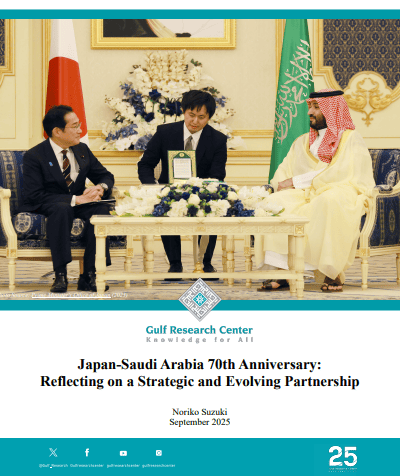
In 2025, Japan and the Kingdom of Saudi Arabia mark the 70th anniversary of their diplomatic relations—a milestone that highlights a dynamic, resilient, and deepening partnership between one of Asia’s most advanced economies and the Arab world’s largest economy. Over the past seven decades, the relationship has evolved from a foundation of energy trade into a multi-dimensional strategic partnership encompassing investment, infrastructure, technology, culture, and regional stability. The 70th anniversary thus provides an opportunity to also reflect on the bilateral trajectory, assess the current landscape, and identify future avenues for cooperation—particularly in light of shared long-term ambitions such as Saudi Arabia’s Vision 2030 and Japan’s Free and Open Indo-Pacific strategy.
1. Laying the Groundwork for a Strategic Partnership Japan and Saudi Arabia established diplomatic relations in 1955, during a period when Japan was rebuilding its industrial base in the aftermath of World War II and urgently seeking stable and long-term sources of energy. Saudi Arabia, meanwhile, was emerging as a major oil-producing power and found in Japan a committed, technology-oriented, and industrially advanced partner. Crude oil trade quickly became the cornerstone of the bilateral relationship. By the 1970s, Japan had become one of the largest importers of Saudi oil, while Saudi Arabia emerged as Japan’s principal supplier.
A historic turning point came in 1974 with the official visit of King Faisal to Japan— the first such visit by a Saudi monarch. The event not only symbolized the deepening of diplomatic ties but also initiated a high-level political dialogue and set the tone for long-term strategic cooperation. That same decade marked the beginning of large-scale industrial and infrastructure cooperation, as leading Japanese trading houses and engineering firms such as Mitsubishi Corporation, Marubeni, Sumitomo Corporation, and JGC Corporation expanded their presence across Saudi Arabia.
Among the most prominent examples of this cooperation has been the entry of Sumitomo Chemical and Mitsubishi Chemical into the Kingdom’s growing petrochemical industry, often in partnership with Saudi Aramco. These ventures marked a transition from simple buyer-seller relationships in crude oil toward valueadded, industrial cooperation.
One of the flagship projects is the Rabigh Refining and Petrochemical Company (Petro Rabigh), a joint venture established in 2005 between Saudi Aramco and Sumitomo Chemical. Located on the Red Sea coast in Rabigh, this integrated complex includes both refining and petrochemical production facilities. Petro Rabigh was one of the first initiatives under Saudi Arabia’s strategy to attract foreign direct investment into its downstream sectors and reflects Japan’s confidence in the Kingdom’s industrial ambitions. The project not only supports domestic Saudi value creation, but also secures long-term supply chains for Japanese industries.
Mitsubishi Chemical has also played an important role in Saudi Arabia’s petrochemical landscape through its involvement in joint ventures and technology transfer initiatives aimed at developing sustainable materials and chemical manufacturing. These industrial engagements have facilitated the sharing of Japanese expertise in efficiency, environmental management, and innovation.
Beyond the chemical sector, Japanese investment has expanded into power generation, water desalination, infrastructure, and transportation. Companies such as Hitachi, Toshiba, and Kawasaki Heavy Industries have contributed to power and water infrastructure, while Toyota and Nissan have long-standing automotive and distribution networks across the Kingdom. These sustained investments helped shape the industrial foundation of modern Saudi Arabia and also created enduring institutional trust between both countries.
In this context, the historical Japan–Saudi energy relationship established a solid foundation for long-term cooperation not just in energy security, but also in technology exchange, industrial development, and strategic economic diversification. These early engagements set the stage for the broader and more strategic partnership witnessed today under frameworks such as Saudi–Japan Vision 2030.
2. Strategic Transformation and Saudi Vision 2030
The 21st century marked a turning point. While energy trade remains essential, both countries have moved toward a broader strategic partnership. The most significant catalyst for this transformation has been Saudi Vision 2030, the Kingdom’s longterm blueprint launched in 2016 under the leadership of His Royal Highness Crown Prince Mohammed bin Salman bin Abdulaziz Al Saud. His vision aims to diversify the economy, reduce dependence on oil, empower youth and women, and elevate Saudi Arabia’s global presence.
Driven by Crown Prince Mohammed bin Salman’s unwavering commitment to reform and innovation, Saudi Arabia has embarked on a series of bold initiatives, including the creation of NEOM—an ambitious smart city project on the Red Sea that embodies the Kingdom’s future-oriented transformation in sustainability, technology, and lifestyle.
Recognizing Japan’s industrial, technological, and managerial strengths, Saudi Arabia identified Japan as a key strategic partner in realizing Vision 2030. In 2017, the two countries launched the “Saudi–Japan Vision 2030” bilateral cooperation framework. This initiative links Saudi reform goals with Japanese capabilities across diverse sectors such as infrastructure, healthcare, renewable energy, smart cities, entertainment, and manufacturing.
Japanese firms have played a prominent role in Saudi Arabia’s diversification drive under Vision 2030. In the infrastructure sector, companies such as Hitachi Zosen and Toray have been actively involved in water desalination projects, helping address Saudi Arabia’s long-term water security challenges. In transport, Mitsubishi Heavy Industries and NEC have contributed to metro and railway development, providing advanced signaling systems and energy-efficient solutions. Japanese firms are also engaged in smart city and digital transformation initiatives, bringing expertise in automation, energy efficiency, and cybersecurity to projects like NEOM and other giga-projects.
Beyond infrastructure and technology, Japan’s cultural and creative industries are also becoming increasingly influential in Saudi Arabia. The Kingdom’s rapidly growing entertainment sector has embraced Japan’s globally recognized strengths in anime, gaming, and digital content creation. For example, Saudi investors have partnered with Japanese studios and gaming companies to co-develop projects, while anime festivals and e-sports tournaments featuring Japanese content are drawing significant youth engagement. These collaborations highlight how the partnership is expanding beyond traditional energy ties into areas that resonate strongly with Saudi Arabia’s younger generation.
3. Bilateral Diplomacy and Geostrategic Engagement
Japan-Saudi Arabia relations are not limited to the economic and energy realm. While the two sides do not maintain a formal military alliance, their diplomatic and security dialogue has steadily deepened, reflecting a shared recognition of the complex geopolitical environment of the Middle East and the Indo-Pacific. Strategic consultation between the two governments has evolved beyond traditional economic and political matters to include regional stability, maritime security, counterterrorism, and energy infrastructure protection.
Japan has consistently emphasized the importance of Middle East peace and stability—not only as a matter of international responsibility, but also as a strategic imperative for its own energy security. The escalation of tensions between the United States and Iran as well as between Israel and Iran, as well as conflicts in Yemen and Gaza, have underscored the vulnerability of maritime transport routes, particularly in the Strait of Hormuz. In response, Japan has adopted an active but non-aligned approach that supports de-escalation and dialogue while maintaining diplomatic relations with all major regional stakeholders.
Since early 2020, Japan has deployed Maritime Self-Defense Force vessels and patrol aircraft to the northern Arabian Sea and Gulf of Oman under an independent mission—distinct from the U.S.-led coalition—to protect commercial shipping, including Japanese-flagged tankers. This mission highlights Tokyo’s commitment to ensuring freedom of navigation and reflects Japan’s willingness to assume greater international responsibility within the limits of its pacifist constitution.
Japan and Saudi Arabia have institutionalized their security dialogue through regular high-level meetings, including foreign and defense ministry consultations. These dialogues address a broad range of issues such as cyber security, military medical cooperation, arms control, and regional threat assessments. Japan has also increased its engagement with the Gulf Cooperation Council (GCC) and held strategic consultations with the Gulf countries on regional security frameworks, energy resilience, and humanitarian assistance coordination.
In multilateral settings, both countries have cooperated on broader initiatives such as the G20, where Saudi Arabia and Japan have promoted global economic stability and pandemic response strategies. Notably, Crown Prince Mohammed bin Salman’s participation in the 2019 G20 Osaka Summit and Prime Minister Fumio Kishida’s recent outreach to Gulf leaders highlight the importance both countries place on diplomatic visibility and multilateral engagement. Japan has welcomed Saudi Arabia’s growing role as a regional convener and has expressed interest in contributing to regional mediation and reconstruction efforts, including in postconflict scenarios such as Yemen or Syria.
Furthermore, there is growing convergence in how the two countries perceive nontraditional security threats. Japan’s Indo-Pacific strategy emphasizes connectivity, rule of law, and maritime domain awareness—all of which align with Saudi Arabia’s emerging interest in maritime infrastructure development along the Red Sea and its broader geopolitical positioning in the Indian Ocean region. Dialogue on strategic technology, space security, and economic security is also gaining traction.
Moving forward, Japan and Saudi Arabia are expected to deepen their security cooperation through expanded institutional dialogue, joint training programs, and shared participation in regional stability frameworks. While formal defense alignment remains unlikely due to Japan’s constitutional constraints and Saudi Arabia’s diverse global partnerships, both countries are increasingly acting as complementary strategic actors—prioritizing stability, conflict prevention, and a rules-based regional order.
4. Soft Power Diplomacy and Human Exchange-From Expo 2025 Osaka to Expo 2030 Riyadh
While economic and political ties between Japan and Saudi Arabia have long been well-established, cultural diplomacy and people-to-people exchange have increasingly emerged as critical pillars of the bilateral relationship—especially in the past decade. As Saudi Arabia advances cultural openness under Vision 2030, Japan’s soft power in pop culture, education, and innovation has found strong resonance among Saudi audiences, particularly younger generations.
Japanese pop culture—including anime, manga, digital games, and design—has become a cultural bridge between the two nations. Saudi youth demonstrate strong affinity for Japanese content, with anime festivals, cosplay events, and Japanese film screenings gaining traction across major cities such as Riyadh and Jeddah. The Kingdom’s General Entertainment Authority and Ministry of Culture have hosted Japan-themed events, and Japanese animation studios are increasingly exploring opportunities to co-produce content with Saudi partners. In 2022, Saudi Arabia’s MiSK Foundation signed cultural collaboration agreements with Japanese institutions, aiming to support youth engagement and cross-cultural learning.
E-sports and gaming represent a rapidly growing arena of bilateral interaction. Japan, as a global leader in game development, is increasingly engaged with Saudi Arabia’s expansive digital entertainment strategy. The upcoming E-Olympics 2025 in Riyadh—hosted under the Saudi Esports Federation—offers a unique opportunity for Japan to participate not only as a competitor but also as a partner in building digital infrastructure, gaming platforms, and creative content. Japanese firms and content creators are being welcomed into Saudi Arabia’s evolving entertainment ecosystem, signaling the depth of mutual interest in this high-growth sector.
Educational exchange is another area showing renewed momentum. Japanese universities are expanding their outreach to Saudi students through joint research programs, scholarships, and technical training initiatives. Likewise, the number of Japanese students and researchers engaging with Saudi counterparts—particularly in the fields of energy, robotics, and Islamic studies—is gradually increasing. Think tanks and academic institutions, including the Gulf Research Center and Japanese public policy institutes, are deepening collaborative efforts through conferences, visiting fellowships, and youth dialogue platforms.
Tourism and cultural heritage exchange are also gaining visibility. With Saudi Arabia’s new openness to international visitors and Japan’s global reputation for quality tourism services, both countries have begun to explore cooperation in hospitality training, heritage conservation, and cultural tourism development. Saudi Arabia is working to attract Japanese tourists by easing visa requirements and promoting destinations such as AlUla, Diriyah, and the Red Sea coast. Meanwhile, Japan is hosting exhibitions introducing Saudi art, archaeology, and cuisine, contributing to a more balanced cultural awareness.
Language education is another long-term area of growth. Japanese language programs are being introduced in Saudi schools and universities, while Arabic language and Islamic cultural studies are being promoted at institutions in Japan. These initiatives help cultivate a new generation of cross-cultural experts who can sustain bilateral understanding in the decades to come.
In sum, cultural diplomacy is no longer a peripheral aspect of Japan–Saudi relations—it is becoming central to how both countries build long-term societal bonds. By investing in creative industries, digital collaboration, education, and mutual cultural appreciation, Japan and Saudi Arabia are fostering a more inclusive and future-oriented partnership that extends beyond government and business actors to engage ordinary citizens and future leaders alike.
The 70th anniversary is symbolically and practically enhanced by Saudi Arabia’s high-profile participation in Expo 2025 Osaka, where the Saudi Pavilion is proving to be one of the largest and most innovative. The pavilion highlights Saudi Arabia’s transformation under Vision 2030 and showcases investment, cultural, and technological advancements. It is also expected to feature partnerships with Japanese firms and cultural institutions. Expo 2025 not only serves as a showcase but also as a venue for public diplomacy, academic forums, and business dialogues. It aligns with Japan’s efforts to use global platforms to promote sustainable innovation and regional collaboration.
Looking ahead, Saudi Arabia will host the next World Expo in Riyadh in 2030, following the successful staging of Expo 2020 in Dubai. Japan has expressed strong support for Riyadh’s bid and is expected to participate meaningfully. This continuity of Gulf countries hosting such large-scale global events underscores the region’s growing role on the world stage. For Japan and Saudi Arabia, reciprocal participation in these Expos symbolizes the maturing nature of their bilateral relations and reflects a shared commitment to multilateralism and global development.
6. Charting the Path Ahead: Deepening Saudi–Japan Collaboration in a Changing Global Landscape
As Japan and Saudi Arabia look to the future, their bilateral relationship holds significant potential for expansion across emerging sectors, while also facing a range of strategic challenges. One of the most promising areas for growth is green energy cooperation. Japan’s commitment to achieving net-zero emissions aligns closely with Saudi Arabia’s investments in hydrogen, ammonia, and renewable energy under Vision 2030. These shared goals provide fertile ground for collaboration in sustainable energy development. For instance, Japan and Saudi Arabia are increasingly partnering in the fields of green hydrogen and decarbonization, signaling a shift beyond traditional oil-based ties. ENEOS and Saudi Aramco are currently exploring the production and export of green hydrogen and e-fuels to Japan, advancing both nations’ climate objectives and energy transitions.
The NEOM project serves as a key platform for this partnership, with Japan positioned as a prospective importer of hydrogen produced using solar and wind power. In parallel, regular bilateral dialogues—such as the Japan–Saudi Energy Forum—now encompass carbon recycling, CCUS, and clean fuel technologies, highlighting a shared commitment to a future-oriented energy relationship.
Localization and technology transfer also represent important avenues for deepening cooperation. Japanese firms, known for their excellence in manufacturing and automation, can play a pivotal role in supporting Saudi Arabia’s industrial diversification by developing local supply chains and enhancing productivity. In the healthcare sector, Japan’s experience with aging populations, advanced medical technologies, and hospital management systems can contribute significantly to the Kingdom’s efforts to modernize its healthcare infrastructure.
Technological collaboration is expanding as Saudi Arabia channels investment into smart cities and artificial intelligence through its giga-projects, including NEOM. These initiatives create opportunities for Japanese companies to showcase their strengths in robotics, sustainable urban design, and digital innovation. Meanwhile, the growing tourism and services sector—an emerging pillar of Saudi Arabia’s postoil strategy—offers Japan a role in areas such as hospitality training, cultural heritage conservation, and destination management.
A rapidly expanding area of shared interest lies in digital entertainment and E-sports. Saudi Arabia’s investments in cultural industries—including gaming, anime, and the upcoming E-Olympics 2027 in Riyadh—align with Japan’s global leadership in content creation. This convergence opens new pathways for cooperation in creative industries, digital media, and youth engagement.
At the same time, the relationship must navigate complex regional dynamics. Geopolitical instability remains a constant concern, particularly in light of renewed tensions between the United States, Israel on one side and Iran on the other, which pose risks to Gulf security, energy flows, and investor confidence. Japan, as a major energy importer from the region, must maintain robust diplomatic engagement to help mitigate such risks.
Strategic competition in the Gulf is also intensifying. Countries such as China and South Korea are expanding their economic and technological presence in Saudi Arabia, creating competitive pressure for Japanese firms in key sectors. Additionally, regulatory complexity and differences in business culture continue to pose operational challenges. While Vision 2030 has introduced significant reforms to improve the investment environment, navigating local legal and administrative systems still requires careful coordination and long-term commitment.
Moreover, the rising global emphasis on environmental, social, and governance (ESG) standards presents new considerations for Japanese companies operating in Saudi Arabia. Ensuring compliance with international norms on labor rights, environmental protection, and transparency will be essential, particularly as global stakeholders place greater scrutiny on corporate responsibility abroad.
To fully realize the partnership’s potential, both governments will need to enhance institutional coordination, sustain high-level political dialogue, and support ongoing public–private collaboration. Frameworks such as Saudi–Japan Vision 2030, Expo 2025 Osaka, and the E-Olympics initiative offer valuable platforms for advancing shared interests and forging a deeper, more resilient strategic relationship.
Conclusion
The 70th anniversary of diplomatic relations between Japan and Saudi Arabia represents more than a commemorative milestone; it reflects the steady maturation of a bilateral partnership that has endured the shifting tides of global politics and economic transformations over seven decades. What originated as a relationship grounded in energy interdependence has expanded into a comprehensive strategic framework that incorporates trade, investment, technology, culture, education, and diplomacy. This evolution underscores both countries’ abilities to adapt to changing international environments while anchoring their ties in shared interests and mutual respect.
Looking to the future, the complementarities between Saudi Arabia’s ambitious Vision 2030 agenda and Japan’s expertise in technology, sustainability, and innovation provide fertile ground for deeper cooperation. Joint efforts in clean energy, advanced manufacturing, healthcare, digital transformation, and human resource development can significantly contribute to each country’s national goals while reinforcing their strategic alignment. Expo 2025 in Osaka and Expo 2030 in Riyadh will serve as global platforms to showcase this cooperation, allowing both nations to highlight their visions for modernization, inclusivity, and global engagement. Meanwhile, people-to-people exchanges—through education, tourism, and cultural diplomacy—will strengthen the societal foundations of the relationship and ensure its continuity across generations.
Nevertheless, this partnership will need to remain responsive to external challenges, including regional volatility, global economic uncertainties, and intensifying competition from other strategic partners. These pressures highlight the importance of sustained trust, long-term vision, and pragmatic adaptation. By aligning their cooperation with values of stability, innovation, and constructive global engagement, Japan and Saudi Arabia are well placed to chart a forward-looking partnership that is both resilient and relevant in shaping the regional and international order of the twenty-first century.
Noriko Suzuki (MA & MSc) is a Senior Advisor at Gulf Reserch Center (GRC.