
Commentary & Analysis
Saudi-Pakistan Mutual Defense Agreement: What It Is, and What It Is Not
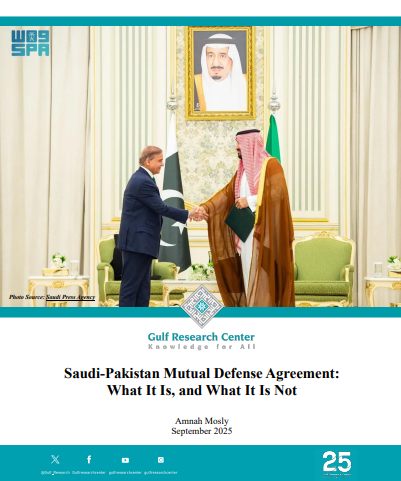
In Riyadh on September 17, 2025, Saudi Arabia and Pakistan signed what both sides described as a “strategic mutual defense agreement,” a step that formalizes nearly eight decades of ties between the two countries. The deal can be seen as carrying both symbolism and substance: it represents not only the consolidation of a longstanding security partnership but also a statement of intent at a moment of heightened regional volatility.
At its core, the agreement co mmits Saudi Arabia and Pakistan to treat any aggression against one as aggression against both. According to official statements, the deal reflects the shared commitment of both nations to enhance their security and to achieve stability and peace in the region and the world, and aims to develop aspects of defense cooperation between the two countries to strengthen joint deterrence against any aggression.
The pact’s timing cannot be divorced from the broader regional context. In recent years, Israel’s military operations have expanded beyond Gaza to encompass strikes on Lebanon, Syria, Iran, and now, Qatar. The signing came less than ten days after Israel’s September 9 attack on Qatar’s capital, Doha, striking diplomatic and civilian facilities and killing six people, including a Qatari security official. For the Gulf states, the assault on Qatar, a fellow member of the Gulf Cooperation Council (GCC), led to a swift collective response: GCC leaders announced that they would take steps “to activate the mechanisms of joint defense and the Gulf deterrence capabilities.”
The Doha strike also raised uncomfortable questions by some about U.S. foreign policy in the region. Against this backdrop, the attack was viewed as particularly shocking, given Qatar’s status as the host of the U.S. Central Command Forward headquarters. Despite this, Washington refrained from condemning Israel, prompting the GCC to calling on the U.S. to use its leverage on Israel following the unprecedented Israeli strikes. At the Doha summit on September 15, Gulf Cooperation Council Secretary General Jasem Mohamed Al-Budaiwi stated that “We also expect our strategic partners i n the United States to use their influence on Israel…to stop this behavior...They have leverage and influence on Israel, and it’s about time that this leverage and influence be used.”
Put into context, Gulf states have grown increasingly wary of assuming that the current U.S. security umbrella is either automatic or unconditional. At the same time, it is important to avoid overstating the immediate impact of the deal. Security experts note that such agreements take years, not days, of negotiation and that the timing of the signing, while politically resonant, does not imply the accord was drafted as a direct response to the Doha attack. Reports indicate that discussions had likely been underway for at least a year.
Equally important, the pact should not be viewed as a mechanism whereby Pakistan would transform into a replacement for the United States as Riyadh’s (or the Gulf’s) principal security partner. The U.S. remains embedded in Gulf defense through military bases, air defense systems, and naval presence. It is an arrangement that cannot be simply uprooted. By and large, U.S.-GCC security ties remain intact.
Instead, the agreement should be seen as complementary: strengthening Saudi Arabia’s network of security partners while signaling to Washington that Gulf states are no longer willing to wait passively and exclusively for U.S. reassurances. In this sense, the pact may increase pressure on the U.S. to clarify and reinvigorate its regional role, particularly as Israel’s actions strain American credibility with key Gulf partners.
The Saudi-Pakistan mutual defense agreement formalizes a partnership rooted in decades of cooperation. Its timing, following Israeli attacks on Qatar, imbues it with symbolic weight and highlights the region’s deepening security anxieties. Yet it would be a mistake to see the pact as supplanting U.S. commitments in the Gulf. What it represents instead is both a new approach and a supplement to existing frameworks. For Saudi Arabia, the deal underscores a determination to broaden its security partnerships in a volatile environment. For Pakistan, it demonstrates that despite economic difficulties and strained ties with the West, it retains strategic relevance. Thus, the pact is less about immediate transformation and more about diversification: a sign that the Middle East’s security architecture is evolving, and that the next phase of regional politics will be shaped by a wider network of alliances, of which the Saudi-Pakistan defense pact is now an additional pillar.
*Amnah Mosly is a Researcher at the Gulf Research Center (GRC)