Commentary & Analysis
Middle Powers in a Multipolar World: The Evolving Role of Gulf States in Global and Regional Order
Executive Summary
Gulf states have moved from the margins of global politics closer to the center of a rapidly shifting international order. Once defined primarily as energy suppliers under U.S. protection, these countries now leverage geography, financial power, and diplomatic agility to act as brokers between competing powers, conveners of global dialogues, and emerging architects of governance frameworks. Their rise reflects not only structural shifts in the global system but also deliberate strategies to transform vulnerabilities into platforms of influence.
This paper argues that the Gulf states represent a new archetype of middle power behavior, one that breaks with traditional models. Unlike established middle powers that rely on multilateralism and niche influence, the Gulf’s approach is pragmatic, flexible, and multi-dimensional. The GCC states balance relations across great power divides, from the United States and Europe to China, Russia, India, and the Global South. They invest in economic corridors, sovereign wealth diplomacy, and climate and digital governance initiatives while cultivating reputations as credible mediators in conflicts from Sudan to Ukraine. At the core of this transformation lies strategic autonomy, the ability to pursue independent foreign policies without severing traditional alliances. Gulf capitals are diversifying their defense industries, embedding themselves in global financial and technological ecosystems, and spearheading institutional innovation. From Saudi Arabia’s role within the G20 and other multilateral initiatives, to the UAE’s agenda-setting role at COP28 and in AI, and Qatar’s humanitarian mediation in numerous settings, the Gulf is moving beyond mere participation and into agenda-shaping.
Yet their ascent does not come without obstacles and risks. The continued heavy dependence on hydrocarbons, the challenge of translating diversification strategies into sustainable non-oil economies, technological reliance on foreign expertise, and persistent regional volatility all threaten in one way or another to constrain their ambitions. The credibility of their global role will ultimately hinge on sustaining domestic reform, managing external partnerships without entrapment, and balancing short-term pragmatism with long-term institutional resilience. The central conclusion is that Gulf states are no longer norm-takers but increasingly norm-setters, not merely adapting to global disruption but helping to shape its direction. Their rise offers a blueprint for how small and medium-sized states can leverage geography, wealth, and diplomacy to exert disproportionate influence in a multipolar world. By redefining what it means to be a middle power, the Gulf states are positioning themselves as indispensable power brokers, and potential architects of the 21st-century international order.
I. Gulf States as Unconventional Middle Powers: Contributing to Redefining the Global Order
Beyond Traditional Middle Power Theory
In the classic lexicon of international relations, middle powers are described as states that occupy a position of moderate influence, neither dominant global actors nor peripheral players. They are usually characterized by their commitment to multilateralism, norm entrepreneurship, and support for a rules-based international order. Countries like Canada, Australia, and the Netherlands have historically embodied this role, promoting stability, conflict mediation, and institutional cooperation.
The Gulf Cooperation Council (GCC) states, particularly Saudi Arabia, the United Arab Emirates (UAE), and Qatar, challenge this traditional theory. They are not “middle” in a strictly powerbased hierarchy, nor are they constrained by the normative commitments that have traditionally defined middle power behavior. These states do not simply reinforce existing global norms; they often reshape, reinterpret, or selectively adopt them to suit their strategic interests. Their rise represents a shift from the classical middle power as a stabilizing "bridge" to a more unconventional actor functioning as a geopolitical pivot.
Unlike traditional middle powers that seek to mediate or balance tensions among major powers, Gulf states increasingly shape the trajectory of great power competition itself. Their geostrategic location at the intersection of Europe, Asia, and Africa, coupled with their energy dominance and financial muscle, allows them to position themselves as agenda-setters rather than mere conduits. The ability of Gulf states to attract simultaneous high-level engagement from the United States, China, Russia, India, and the European Union speaks to this new reality: the Gulf is no longer a peripheral energy supplier or security client; it is also a potentially active co-architect of multipolarity.
The UAE’s normalization of ties with Israel through the Abraham Accords, facilitated in coordination with the U.S. but independently pursued, demonstrates how Gulf states are increasingly asserting strategic autonomy within the international system. Similarly, Saudi Arabia has emerged as a credible diplomatic actor, hosting high-level mediation efforts such as the U.S.– Russia summit in Riyadh, facilitating talks between Ukraine and the United States, and engaging in efforts to resolve the conflict in Sudan. Most notably, Riyadh is not merely supporting Gaza but is actively working to spearhead a broader international coalition with the explicit objective of resolving the Palestinian issue, an initiative that could prove far more consequential for longterm regional stability. This approach reflects a shift from reactive diplomacy to proactive statecraft, positioning Saudi Arabia as a key architect of new conflict resolution frameworks in the Middle East. Meanwhile, Qatar’s engagement with both the Taliban and Western governments after 2021, the ongoing negotiations between Israel and Hamas, and Saudi Arabia’s careful balancing between Washington and Beijing all challenge outdated binaries of ally versus adversary and East versus West.
What sets the Gulf states apart is that their unconventional middle power role is not occurring in isolation but is deeply embedded in a broader systemic shift. As the international order fragments, marked by contested norms, weakened alliances, and intensifying great power rivalry, these states have seized the moment to translate their middle power behavior into strategic autonomy. Rather than aligning fully with any single pole, they use multi-vector diplomacy to maximize flexibility, hedging risks while elevating their agency in global governance. In this sense, the Gulf’s rise as ‘unconventional middle powers’ is inseparable from the structural conditions of a multipolar world that reward agility, diversification, and independent statecraft.
Strategic Autonomy in a Fragmented World
The international system is undergoing a profound transformation. The post-Cold War moment, defined by unipolar dominance, liberal institutionalism, and a presumed convergence around Western norms, is steadily unraveling. In its place, a more fragmented and fluid world order is emerging, characterized by contested rules, declining trust in multilateral institutions, and intensified strategic competition among major powers. The rise of multipolarity has been accompanied by overlapping crises, from geopolitical conflict and economic instability to climate and technological disruption, that have exposed the limits of existing governance frameworks. As traditional alliances fray and ideological blocs reassert themselves, states are increasingly compelled to diversify partnerships, hedge risks, and assert greater agency in managing their external relations.
Within this shifting context, Gulf states have embraced strategic autonomy, defined as the capacity to act independently of traditional allies and rivals alike. Rather than fully aligning with any global power, they pursue a sort of multi-vector diplomacy that keeps multiple doors open and all options on the table. Rather than choosing sides, Gulf states are balancing relationships to maximize strategic leverage.
This shift in global conditions did not, on its own, propel the Gulf states into positions of greater influence; rather, the combination of these structural openings with assertive national strategies that enabled their rise. A key driver was the recalibration of risk perception among Gulf leadership. Rather than treating geopolitical uncertainty as a liability, leaders increasingly saw it as an opportunity to craft more independent foreign policies.
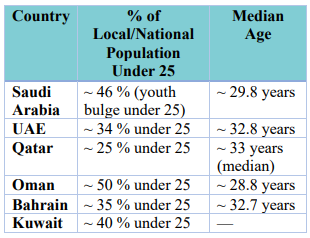
Several factors underpinned this shift. First, generational leadership transitions in Saudi Arabia, the UAE, and Qatar brought to power younger rulers, such as His Royal Highness Crown Prince and Prime Minister Mohammed bin Salman, His Highness Sheikh Mohammed bin Zayed, and His Highness Sheikh Tamim bin Hamad Al Thani, who have shown greater willingness to take calculated risks and redefine their countries’ external postures. Yet this generational change extends beyond the leadership level. A growing number of young, highly educated Saudis, Emiratis, and Qataris have entered the ranks of government and policy institutions, shaping new approaches to governance, diplomacy, and national identity that differ markedly from those of the previous generation. By contrast, Oman, Bahrain, and Kuwait have largely maintained older leadership styles, with Oman continuing its tradition of quiet mediation and Kuwait remaining less proactive in regional diplomacy.
Second, confidence grew from having weathered repeated crises, from the oil price collapses of the 1980s and 2014– 15, to the Gulf War, the Arab Spring, and the 2017 GCC rift, which proved the Gulf states’ resilience and capacity to adapt.
Third, doubts over the reliability of U.S. security guarantees, particularly after the 2003 Iraq invasion, the 2011 Arab uprisings, and the perceived U.S. disengagement under both Obama and Trump, pushed Gulf capitals to diversify alliances and pursue multi-vector diplomacy. This approach has been explicitly articulated by Saudi Foreign Minister Prince Faisal bin Farhan, who in 2022 emphasized, “We do not believe in polarization or selecting between one partner and another,” reiterating that the Kingdom will continue to set its policies “based on its own interests” (Hamad, 2022).
Combined with high levels of domestic legitimacy rooted in social contracts and state-led development, the above factors enabled Gulf states to transform vulnerabilities into platforms for influence, positioning themselves as indispensable interlocutors in a fragmented global order increasingly short on trust, flexibility, and mediation capacity.
Simultaneously, the transformation of the global economy provided additional avenues for Gulf states to enhance their strategic relevance. The shifting geography of energy demand, away from the West and towards Asia, has given new weight to their long-standing resource wealth. Moreover, their sovereign wealth funds, with hundreds of billions in assets, have become key instruments of global economic influence. Gulf investments now shape infrastructure development, technology ecosystems, and capital flows from Africa to Europe to Southeast Asia. These financial tools are used not only for returns but also as mechanisms to forge political relationships, secure technological know-how, and build long-term economic interdependence with emerging and established powers alike.
The traditional foundation of Gulf influence, hydrocarbon wealth, remains significant, but it no longer defines the full spectrum of their international clout. During the 1970s oil boom, the Gulf states became integral to the global capitalist system, but their roles were largely reactive: pricing oil, recycling petrodollars, and upholding the securityfor-oil compact with the United States. What has changed is not just the external environment, but the Gulf states’ own strategic posture. A confluence of regional instability, the perceived retrenchment of the U.S. from the Middle East, and the multipolar diffusion of global power created openings, but it was Gulf leadership that actively moved to fill them. Rather than waiting for roles to be assigned by external powers, the GCC states have taken initiatives to shape the regional order themselves: mediating in existing conflicts, recalibrating ties with great powers, and investing in multilateral diplomacy. This marks a shift from a reactive posture to a proactive and diversified foreign policy strategy, giving rise to a new phase of Gulf diplomacy that is more autonomous, assertive, and multidimensional.
From Resource-Based Influence to Multi-Dimensional Diplomacy
Gulf diplomacy today encompasses geopolitical maneuvering, ideological flexibility, strategic investments in soft power, and institutional entrepreneurship. Gulf states are no longer passive investors or aid providers; they are strategic conveners and norm entrepreneurs, actors that actively promote new ideas, values, and standards in international affairs to reshape what is considered acceptable or desirable behavior. The UAE’s efforts in climate diplomacy, exemplified by hosting COP28 in 2023, reflect an emerging role in shaping global governance on issues beyond energy. Saudi Arabia’s growing influence in Islamic multilateralism, through the Organization of Islamic Cooperation (OIC), and its push for tourism, entertainment, and cultural diplomacy signal an ambition to become a hub of soft power in the Muslim and Arab worlds.
At the heart of this balancing act is a form of transactional diplomacy, where partnerships are assessed on the basis of deliverables rather than ideology or historical alliances. This approach offers clear short-term advantages: access to markets, technology transfers, arms deals, and investment inflows. However, it also carries long-term risks, including reputational costs, accusations of opportunism, and potential entrapment in rivalries they seek to avoid. Whether Gulf states can transform this short-term pragmatism into sustainable, long-term influence remains an open question.
The strategic autonomy aspect is apparent in how Gulf states navigate U.S.-China tensions. On one hand, the United States remains the principal security guarantor for most GCC countries, with military bases in Qatar, Bahrain, Kuwait, and the UAE. On the other hand, China has emerged as a top trade partner and energy client, as well as a technology and infrastructure investor through the Belt and Road Initiative (BRI). The two are not seen as mutually exclusive. While the GCC states maintains security assurances from the U.S., it also deepens its economic integration with China. Saudi Arabia and the UAE, for example, have signed strategic partnerships with Beijing, cooperated on 5G development, and welcomed Chinese mediation efforts in regional diplomacy. At the same time, U.S. pressure has constrained some aspects of this engagement: the UAE, for instance, scaled back its cooperation with Huawei on 5G networks due to Washington’s security concerns, highlighting the balancing act required to maintain strategic autonomy.
What this recalibration has not meant is disengagement. In February 2024, Huawei and UAE telecom operator du signed a strategic MoU during the Mobile World Congress in Barcelona to accelerate the 5G-Advanced (5G-A) rollout, establishing a full city-level UAE demo network, a joint innovation center, and incubating services such as holographic conferencing, fixed wireless access (FWA), and enhanced private 5G networks (Tomás, 2024).
The Gulf state’s strategies also stretch beyond the U.S./China dichotomy. The GCC states maintain business ties with Russia even amid Western sanctions, and cultivate relations with India, the EU, and emerging powers in Africa and Southeast Asia. This “all-partners-noenemies” strategy has allowed the Gulf states to avoid entanglement in ideological blocs while maximizing returns from a fragmented world order.
To bolster their strategic autonomy further, Gulf states are increasingly engaging with global and minilateral platforms such as BRICS+, the I2U2, G20, and the India-Middle East-Europe Economic Corridor (IMEC). This active participation is not simply about inclusion; it reflects a deliberate effort to influence the evolving norms and rules of global governance. Rather than being passive followers of international rules, Saudi Arabia and its Gulf partners are positioning themselves as contributors to new standards in diplomacy, trade, and energy cooperation.
Saudi Arabia and the UAE, in particular, have intensified their diplomatic outreach to build robust economic partnerships that support both regional development and broader international cooperation. These partnerships span infrastructure investment, energy coordination, food security, and technology, underscoring their roles as drivers of economic connectivity and global integration. For the UAE, a central instrument in this effort has been the negotiation of Comprehensive Economic Partnership Agreements (CEPAs) with key partners across Asia, Europe, and beyond, part of a broader geoeconomic strategy: leveraging trade, investment, and supply-chain integration as tools of strategic statecraft. A core priority for Saudi Arabia and the UAE is reinforcing their reputation as reliable energy partners, vital for stability in global energy markets, while simultaneously pursuing a Geotechnology agenda. Both countries are investing heavily in renewable energy, energy-tech innovation, and digital infrastructure, including projects in clean hydrogen, smart grids, and solar R&D, as part of broader efforts to build diversified and future-oriented economies.
Since the escalation of the U.S.–China trade war in 2017, the GCC has also embarked on a new phase of trade liberalization. After years of limited progress, the bloc, comprising Bahrain, Kuwait, Oman, Qatar, Saudi Arabia, and the UAE, has launched 12 collective free trade negotiations. In parallel, individual member states, particularly the UAE, have pursued a more agile and independent trade diplomacy strategy, concluding CEPAs with at least 29 countries, including key G20 partners such as Australia, India, Indonesia, Russia, South Korea, and Turkiye.
The Kingdom also places growing emphasis on enhancing South-South cooperation, especially with countries of the Global South. Saudi Arabia’s and the UAE’s accession to BRICS is a pivotal step in this direction. Engagement with BRICS opens new avenues for political and economic coordination with emerging powers and establishes a platform through which the two countries can support more inclusive global development, amplify its voice in multilateral decision-making, and contribute to reshaping financial and governance institutions that better reflect today’s multipolar realities.
Another aspect is mediation. Gulf states are increasingly positioning themselves as neutral brokers in regional and global disputes, leveraging their strategic location, economic weight, and diversified diplomatic ties. Saudi Arabia’s role in Sudanese ceasefire negotiations, talks between Russia and Ukraine, and brokering prisoner exchanges has earned it recognition as a diplomatic problem-solver. The logic behind this “mediation business” is multi-faceted: it allows Gulf capitals to project soft power, cultivate strategic goodwill with multiple parties, and demonstrate their value to great powers as indispensable intermediaries.
Mediation also serves to reduce the risk of regional instability spilling over into their own security and economic environment, while creating platforms for influence in arenas where traditional global powers have lost traction. By positioning themselves as credible venues for dialogue, backed by financial resources, political access, and a reputation for pragmatism, Gulf states aim to diversify their influence, mitigate threats at their periphery, and cement their status as indispensable actors in a multipolar diplomatic landscape.
What distinguishes Gulf diplomacy is not just its scale but its tactical agility. These states can switch between bilateral negotiations, regional alliances, and multilateral forums with ease. They selectively participate in multilateralism, avoiding deep treaty commitments while capitalizing on ad hoc platforms to assert influence. This has allowed them to craft a foreign policy that is pragmatic, flexible, and often transactional, capable of extracting value from both global rivalries and regional conflicts.
II: Tools of Gulf Statecraft: Pursuing Strategic Autonomy in a Changing Order The Gulf states’ pursuit of strategic autonomy is not an abstract ambition, but a carefully calibrated process grounded in a diverse set of policy tools. These tools, economic leverage, mediation diplomacy, security partnerships, cultural engagement, and technological investment, allow the GCC countries to project influence well beyond their geographic boundaries. By combining traditional strengths, such as energy dominance, with newer avenues of engagement, for example on the renewable and energy transition front, they are able to navigate great power rivalries, manage regional tensions, and expand their role in shaping global governance. This section examines these instruments of Gulf statecraft, beginning with the economic power that underpins much of their diplomatic reach.
Economic Power as a Tool of Influence
Economic power underpins the Gulf’s diplomatic influence. The GCC states increasingly leverage their financial and investment capabilities not only to drive domestic transformation but also to shape international agendas and strategic partnerships. This influence is rooted in the enduring relevance of petrodollar diplomacy. Despite global momentum toward energy transition, hydrocarbons remain the dominant source of energy worldwide, and the Gulf continues to play a pivotal role in stabilizing prices, coordinating production, and ensuring the security of global energy supplies.
Through organizations like OPEC and OPEC+, Gulf states exert significant control over global oil supply, working in concert with non-OPEC producers like Russia. Production decisions influence not only global inflation and economic growth but also the foreign policy calculus of major powers. By leveraging their oil output as both a geopolitical tool and a fiscal resource, Gulf states have inserted themselves into key global economic and strategic discussions.
While deeply rooted in the hydrocarbon economy, Gulf states have paradoxically emerged as major investors in renewable energy and green technologies. Initiatives such as Saudi Arabia’s Vision 2030, the UAE’s Masdar, and Qatar’s expansive solar programs signal a strategic commitment to energy diversification and positioning within the global green finance landscape. However, these investments are not intended to displace the region’s fossil fuel dominance, but rather to expand its leverage across both traditional and emerging energy sectors. This dual-track approach enables the Gulf states to simultaneously safeguard their role in conventional energy markets while asserting leadership in the global energy transition.
At the heart of Gulf economic influence lie sovereign wealth funds (SWFs), which collectively manage over $4 trillion in assets, making them some of the most powerful institutional investors worldwide. Funds such as Saudi Arabia’s Public Investment Fund (PIF), the UAE’s Mubadala and ADIA, and the Qatar Investment Authority (QIA) have made targeted investments across strategic sectors, including artificial intelligence, biotechnology, defense, logistics, and entertainment. These investments are often shaped by geopolitical considerations, advancing technology transfer, forging strategic partnerships, and elevating the Gulf’s global presence. For instance, Saudi Arabia’s PIF has invested over $1 billion in the U.S.-based electric vehicle company Lucid Motors, which opened its first international manufacturing plant, the Advanced Manufacturing Plant (AMP-2), in King Abdullah Economic City (KAEC), on September 27, 2023, supporting green technology transfer and local industrialization. Similarly, Mubadala’s full ownership of GlobalFoundries, a leading semiconductor producer, grants the UAE a strategic stake in a sector critical to global technology competition. In addition, its significant investment in Nvidia further positions Mubadala within the core of the global semiconductor and AI ecosystem, reinforcing its role in shaping the next frontier of technological innovation.
Gulf capital is therefore increasingly deployed with a strategic purpose. While not partisan, it is deeply political in intent. Investments in critical infrastructure and logistics, such as the UAE’s AD Ports Group acquiring terminal concessions across Africa and the Mediterranean, enhance regional connectivity and deepen Emirati influence along key maritime routes.
In Europe, Qatar’s QIA holds a major stake in Heathrow Airport, giving it soft power access to one of the continent’s primary air transit hubs. This strategic asset ownership is a key component of the Gulf's larger aviation dominance, working in tandem with the formidable global networks of state-backed airlines like Emirates, Qatar Airways, and the new Riyadh Air, which effectively utilize their central geographic position to connect continents and people.
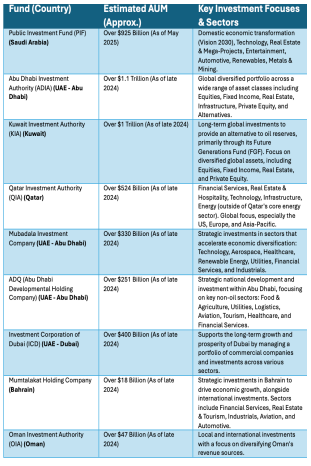
Meanwhile, Saudi and Emirati investments in agricultural land in Sudan and Pakistan, as well as ADQ’s stakes in India’s food supply chain, reflect efforts to secure food security while simultaneously reinforcing ties with strategically important partners.
Even in the cultural and entertainment sectors, Gulf states are leveraging capital to project soft power and reshape global perceptions. As highlighted in the GRC’s analysis of GCC cultural diplomacy, these efforts build on a broader understanding of culture as both a unifying force and a vehicle for projecting a coherent image abroad, an image that, when channeled through nation branding, can generate strategic advantages through attraction rather than coercion.
Qatar’s ownership of Paris SaintGermain (PSG) and its hosting of the 2022 FIFA World Cup exemplify how sports and cultural investments can position a state as a cultural and diplomatic hub while reinforcing national identity. Similarly, Saudi Arabia’s Public Investment Fund (PIF) acquisition of Newcastle United Football Club aligns with the Vision 2030 objective of cultivating a modern, outward-facing image, while also contributing to the GCC’s collective visibility and influence. These initiatives reflect the logic outlined in the GCC Cultural Strategy 2020–2030: to employ culture not only as a peacebuilding and identity-building instrument, but also as an economically and diplomatically useful tool that amplifies the region’s role on the global stage.
This deliberate use of financial leverage blurs the boundaries between foreign policy and economic investment, highlighting how Gulf states are actively redefining the role of middle powers in a multipolar world. By embedding themselves in strategic sectors across continents, they are shaping the global rules of engagement through capital rather than coercion.
Oman offers a case in point. By leveraging its strategic ports, Sohar, Salalah, and Duqm, and expanding its footprint through the state-owned Asyad Group’s investments in ports across the Far East, East Africa, and the Indian subcontinent, Muscat has advanced not only trade facilitation but also regional integration. Oman has also used platforms such as the Oman–East Africa Business Conference (ITEX 2025) and the Indian Ocean Conference to promote logistics cooperation, investment, and connectivity between the Gulf and African economies. These efforts strengthen supply chain resilience, reduce transaction costs, and enhance Oman’s position as a hub linking Asia, the Middle East, and Africa. Over time, such initiatives could evolve into permanent institutional arrangements anchored in shared commercial interests, helping to insulate regional cooperation from political volatility.
Hydrocarbon Dependence vs. Economic Diversification: Is a Real Transition Possible?
Energy remains the cornerstone of Gulf economies, providing the fiscal stability that underpins ambitious national development agendas. Yet the recognition that over-reliance on hydrocarbons can expose economies to price volatility, shifting demand patterns, and long-term structural risks has led to an unprecedented push for diversification. Across the region, this has translated into carefully designed strategies that seek to expand non-oil sectors while leveraging the revenues generated by hydrocarbons to finance the transition.
In Saudi Arabia, Vision 2030 has accelerated investment in sectors such as tourism, entertainment, renewable energy, and advanced manufacturing, supported by flagship projects like NEOM and the Sakaka Solar Plant. The UAE has expanded its role as a global trade, logistics, and financial hub through the continued growth of DP World’s port network, the international reach of its airlines, and the development of financial centers such as Abu Dhabi Global Market. Oman’s Vision 2040 has prioritized fisheries, mining, and the large-scale production of green hydrogen as central to its economic transformation, while Kuwait’s Vision 2035 has sought to modernize infrastructure and promote privatesector-led growth.
Despite these advances, the fiscal link to hydrocarbons remains strong. Oil and gas revenues continue to fund much of the diversification drive, creating a paradox in which the journey toward a post-oil economy still depends on oil income. Achieving a genuine structural transition will require non-oil revenues to reach a scale that can sustainably support social services, absorb growing youth populations into the labor market, and fund external economic engagements. This will necessitate sustained reforms in education, labor markets, and innovation systems, ensuring that the Gulf’s economic competitiveness is anchored in productivity and knowledge creation rather than consumption and public expenditure alone.
Multi-Vector Diplomacy and Flexible Alignments
Building on their growing role in mediation, Gulf states are increasingly applying multi-vector diplomacy to issue-specific arenas, forming coalitions that shift according to the challenge at hand. This flexibility enables them to lead or participate in ad hoc groupings, whether coordinating oil policy through OPEC+, aligning with like-minded states on climate action in COP negotiations, or pursuing joint technological ventures. Such diplomacy is less about fixed blocs and more about fluid, interest-based alignments that can be recalibrated as circumstances evolve. This multi-vector approach also includes diversification into strategic partnerships with middle and emerging powers. India has become a key strategic partner, not only in energy but also in defense production, fintech, and space collaboration. Turkey, once a regional rival, is now a recipient of growing Gulf investments and a diplomatic interlocutor in conflict zones like the Caucasus and North Africa. Simultaneously, ties with Southeast Asian nations, including Malaysia, Indonesia, and Vietnam, are being deepened through Islamic finance, halal trade, and educational diplomacy. These engagements reflect a Gulf-wide strategy of global embeddedness without exclusive alignment, engaging everyone, binding with no one.
The flexible diplomacy approach does enable Gulf states to act as interlocutors between rival powers and to carve out strategic roles in diverse conflict theaters. Qatar’s ability to host both U.S. CENTCOM and act as a diplomatic intermediary with the Taliban after the U.S. withdrawal from Afghanistan in 2021 illustrates the potential of this dual posture. The UAE’s participation in the I2U2 initiative, bringing together India, Israel, the UAE, and the U.S. to cooperate on infrastructure, food security, and tech innovation, while simultaneously engaging with the BRICS and SCO platforms, highlights the strategic ambition to influence both Western and non-Western governance ecosystems.
Regionally, the Gulf has shifted from reactive diplomacy to active agendasetting. The Abraham Accords, the Saudi-Iran détente, and the normalization with Syria and Lebanon all represent Gulf-led reordering efforts designed to defuse tensions and unlock economic opportunity. These moves are not only about conflict management but also about constructing a Gulf-centric regional architecture that elevates their own geopolitical agency. Through mediation in Sudan, Lebanon, and between Russia and Ukraine, Gulf states are cultivating reputations as credible and neutral problem-solvers. This expansive diplomatic reach, unencumbered by rigid alliances, reflects an adaptive, post-Westphalian approach to statecraft, one where sovereignty is preserved through strategic ambiguity and relational depth.
This diplomatic agility is also being institutionalized through Gulf-led forums, security dialogues, and regional economic corridors. The Saudi-hosted Arab-China and Arab-African summits, the UAE’s integration into East African logistics chains, and the expansion of Gulf diplomatic missions in Central Asia all point to a deliberate redefinition of the region’s external relations map. Taken together, these developments reflect not only strategic autonomy in motion but the early architecture of a Gulf-centered sphere of influence, flexible, well-capitalized, and increasingly institutionalized.
Gulf diplomacy is undergoing a notable transformation, moving beyond its traditional focus on carefully balancing relationships toward a more proactive role in shaping international priorities. Increasingly, Gulf capitals are not only participating in global discussions but also designing and hosting platforms that set the terms of debate on emerging issues. The UAE’s Abu Dhabi Space Debate is one such example, a high-level forum that brings together government leaders, industry experts, and academics from across the world to develop cooperative frameworks for space governance and sustainability, positioning the Emirates as a convener in a domain of growing strategic significance.
Oman illustrates a more discreet yet equally strategic form of agenda-setting through its maritime diplomacy. In February 2025, Muscat hosted the 8th Indian Ocean Conference under the theme “A Voyage Towards New Horizons of Maritime Partnership,” fostering dialogue between regional and international stakeholders on maritime cooperation, security, and environmental stewardship. The Sultanate further reinforced its standing in May 2025 with a high-level address to the UN Security Council, underscoring the legal, security, and humanitarian imperatives of safeguarding vital sea lanes (Foreign Ministry of Oman, 2025).
Oman offers another case in point. By leveraging its strategic ports, Sohar, Salalah, and Duqm, and expanding its footprint through the state-owned Asyad Group’s investments in ports across the Far East, East Africa, and the Indian subcontinent, Muscat has advanced not only trade facilitation but also regional integration. Oman has also used platforms such as the Oman–East Africa Business Conference (ITEX 2025) and the Indian Ocean Conference to promote logistics cooperation, investment, and connectivity between the Gulf and African economies. These efforts strengthen supply chain resilience, reduce transaction costs, and enhance Oman’s position as a hub linking Asia, the Middle East, and Africa. Over time, such initiatives could evolve into permanent institutional arrangements anchored in shared commercial interests, helping to insulate regional cooperation from political volatility.
Institutional Partnerships and Emerging Norm-Setting
As Gulf states expand their economic, diplomatic, and security influence, they are also moving decisively into the realm of shaping international norms and governance frameworks. This emerging role is not confined to traditional arenas of diplomacy but extends into climate action, technology governance, humanitarian mediation, and institutional reform. Leveraging sovereign wealth, convening power, and targeted partnerships, Gulf capitals are positioning themselves not merely as participants in the global system but as agenda-setters capable of influencing the rules, priorities, and narratives of the shifting international order. Their approach blends pragmatic state-led modernization with a deliberate effort to cultivate platforms, both national and regional, that project their governance models, mobilize coalitions across the Global South, and challenge the dominance of traditional Western-led frameworks. The following section examines how this normative ambition is expressed through sector-specific leadership, institutional innovation, and active engagement in debates over the reform of multilateral institutions.
Norm-setting is the process by which states shape the rules and practices that govern international relations. Traditionally dominated by great powers and institutions like the UN or the Bretton Woods system, middle and emerging powers often played the role of norm-takers. In today’s multipolar and contested order, this dynamic is shifting. As traditional institutions face paralysis and declining legitimacy, new actors are stepping in to define what is considered legitimate or desirable across areas such as security, trade, technology, climate, and humanitarian action. Norm-setting thus extends beyond diplomacy to shaping the architecture of global governance itself. For the Gulf states, this is both a challenge and an opportunity. With growing economic clout, diplomatic reach, and convening power, they are moving from normfollowers to norm-entrepreneurs, promoting governance models and partnerships that reflect their own interests and priorities.
Norm-setting is also manifest in the climate and technology domains, where Gulf states are positioning themselves not just as contributors to global governance but as architects of new frameworks. The UAE’s hosting of COP28 in 2023 demonstrated a strategic effort to reshape the climate agenda from a Gulf perspective, one that emphasizes carbon mitigation through decarbonization technologies, scaling up climate finance, and promoting a pragmatic, transition-based approach to energy transformation rather than abrupt fossil fuel divestment. The summit highlighted initiatives such as the UAE-led $30 billion Alterra climate investment fund and global partnerships for green hydrogen and carbon capture utilization and storage (CCUS), reinforcing the country's ambition to lead in shaping post-carbon energy governance.
The UAE has also embedded itself in global discussions on technology governance, particularly through its Artificial Intelligence Office, which launched the first national AI strategy in the region, and through initiatives like the UAE Council for the Fourth Industrial Revolution. Its role in convening discussions on AI ethics, data regulation, and digital inclusion via the World Government Summit reflects a deliberate strategy to frame global digital norms around its vision of centralized innovation and controlled liberalization. These forums attract multilateral stakeholders, including UN agencies, tech multinationals, and Global South policymakers, enabling the UAE to project a “techno-pragmatic” governance model that merges state authority with high-tech ambition.
Qatar, too, plays a growing role in norm entrepreneurship, albeit through a different lens. Its influence is centered on humanitarian diplomacy, legal multilateralism, and global mediation. Qatar has positioned itself as a credible and neutral broker in a number of highstakes negotiations, including ceasefire talks in Afghanistan, Gaza, and, most recently, Iran. By hosting and facilitating discreet diplomatic engagements, Doha has helped shape evolving norms around conflict resolution, humanitarian access, and international legal safeguards.
Institutionally, Gulf states are building parallel governance platforms designed to consolidate their normative leadership. Saudi Arabia’s Future Investment Initiative (FII) and Financial Sector Conference serve as convening spaces where economic policy, sovereign capital, and global thought leadership intersect, often setting the tone for emerging markets and Global South investment frameworks.
These platforms allow Gulf states to present curated models of governance that emphasize efficiency, modernization, and state-led development, offering a distinct alternative to both liberal democratic pluralism and authoritarian populism.
Calls for reforming multilateral institutions have become a recurring theme in Gulf diplomacy, reflecting frustration with the slow pace of global governance adaptation and a desire for structures that better reflect contemporary geopolitical realities. Gulf participants have explicitly championed updating multilateral frameworks. At the 2024 G20 Foreign Ministers’ Meeting, Saudi Foreign Minister Prince Faisal bin Farhan called for resisting economic fragmentation and strengthening multilateral systems to maintain the G20’s relevance in a multipolar world; he also emphasized the need to bolster global governance mechanisms more broadly (SPA, 2024). Meanwhile, the UAE, through remarks by Foreign Minister Sheikh Abdullah bin Zayed Al Nahyan, at the 79th UN General Assembly, highlighted the significance of revitalizing multilateral cooperation via initiatives like the Summit of the Future (UAE Ministry of Foreign Affairs, 2024). Qatar also reinforced the position that “The issue of reforming the Security Council is an important challenge and a strategic goal for the international group as it is firmly linked to one of the main pillars of the United Nations, which is maintaining international peace and security; noting that the Security Council is the main body of the United Nations concerned with ensuring international peace and security, based on its mandate according to the Charter.” (Qatar Ministry of Foreign Affairs, 2023).
These positions align with the Gulf’s broader advocacy for refining the UN Security Council’s working methods to make it a more effective guardian of international peace and security. Through contributions to G20 debates, engagement with emerging forums like BRICS, and leadership in summits such as the Arab–China and Arab–African meetings, Gulf states are positioning themselves as constructive architects of the next phase of global governance.
This Gulf model of norm-setting is not explicitly ideological, but it is deeply intentional. It prioritizes state-led modernization, regime stability, developmentalism, and cultural rebranding. It leverages sovereign wealth, convening power, and institutional innovation to influence the international rule-making process, especially in areas where traditional powers have stalled or lost legitimacy. While this model has gained traction across parts of the Global South, where the appetite for post-Western, nonprescriptive development pathways is growing, it also raises concerns in Western capitals about value divergence, influence without accountability, and the erosion of universalist norms in global governance.
Ultimately, the Gulf’s role in shaping regional and global norms is both a reflection of its expanding capacities and a test of its long-term intentions. Whether these efforts consolidate into a more pluralistic, balanced multipolar order, or evolve into a Gulf-centric architecture, narrowly serving elite interests, remains uncertain. The outcome may depend on how Gulf-led platforms evolve and if they internalize inclusive governance, transparency, and multilateral legitimacy, or continue to prioritize control, stability, and sovereign autonomy at the expense of democratic participation and shared rulemaking.
III: The Gulf’s Future in a Disrupted Global Order: Risks, Reinvention, and Resilience
The Decline of Western Security Guarantees and the Rise of Self Reliance
For much of the modern era, Gulf states have anchored their defense posture in close partnerships with Western powers, particularly the United States, which provided security assurances in exchange for the stable flow of energy.
This relationship remains valuable, yet its contours are changing. Shifts in U.S. strategic priorities toward the IndoPacific, the unpredictability of Western domestic politics, and recalibrations in military commitments have led Gulf capitals to reassess the long-term reliability of these guarantees. Incidents such as the almost non-existent U.S. response to attacks on energy infrastructure in 2019, the mixed signals over regional maritime security, and Washington’s complacency in the face of Iran’s attack on Doha in June 2025 and Israel’s strike on Doha in September 2025 have underscored the need to complement external alliances with stronger indigenous capabilities. This shift is reflected in Saudi Arabia’s recent security agreement with Pakistan on September 17, 2025, signaling a diversification of its defense partnerships.
The Gulf states operate in one of the world’s most volatile strategic environments, where geopolitical rivalries, energy transitions, and regional instability converge. Their security is challenged not only by shifting U.S. commitments and intensifying great power competition but also by fragile neighbors, transnational threats, and the growing impact of climate change. Economic diversification, technological dependence, and societal pressures further add to the complexity of their external posture. In such a turbulent context, the ability of Gulf states to shape international norms is not a luxury but a necessity, an essential tool for safeguarding their interests, projecting stability, and ensuring resilience in a fragmented global order.
In recent years, Gulf states have taken visible steps to accelerate defense selfreliance while continuing to value and strengthen their traditional partnerships. Saudi Arabia’s General Authority for Military Industries (GAMI) has set an ambitious target to localize half of the Kingdom’s defense spending by 2030, supported by the development of domestically produced armored vehicles, air defense systems, and unmanned aerial platforms in cooperation with international partners. The UAE has consolidated its national defense industry through EDGE Group, now ranked among the top 25 global defense companies, and has become a producer and exporter of advanced munitions, autonomous systems, and electronic warfare technologies (Czulda, 2025). Qatar has expanded the scope of Barzan Holdings to include naval vessel production, cybersecurity development, and specialized training programs for its armed forces (Tactical Report, 2025).
Bahrain has strengthened its capabilities by leveraging the Arab Shipbuilding & Repair Yard (ASRY) to design and build vessels for the Bahrain Coast Guard, enabling indigenous construction and maintenance capacity. The Kingdom has also invested in new facilities at Isa Air Base to support the arrival of the Royal Bahraini Air Force’s F-16 Block 70 aircraft, ensuring that basing, mission generation, and maintenance can be conducted locally. A notable recent development linking Bahrain’s maritime capabilities with those of the UAE is the strategic joint venture between ASRY and Abu Dhabi’s Noatum Maritime, part of AD Ports Group. This partnership integrates Noatum Maritime’s operational expertise, modern fleet, and regional reach with ASRY’s established shipyard facilities, initially providing towage and mooring services in Bahrain with plans to expand into a broader suite of marine solutions (Noatum Maritime, 2025). By combining Bahrain’s ship repair and fabrication capacity with the UAE’s advanced maritime logistics network, the joint venture enhances operational efficiency, broadens service offerings, and strengthens Bahrain’s position within the Gulf’s integrated maritime ecosystem.
These measures reflect a strategic choice to pursue a balanced security posture-- one that retains the benefits of cooperative defense arrangements with Western and other global partners, while ensuring that the Gulf possesses the capacity to act decisively in defense of its own interests. In this respect, selfreliance is not a break from traditional alignments but an enhancement of them, ensuring resilience in a more fluid and unpredictable security environment. While these initiatives mark an important beginning in strengthening indigenous defense capabilities, much remains to be addressed. Gulf states continue to rely heavily on Western, particularly U.S., security guarantees, and the intention is not to sever these ties but to recalibrate them. The ultimate goal is to reduce dependency by broadening options, cultivating diversified partnerships, and developing local capacity. In doing so, Gulf capitals seek to raise their level of strategic autonomy without undermining existing alliances, creating a more balanced posture that allows them to navigate an increasingly uncertain security environment on their own terms.
Gulf States in an AI-Driven World: Innovation Hub or Technological Dependency?
Digital transformation and artificial intelligence are central to the Gulf’s vision for a diversified, high-value economy. Governments have set ambitious goals to position their countries at the forefront of the Fourth Industrial Revolution. Saudi Arabia’s National Strategy for Data and AI, implemented through the Saudi Data and AI Authority (SDAIA), aims to place the Kingdom among the top fifteen AI nations by 2030 and has already begun integrating AI into public services, logistics, and urban planning. This trajectory is reinforced by Saudi Arabia’s achievement in the 2024 Global AI Index published by Tortoise Intelligence, where it ranked 14th globally and first in the Arab world, marking a 17-place rise among 83 countries, and maintained its global lead in the Government Strategy sub-pillar while placing seventh in the Commercial Ecosystem sub-pillar, reflecting its commitment to building a world-class AI ecosystem (SPA, 2024). The UAE’s National AI Strategy 2031 includes initiatives in autonomous mobility, healthcare, and smart governance, supported by the appointment of the world’s first Minister of State for Artificial Intelligence and the hosting of the World Government Summit, which regularly features AI governance as a central theme. Qatar, meanwhile, is incorporating AI into sectors ranging from sports analytics to infrastructure management, positioning itself as a regional leader in applied AI research.
The opportunities are substantial. AI can deliver productivity gains, improve service delivery, and generate entirely new industries, thereby reinforcing economic diversification. Yet the path forward is not without risk. Much of the Gulf’s AI ecosystem relies on imported technologies, foreign-owned platforms, and expatriate expertise. This dependency raises questions about technological sovereignty and the longterm sustainability of innovation ecosystems. Without a strong domestic base in research and development, the region risks becoming a technologically advanced consumer but not a true producer of frontier technologies.
Overcoming this challenge will require a concerted focus on building local capacity. This includes strengthening STEM education from primary school through to advanced research institutions, incentivizing private-sector innovation, and ensuring that AI adoption is guided by governance frameworks sensitive to the Gulf’s cultural and societal context. By balancing the benefits of global technological partnerships with the development of indigenous capabilities, Gulf states can position themselves not merely as adopters but as shapers of the global AI agenda.
Reimagining Multilateralism: Should the Gulf Spearhead its Own Global Institutions? The limitations of traditional multilateral bodies, often hindered by cumbersome decision-making processes, geopolitical rivalries, and the struggle to adapt to rapidly evolving challenges, are increasingly apparent. Against this backdrop, Gulf states have identified a strategic opening: to use their convening power, financial resources, and growing diplomatic credibility to develop more agile, issue-focused institutions capable of delivering concrete results. This is not about supplanting the United Nations or other established frameworks, but about complementing them with targeted mechanisms that can respond faster and with greater flexibility to specific needs.
The UAE-backed Arab Digital Economy Initiative, for example, demonstrates how Gulf capitals are positioning themselves to shape the governance of emerging domains. By promoting unified digital policy standards, investing in cross-border infrastructure, and enabling interoperability between Arab states’ digital systems, the initiative seeks to create a coherent and competitive regional digital market. In an era where digital governance is becoming as strategically important as physical infrastructure, this initiative not only enhances economic competitiveness but also positions the Gulf as a standard-setter in an area traditionally dominated by global tech powers.
Saudi Arabia’s leadership in establishing the Council of Arab and African States bordering the Red Sea and the Gulf of Aden, commonly known as the Red Sea Council, adds another dimension to Gulf institutional innovation. Formally launched in January 2020 with seven other littoral states (Egypt, Jordan, Eritrea, Yemen, Sudan, Djibouti, and Somalia), the council aims to coordinate maritime security, promote stability, and safeguard the shared interests of one of the world’s most strategic waterways. While its agenda has so far focused primarily on security, the council has the potential to expand into areas such as environmental protection and trade facilitation. Given the Red Sea’s role as a vital link between Europe and Asia, this framework could serve as a stabilizing force in a region prone to geopolitical tension, complementing existing efforts by providing a dedicated forum for the security and prosperity of this critical corridor.
Economic governance offers yet another arena for Gulf-led institutional entrepreneurship. The concept of a Gulfdriven Global Infrastructure and Investment Partnership, pooling the resources of sovereign wealth funds across the GCC, has the potential to deliver high-impact projects in the Global South. By operating outside the often-slow-moving Bretton Woods institutions, such a platform could respond more nimbly to infrastructure needs while offering recipient countries alternatives to existing financing models. This would reinforce the Gulf’s image as a reliable and non-prescriptive partner, one that aligns financial diplomacy with development priorities.
Oman’s 2024 signing of a Coordination and Cooperation Protocol with the EU’s Operation ATALANTA further underscores the potential for Gulf-led security cooperation. By linking Muscat’s Maritime Security Centre with EU anti-piracy operations in the Western Indian Ocean, this agreement not only enhances maritime safety but also deepens interoperability between Gulf and European security frameworks. Such linkages illustrate how Gulf states can act as both regional security providers and connectors between disparate multilateral efforts.
The long-term viability of these Gulf-led institutions will depend on three factors: legitimacy, achieved through inclusive governance that attracts participation beyond the GCC; transparency, ensuring that decision-making processes are trusted by stakeholders; and effectiveness, demonstrated by measurable outcomes that address real-world problems. If these principles are upheld, Gulf-sponsored platforms could become enduring fixtures in the global governance architecture, turning the Gulf’s growing agenda-setting capabilities into durable, institutionalized influence.
Investing in Resilience: Sustainability, Regional Stability, and FutureProofing the Gulf Economy
Resilience has moved from a policy aspiration to a strategic imperative in Gulf capitals, an organising principle spanning environmental sustainability, regional stability, and economic durability. It is not only about withstanding shocks, but about using them as catalysts for transformation. On the environmental front, initiatives such as Saudi Arabia’s Middle East Green Initiative, the UAE’s Masdar renewable energy portfolio, and Oman’s large-scale green hydrogen projects are more than climate responses; they are long-term economic hedges. By diversifying energy sources, these projects insulate Gulf economies from hydrocarbon volatility and position them as suppliers of low-carbon energy in a decarbonising world, while building credibility in global climate diplomacy.
Regionally, Gulf states are reframing stability as economic security. Their approach blends security cooperation with targeted development and humanitarian interventions, investments in Yemen’s reconstruction, humanitarian relief in Sudan, and infrastructure development in Iraq, aiming to address root causes of instability, reduce the likelihood of disruptive conflicts, and foster economic interdependence. Institutional innovation has also emerged as a resilience tool. Saudi Arabia’s leadership in launching the Council of Arab and African States has created a platform for maritime security cooperation in one of the world’s most strategic waterways.
Economically, sovereign wealth funds such as Saudi Arabia’s Public Investment Fund and Abu Dhabi’s Mubadala are diversifying into sectors resilient to commodity price swings, technology, logistics, healthcare, and renewable infrastructure. This global diversification spreads risk, strengthens fiscal stability, and gives Gulf states a strategic stake in critical supply chains and innovation hubs. Investing in resilience, therefore, creates a double dividend: It safeguards domestic economies from external shocks and enhances the Gulf’s ability to shape the international agenda. A Gulf able to weather energy transitions, climate impacts, and geopolitical turbulence can engage in diplomacy from a position of strength, exercising influence not only through energy exports and security partnerships but also through stability provision, climate leadership, and sustainable growth models.
Conclusion
Gulf states today stand at a critical juncture in the evolution of the international system. Their rise is not an accident of geography or resources alone, but the result of deliberate strategies that have combined economic statecraft, security recalibration, and diplomatic agility. Anchored at the crossroads of Asia, Africa, and Europe, they command vital maritime corridors and global energy flows while leveraging sovereign wealth funds that shape financial and technological landscapes far beyond the region. This combination of location, leverage, and ambition has elevated the Gulf from a peripheral actor to an indispensable broker of global affairs.
Unlike traditional middle powers that operate within the constraints of established Western frameworks, Gulf states have cultivated a more unconventional posture, flexible alignments, transactional pragmatism, and selective multilateralism. They are no longer content with playing niche roles but are expanding their reach into the very architecture of the emerging order: setting agendas at COP28, convening cross-regional corridors such as IMEC, or facilitating dialogues between rivals in Sudan, Ukraine, and the Red Sea. This shift signals not only the rise of Gulf agency but the emergence of a new archetype of power, one rooted in strategic autonomy, economic diversification, and norm entrepreneurship.
At the same time, this trajectory carries risks. Overextension, domestic reform pressures, technological dependency, and persistent regional instability could undermine the Gulf’s capacity to sustain influence. Their growing visibility in global governance also exposes them to sharper scrutiny, raising questions about accountability, inclusivity, and the balance between regime stability and broader legitimacy. The Gulf’s ability to reconcile its ambitions with these vulnerabilities will determine whether its role consolidates into a durable model of leadership or fragments under competing pressures.
Yet the direction of travel is clear. By blending hard and soft power, Gulf states are positioning themselves not merely to adapt to multipolarity, but to help shape it. They are no longer just participants in the global order; they are beginning to define its rules, priorities, and institutions. In this sense, the Gulf is emerging as both a laboratory and a driver of new forms of middle power diplomacy, pragmatic, flexible, and increasingly systemic in its influence.
Looking ahead, the Gulf’s trajectory offers a broader lesson for the international community: In an era of contested norms and fractured alliances, strategic agility can be as valuable as material power. Whether through convening Global South coalitions, setting standards in digital and climate governance, or redefining regional security frameworks, Gulf capitals are demonstrating that small and mediumsized states can exercise disproportionate influence when they leverage geography, wealth, and diplomacy with vision and precision.
The Gulf has no shortage of vision statements; the real test lies in translating them into enduring outcomes. This will demand sustained institutional capacity to ensure projects survive political cycles, close coordination across environmental, economic, and security spheres, and the integration of resilient thinking into all aspects of governance. If executed effectively, resilience investments will not just prepare the Gulf for foreseeable challenges but will enable it to anticipate, adapt to, and shape the contours of the posthydrocarbon world while consolidating its role as a driver of regional stability and a convenor of global cooperation.
The next decade will be decisive. If Gulf states can translate their ambitions into institutional resilience, sustain domestic transformation, and balance relationships with global powers without becoming entrapped, they will not only secure their own futures but also shape the contours of a more pluralistic world order. In doing so, they will redefine what it means to be a middle power in the 21st century, emerging not as followers of global change, but as architects of its next phase.
Layla Ali is the Senior Research Associate at the Gulf Research Center (GRC).