

Commentary & Analysis
Shadows in Northern Skies: The NB8 Security Response
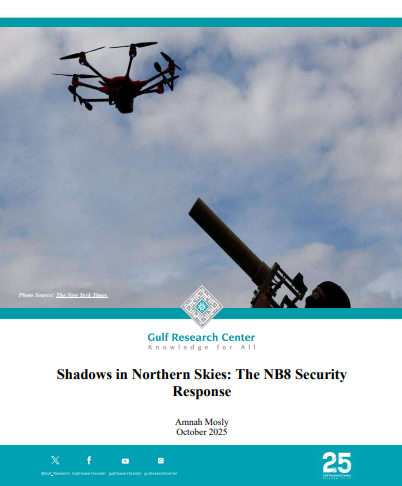
In recent weeks, a series of drone incursions over European skies has reignited concerns about regional security and international law. These incidents, which some observers have attributed to Russia, though Moscow has consistently denied involvement, have placed the Nordic-Baltic Eight (NB8) countries as a focal point in a complex geopolitical discussion. The NB8 is an informal regional cooperation format consisting of Denmark, Estonia, Finland, Iceland, Latvia, Lithuania, Norway, and Sweden that has steadily gained strategic importance in the 21st century. Comprising a mix of NATO and EU member states, these nations share a common geographical space and a growing concern over Russia’s increasingly assertive foreign policy. The February 2022 Ukraine crisis served as a watershed moment, galvanizing their collective resolve and accelerating their security cooperation.
The recent drone incidents have starkly underscored the fragile security environment in which these nations operate. Some European officials have interpreted these incursions as Moscow testing NATO’s response, which raised questions about how prepared the alliance is against Russia. The scale and frequency of drone intrusions into NATO airspace and the observed patterns of these drones, which have at times occurred near critical infrastructure such as airports, power plants, and military installations, suggest a coordinated approach that aligns with characteristics of hybrid tactics.
A notable incident occurred on September 10, 2025, when a group of drones, reported by some sources to be Russian, entered Polish airspace. This development prompted a rapid response from NATO aircraft, which intercepted and neutralized some of the devices. Moreover, Germany’s Munich Airport shut down twice in less than 24 hours after additional drone sightings. Beyond these high-profile events, a cascade of other incidents has been reported across the NB8 countries and wider Europe, each eliciting a distinct response.
Estonia: On September 19, 2025, NATO jets escorted three Russian warplanes out of Estonian airspace after the aircrafts entered without permission and stayed there for 12 minutes. Foreign Minister Margus Tsahkna stated that Russia violated Estonian airspace four times in 2025 but called this incident “unprecedentedly brazen.” As a frontline state, Estonia has advocated for a robust and unified NATO response. The interception of aircraft attributed to Russia in its airspace has contributed to its calls for enhanced air policing and a strengthened deterrent posture within NATO.
Denmark and Norway: On September 22, 2025, drones flew over Copenhagen Airport, causing significant disruption to air traffic. Danish Prime Minister Mette Frederiksen stated that Russian involvement could not be ruled out, describing the incident as “the most serious attack on Danish critical infrastructure to date.” A drone sighting at Oslo Airport on the same night led to traffic being restricted to a single runway. Norwegian authorities are investigating potential links between this incident and the one at Copenhagen Airport, questioning whether there is a coordinated pattern of activity across the region. In the next few days, drones were also observed over four smaller Danish airports, including two military bases. Danish Defense Minister Troels Lund Poulsen indicated that a “professional” actor was likely behind these “systematic flights.”
Lithuania and Latvia: Lithuania has also closed its largest and busiest airport “due to a possible series of balloons heading toward Vilnius Airport.” Similar to its Baltic neighbors, Lithuania has also reported airspace violations and has advocated for increased defense spending and a robust NATO front. Lithuania has also declared a 90-km no-fly zone bordering Belarus. Similarly, Latvia announced restrictions on civilian flights over its borders with Russia and Belarus.
Taken together, these incidents illustrate a clear pattern of hybrid pressure against NATO’s northern flank. In response to this wave of provocations, the NB8 nations, in conjunction with NATO and the EU, have been actively discussing collective measures to enhance border security. A notable proposal gaining traction is the establishment of an “EU drone wall.” This initiative, endorsed by figures such as European Commission President Ursula von der Leyen, is not envisioned as a physical barrier but rather “a layered network of detection and interception systems, building on individual EU members’ anti-drone capabilities.” The European Parliament has also called for a unified EU response to Russian violations and hybrid warfare threats, specifically highlighting the drone incursions targeting critical infrastructure in the NB8 countries.
Furthermore, on October 1, 2025, EU leaders met for a one-day summit in Copenhagen to discuss how to strengthen Europe’s common defense. The meeting was chaired by the President of the European Council, António Costa, and hosted by the Prime Minister of Denmark, Mette Frederiksen. President Costa stated that “the leaders broadly supported priority flagships presented by the Commission and the High Representative, including the European Drone Wall and the Eastern Flank Watch.” As the NB8 countries confront these evolving security tests, their coordinated responses may well define the next chapter in Europe’s collective defense posture.
The drone incidents in Northern Europe, while geographically distant, resonate profoundly with the rest of the world, including the Gulf region. For the Gulf Cooperation Council (GCC) countries, these developments reaffirm the growing interconnection between European and Gulf security landscapes. The GCC states have maintained a nuanced and pragmatic approach to the broader Russia-Ukraine conflict, balancing strong partnerships with Western allies alongside diplomatic engagement with Moscow. This careful calibration reflects a strategic awareness of global interdependencies, particularly in energy security and the global economic order.
In this evolving context, the deepening GCC–EU partnership has assumed greater importance. The Joint Communication on a “Strategic Partnership with the Gulf” and the appointment of the EU Special Representative for the Gulf Region have institutionalized a new era of structured dialogue, including on issues of regional security and crisis management. With the upcoming high-level meetings and summits, both sides have an opportunity to translate this dialogue into coordinated action, especially in addressing emerging threats such as hybrid warfare, drone technology, and cyber insecurity that transcend geographic boundaries.
The timing of these developments coincides with the increased diplomatic coordination between the European Union and the Gulf Cooperation Council. In their 29th Joint Council and Ministerial Meeting held in Kuwait on October 6, 2025, both sides expressed “deep concern about the series of intentional violations of the sovereign airspace of EU member states by drones and military aircraft including the most recent airspace incursions into Poland, Romania and Estonia in September 2025,” describing them as a “dangerous escalation” that threatens regional stability and international peace. This shared position underscores a growing recognition that airspace security, technological warfare, and hybrid threats are not merely European or Gulf challenges, but global ones requiring collective vigilance and response.
Furthermore, the Gulf states have demonstrated a growing commitment to mediation and conflict resolution, positioning themselves as credible diplomatic actors capable of bridging divides between Russia and broader Europe. Their recent roles in humanitarian mediation and peace facilitation underscore the potential for greater Gulf–European cooperation in preventive diplomacy, situational awareness, and crisis de-escalation. In an increasingly volatile global environment, strengthening this axis of dialogue between the GCC and the EU offers not only a stabilizing influence but also a framework for collective resilience against evolving security challenges.
Ultimately, the convergence of European and Gulf security concerns underscores the necessity of a broader, more interconnected approach to global stability. The recent drone incidents highlight not only the vulnerabilities of Europe’s northern flank but also the shared imperative for cooperative resilience across regions. In an era defined by hybrid threats and geopolitical fluidity, reinforcing this transregional partnership between the Gulf and Europe will be critical to safeguarding both European and Gulf interests while contributing to the preservation of international peace and stability.
*Amnah Mosly is a Researcher at the Gulf Research Center (GRC)