Commentary & Analysis
Venezuela’s Geopolitical Crisis and Its Ripple Effects Across Latin America: Lessons for the Gulf
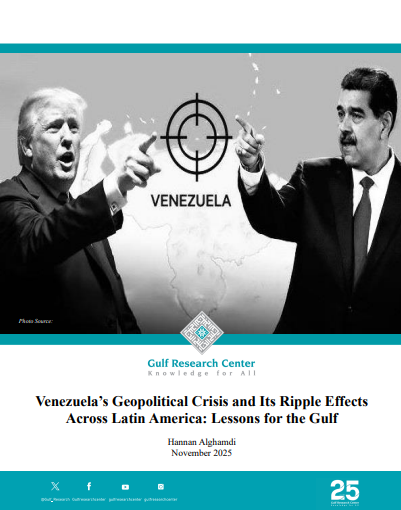
Venezuela’s ongoing crisis has once again thrown Latin America’s regional order into disarray and exposed severe weaknesses in diplomatic cohesion as well as the capacity to respond to internal and external shocks. The US military build-up and kinetic operations launched since September 2025, along with high-profile covert interventions, have drawn sharp and often contradictory reactions from neighboring states. Colombia, for instance, has openly condemned US strikes, and Latin American capitals in general have displayed deep wariness, stressing how fragile joint action is under pressure. Washington’s willingness to bypass regional frameworks sends an unmistakable signal that the traditional architecture of cooperation cannot be taken for granted.
Within this tense context, the territorial dispute over Guyana’s Essequibo region offers another glimpse into regional fragility. In recent months, Venezuela’s maneuvers around this oil-rich frontier, where new offshore discoveries stand to reshape Guyana into a major exporter, have catalyzed a mixture of military posturing and diplomatic overtures. Brazil has stepped in as a stabilizing force. Its efforts to reinforce borders and mediate between Venezuela and Guyana are designed to avert escalation and maintain broader stability as resource politics shift. The Essequibo episode is emblematic. It demonstrates how resource frontiers can quickly turn into strategic flashpoints that complicate relations and test the ability of states to manage conflict.
The economic and humanitarian dimensions of Venezuela’s crisis have also reverberated throughout the region. With more than 90 percent of Venezuelans living below the poverty line and upwards of 4 million refugees scattered across neighboring countries, these spillovers strain already fragile social systems and have wider consequences.
Venezuela’s oil sector has experienced significant swings during September and October 2025. Venezuelan oil exports rose to a peak of around 1.09 million barrels per day in September (their best since 2020), but quickly fell by 26 percent in October, to about 808,000 barrels per day, as US restrictions and diluent shortages set in. These swings have been absorbed by global markets, mainly because OPEC Plus (including Gulf producers) has enough spare capacity to smooth over volatility, and overall supply remains steady.
These fluctuations appear clearly in the figure above, which shows Venezuela’s monthly crude oil exports through October 2025. The surge in September, followed by the sharp fall in October, illustrates how external factors and policy decisions such as renewed US sanctions and operational disruptions have a direct effect on export volumes.
The risk of proxy escalation compounds these dynamics, as competition among external powers becomes increasingly pronounced. The US campaign against Venezuela is openly a blend of military and intelligence tools, which inevitably provokes countermeasures from Russia, China, and Iran. Each sees both strategic and economic value in supporting Caracas. For Latin American leaders, the prospect of Venezuela’s crisis turning their region into a stage for great-power rivalry adds a new layer of uncertainty to an already complex situation. President Maduro leverages international intervention to cement his claim to sovereignty and frame resistance to external aggression as a patriotic imperative.
Amid all these developments, a pattern emerges. Venezuela’s predicament represents how backsliding in fair governance and unresolved territorial disputes, along with external actors, can destabilize even resource-rich countries. In response, Latin American states see the necessity of strengthening crisis management, humanitarian response, and diplomatic agility. Regional actors face pressing questions about how to address transboundary threats, mitigate economic collapse, and maintain sovereignty in the face of assertive global powers. The lessons of the Venezuelan crisis are vivid and urgent.
For the Gulf, these challenges provide valuable insights. Firstly, Venezuela’s situation highlights the critical importance of sustained regional unity. Latin America’s fragmentation under pressure demonstrates that without integrated policy frameworks, crises quickly overwhelm national capacities. Gulf states should build and sustain robust platforms for joint defense and crisis response. Secondly, the escalation of resource disputes, such as the Essequibo standoff, signals to Gulf policymakers the necessity of credible conflict management mechanisms. Maritime boundaries and shared energy fields in the Gulf region face similar risks, and only multilateral agreements and mediation can prevent dangerous escalation.
Venezuela’s humanitarian crisis is also a case study in how social and economic shocks spread quickly and with intensity. The Gulf must anticipate these scenarios and invest in resilience of health and social protection systems, domestically and regionally. The experience of Latin America further highlights how great-power competition can transform local crises. Gulf states should pursue diversified foreign policy and build self-sufficiency to navigate unpredictable rivalries. Finally, Venezuela’s situation is a reminder that institutional agility, scenario planning, and rapid coordination are vital. Gulf decision-makers should strengthen their ability to respond to dynamic risks, both through empowered regional organizations and by developing strategic foresight.
In conclusion, Venezuela stands as a cautionary tale for both Latin America and the Gulf. Its crisis is not just about oil, migration, or contested borders. It demonstrates how political fragility, resource competition, humanitarian disaster, and external intervention can be interconnected and can echo far beyond national boundaries. The Gulf can benefit from these lessons by prioritizing unity, conflict management, humanitarian preparedness, and diplomatic agility, ensuring that when its own challenges arise, the region is prepared to face them with resolve and coherence.
*Hannan Alghamdi is a Researcher at the Gulf Research Center (GRC)