Commentary & Analysis
Oman–Japan Energy Partnership: Driving Economic Diversification and Green Transformation under Vision 2040
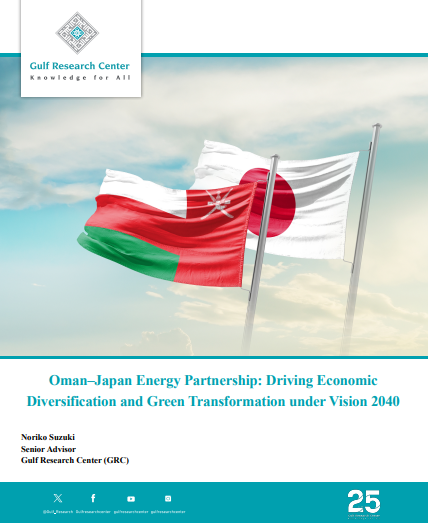
The strategic partnership between the Sultanate of Oman and Japan has long been anchored in energy security, technological exchange, and mutual economic benefit. Since the early 1970s, when Oman began exporting oil and later liquefied natural gas (LNG), Japan has viewed the Sultanate as a reliable and moderate partner in a volatile region. Today, as Oman advances Vision 2040 and Japan pursue its Green Transformation (GX), the relationship is shifting from a hydrocarbons-based trade partnership to a more diverse collaboration built on decarbonisation, hydrogen, maritime logistics, and industrial innovation.
Energy has historically defined Oman–Japan relations. For Japan, which imports nearly 95 percent of its primary energy, diversification and reliability remain paramount. Oman, one of the most stable producers in the Gulf, emerged early as a trusted supplier of oil and LNG. The establishment of Oman LNG in 1994 created the foundation for long-term cooperation, with Japanese companies including Mitsui & Co., Itochu, and Osaka Gas participating as shareholders and long-term off-takers from the outset. In December 2022, Oman LNG signed term-sheet agreements with JERA Co., Inc., Mitsui & Co., and Itochu Corporation for a combined 2.35 million tonnes per annum (mtpa) of LNG supplies to Japan from 2025 for approximately ten years. Within this, JERA’s allocation of around 0.8 mtpa (roughly 12 cargoes annually) reflects Japan’s ongoing confidence in Omani reliability while supporting the Sultanate’s efforts to stabilise demand as it advances economic diversification under Vision 2040.
Trade continues to be dominated by hydrocarbons, with LNG accounting for about 55 percent of total trade value, followed by crude oil at 25 percent, petrochemicals at 15 percent, and early-stage hydrogen-related initiatives at roughly 5 percent. This evolving structure illustrates both the persistence of traditional energy flows and the initial emergence of low-carbon cooperation. In 2024, Oman LNG renewed long-term supply agreements with its international shareholders—including Japanese partners—securing roughly seven mtpa of LNG for 2024–2034 and reaffirming Japan’s position as the largest destination for Omani LNG.
As the global energy transition accelerates, both countries are aligning strategies to support decarbonisation, hydrogen development, and technological innovation. Oman’s National Hydrogen Strategy aims to position the Sultanate among the world’s top ten hydrogen exporters by 2030, with targeted annual production of up to one million tonnes of green hydrogen. Japan’s Seventh Strategic Energy Plan, together with its GX initiative, envisions three million tonnes of hydrogen consumption by 2030 and expanded ammonia imports for co-firing in domestic power plants. These complementary ambitions draw Muscat and Tokyo closer in terms of policy coordination, green finance, and industrial project development. In March 2024, Oman LNG and Japan’s Hitachi Zosen Corporation signed a memorandum of understanding to develop methanation technology that converts hydrogen and CO₂ into synthetic methane for cleaner LNG production, becoming one of the first such initiatives in the Middle East. This aligns closely with Japan’s Asia Zero Emission Community (AZEC) framework and reinforces a joint commitment to technological decarbonisation.
Japanese companies such as Marubeni, J-Power, and Mitsui are also engaged in feasibility studies on green-ammonia and hydrogen projects in Duqm and Salalah, while Oman LNG’s planned fourth train—expected to raise capacity to 15.2 mtpa by 2029—offers further opportunities for Japanese engineering and project-management participation. Hydrom Oman’s regulatory clarity and Japan’s institutional support through JBIC, JOGMEC, and NEXI have become powerful enablers for large-scale, low-carbon investment. Both countries are also increasingly coordinating their climate-transition policies in the run-up to COP30, where they aim to highlight practical pathways for industrial decarbonisation, hydrogen development, and the application of green-finance mechanisms. Japan and Oman’s shared emphasis on balancing growth with environmental responsibility positions them as constructive partners in global climate diplomacy.
Economic diversification forms another strong pillar of the bilateral relationship. Under Vision 2040, Oman seeks to expand downstream industries, attract strategic investments, and accelerate the development of a knowledgebased economy. Special economic zones such as Duqm and Sohar have become focal points for Japanese interest. Mitsui and OQ Group collaborate on petrochemical ventures, while Japanese companies explore renewableenergy, green-hydrogen, and ammonia-export infrastructure across Oman’s rapidly expanding industrial base. These projects connect directly to Vision 2040’s industrialisation priorities and to Japan’s need for secure, scalable, low-carbon energy imports.
Beyond economics, the political and diplomatic foundation of Oman–Japan relations remains exceptionally strong. Oman’s foreign policy— sometimes mislabelled as neutrality—is in reality an active, principled approach rooted in dialogue, stability, and constructive engagement. This gives Japan a credible and predictable partner at a time of growing regional volatility. Oman’s location on the Arabian Sea and Indian Ocean provides Japan with a vital southern anchor for Indo-Pacific energy routes, complementing the maritime priorities central to Japan’s Free and Open Indo-Pacific (FOIP) vision. Regular energy dialogues between Oman’s Ministry of Energy and Minerals and Japan’s Ministry of Economy, Trade and Industry (METI) further deepen coordination on investment frameworks, renewable-zoning policies, and carbon-market mechanisms. Industry-level consultations among OQ Group, Oman LNG, and Japanese enterprises reinforce alignment on project implementation and regulatory expectations.
Human-capital and knowledge cooperation also play an increasingly important role. Vision 2040 emphasises innovation, research, and technical capacity-building, and Japan’s strengths in hydrogen engineering, digital infrastructure, and energy efficiency make it a natural partner in these areas. Joint training programs, university exchanges, and clean-energy research collaborations can support Omani talent development and accelerate the shift toward a high-value, knowledge-driven economy. Think tanks such as the Gulf Research Center and the Japan Institute of International Affairs (JIIA) likewise contribute to deepening the relationship through joint studies on supply-chain resilience, hydrogen certification standards, and energy security. This form of “knowledge diplomacy” enhances institutional dialogue and complements economic and strategic cooperation.
As H.E. Dr. Mohamed Said Al Busaidi, Ambassador of the Sultanate of Oman to Japan, noted, “Oman’s collaboration with Japan reflects our shared commitment to innovation in the energy sector—from LNG to hydrogen and lowcarbon technologies. This relationship stands as a model of how economic diversification and sustainability can advance hand in hand.” His assessment captures the spirit of a partnership built on trust, continuity, and forward-looking vision.
Still, challenges remain, notably the need to improve cost competitiveness for hydrogen and ammonia exports, expand renewable-power generation, and scale desalination systems for electrolysis. Japan, for its part, must continue developing shipping, storage, and end-use systems for emerging fuels, supported by regulatory adaptation and sustained investment. Concessional financing, risk-mitigation tools, and coordinated policy frameworks will be essential to bringing new-energy projects to commercial maturity.
From a broader analytical perspective, the Oman–Japan partnership illustrates the ongoing restructuring of Gulf–Asia energy relations in the context of the global energy transition. What began as a predominantly transactional hydrocarbons exchange has progressively evolved into a multidimensional framework that intertwines trade, energy security, technological innovation, and coordinated policy development. The durability and strategic relevance of this partnership will hinge on the ability of both countries to institutionalize emerging mechanisms of cooperation, ensure regulatory clarity, and advance commercially scalable pathways for low-carbon energy systems. As Muscat and Tokyo deepen their alignment— bilaterally, through regional platforms such as the Asia Zero Emission Community (AZEC), and within broader multilateral settings including the G7–GCC dialogues—the Oman–Japan relationship is poised to serve as an increasingly important model of sustainable, resilient, and mutually beneficial cooperation in a rapidly changing international energy landscape.
About Gulf Research Center (GRC)
The Gulf Research Center (GRC), headquartered in Riyadh with offices in Jeddah, Geneva, and Brussels, is an independent, non-profit institute dedicated to research and analysis on political, economic, and security developments in the Gulf region. The GRC was founded in July 2000 by Saudi businessman Dr. Abdulaziz Sager, whose vision was to fill an important void by conducting scholarly, high-quality research on all aspects of the wider Gulf region including the six member countries of the Gulf Cooperation Council (GCC), as well as Iran, Iraq, and Yemen.
With its partnerships across Europe, Asia, and the Middle East, the GRC actively promotes dialogue and cross-regional understanding. Through its publications, conferences, and specialized programs, the Center provides informed, evidence-based insights that support policymakers and stakeholders engaged with the Gulf region.
Noriko Suzuki (MA & MSc) is a Senior Advisor at the Gulf Research Center (GRC)