
Commentary & Analysis
Post-Maduro: The Future of US Policy Toward Latin America
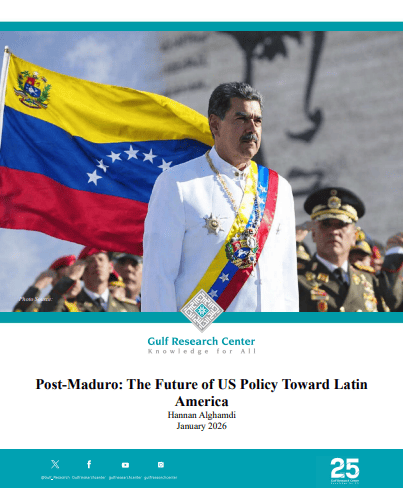
The trial of former Venezuelan President Nicolás Maduro opened in Manhattan federal court on January 5, 2026, on charges of drug trafficking to the United States and possession of heavy weapons, following his capture in Caracas during the US military operation codenamed “Operation Absolute Resolve.” In its aftermath, US President Donald Trump declared that his administration would not only apprehend Maduro but also “run the country” until a “safe, proper, and judicious” transfer of power could be achieved and a transitional government “friendly” to Washington installed. For his part, Secretary of State Marco Rubio stressed that the administration’s priority in Venezuela and the wider region is to shape policy and preserve US strategic influence in the Western Hemisphere.
This approach marks a significant shift in US policy toward Latin America compared with the sanctions‑driven framework that successive administrations relied on in recent decades. The decision to capture Maduro and try him in US courts must be read in tandem with the 2025 US National Security Strategy, which explicitly recenters the Western Hemisphere in US grand strategy. The NSS casts the region as “home to strategic points and resources” to be jointly developed with regional partners, and calls for a hemisphere “free of hostile foreign incursion or ownership of key assets,” with the United States restoring its “preeminence” as primary partner, a clear allusion to countering Russian and Chinese influence.
This turn of events raises pressing questions about the future trajectory of US policy toward Latin America, especially in light of ongoing threats by President Trump against leaders in countries such as Colombia, Cuba, and Mexico. Will Maduro’s arrest become a template for renewed direct military interventions aimed at containing Russian and Chinese influence, or will Washington primarily rely on calibrated pressure, sanctions, and other coercive instruments short of war? The remainder of this commentary addresses the regional repercussions of the Venezuelan operation and sets out plausible scenarios for the next phase of US engagement with Latin America.
A Long History of Intervention
Washington has traditionally regarded Latin America as a core sphere of US strategic influence, a perception that crystallized with the 1823 Monroe Doctrine and its slogan “America for the Americans.” The doctrine sought to bar external, particularly European, involvement from the Western Hemisphere and laid the foundations for long-term US claims to regional primacy.
In 1904, President Theodore Roosevelt advanced the “Roosevelt Corollary” to the Monroe Doctrine, asserting Washington’s right to intervene directly in Latin American states in the name of preserving stability and order. This principle underpinned a series of military expeditions and occupations, including in Haiti and Nicaragua, that further entrenched the United States as the self-appointed arbiter of regional affairs.
During the Cold War, US interventions in Latin America took on an explicitly ideological character, driven by the objective of containing communism and limiting Soviet influence in the hemisphere. Washington backed coups and authoritarian regimes in countries such as Brazil and Guatemala, and employed covert operations to prevent or overturn left-wing governments it viewed as potential Soviet allies. The 1989 invasion of Panama, launched as “Operation Just Cause” and culminating in the arrest of General Manuel Noriega on drug-trafficking charges, is widely regarded as the last major direct US military intervention in Latin America prior to the current episode in Venezuela.
After the Cold War, US–Latin America relations receded in priority as Washington’s focus shifted toward the Middle East and South Asia, particularly the wars in Afghanistan and Iraq. In this period, US policy relied heavily on punitive tools against governments that cultivated ties with US rivals or were accused of sponsoring terrorism, including targeted economic sanctions, support for opposition elites and segments of civil society, and strategies of diplomatic isolation. These measures contributed to severe economic and political strain in several countries, most notably Venezuela, where successive rounds of US sanctions accelerated an already deep crisis rooted in corruption, mismanagement, and the collapse of the oil-based model.
Trump’s second term, and especially the 2025 NSS, marks a clear departure from this period of relative neglect. The document effectively revives Monroe Doctrine logic, calling for a Western Hemisphere “free of hostile foreign incursion or ownership of key assets” and affirming that the United States “must be preeminent in the Western Hemisphere” as a condition of its own security and prosperity. In practice, this amounts to a geostrategic repositioning in which Latin America is recast both as a frontline in great-power competition with China and Russia and as a primary theater for controlling migration, drug flows, and the security of critical supply chains.
Against this backdrop, Maduro’s arrest signals that Washington is now prepared to move beyond sanctions and diplomatic pressure to the use of direct military force in order to impose its vision and safeguard its interests in the hemisphere.
Regional Divergences
Maduro’s detention and transfer to New York triggered a wide spectrum of regional reactions, exposing ideological divisions, diverging national interests, and contrasting views of his legitimacy. Cuban President Miguel Díaz-Canel offered strong public support for Caracas, appearing at mass rallies demanding Maduro’s release and denouncing the US operation as a “criminal attack” on Venezuela and Latin America.
Colombian President Gustavo Petro condemned what he called an “aggression against the sovereignty of Venezuela and of Latin America,” requested an urgent meeting of the UN Security Council, and ordered security deployments to the Colombia–Venezuela border. Brazilian President Luiz Inácio Lula da Silva likewise criticized the strikes and capture as an unacceptable violation that set a dangerous precedent, while Mexico and Uruguay issued statements rejecting unilateral military action and reiterating their commitment to international law and non-intervention.
In contrast, Nicaragua’s President Daniel Ortega, long seen as one of Maduro’s closest allies, delayed his response and eventually issued a carefully calibrated statement that avoided anti-imperialist language and any direct criticism of the United States. Instead, he voiced support for the positions of Venezuela’s interim president, Delcy Rodríguez, who has signaled a willingness to explore pragmatic engagement with Washington in managing the transition.
At the opposite end of the spectrum, Chile’s president-elect José Antonio Kast hailed Maduro’s arrest as “good news for the region,” arguing that it opened the door to dismantling criminal and terrorist networks linked to the regime. Ecuadorian President Daniel Noboa likewise portrayed the US operation as a major blow against organized crime structures associated with Caracas. Peru, Paraguay, and Bolivia, for their part, stressed the importance of a democratic transition consistent with international law and human rights norms, while emphasizing the contested legitimacy of Maduro’s rule.
Taken together, these divergent reactions reflect several factors: contrasting political orientations, varying degrees of economic and security interdependence with the United States, and differing evaluations of Maduro’s domestic performance and regional role.
Autonomy, Instability, and the Regional Security Environment
Despite the variable reactions, Maduro’s arrest has reopened fundamental questions about political autonomy and regional order in Latin America. Rather than signaling a clear path toward stability, the episode highlights the persistent tension between external intervention and the region’s efforts to build independent political and economic frameworks. Actions taken against Venezuela are widely interpreted not as isolated measures, but as signals aimed at discouraging broader attempts at autonomy across the Global South.
Past interventions illustrate that removing an authoritarian leader does not automatically produce functional institutions. Cases such as Panama after Noriega or Libya after Gaddafi show how leadership removal can instead generate institutional vacuums, fragmented authority, and prolonged instability when transitions lack inclusive political settlements. Venezuela risks following a similar trajectory if power shifts occur faster than institutional reconstruction.
The regional consequences are likely to be significant. Instability in Venezuela has already spilled across borders through mass migration, and renewed disorder could intensify these flows while deepening political polarization in neighboring countries. Border areas are particularly vulnerable, where armed groups, informal militias, and criminal networks operate with relative freedom. Disruptions to key sectors such as energy distribution and food supply chains would further aggravate humanitarian conditions.
In the medium term, the most consequential effects may be structural rather than immediate. How Venezuela’s transition is managed will influence future regional alignments, patterns of external engagement, and the credibility of intervention as a tool for political change. Whether the outcome reinforces dependency or encourages more resilient regional cooperation will shape Latin America’s political landscape well beyond Venezuela itself.
Future Scenarios
Trump’s actions did not end with Maduro’s capture. His immediate threats toward leaders in Colombia, Mexico, and Cuba suggest that Venezuela may represent the opening phase of a broader regional strategy rather than a one-off intervention. The pattern points toward an effort to reassert US influence in the Western Hemisphere, secure access to strategic resources, and contain the expanding presence of China and Russia. Within this context, several plausible scenarios arise:
1. Consolidation of Preferred Partners
Under this scenario, Washington prioritizes cooperation with governments that are politically aligned and willing to support US objectives on migration management, security, and regional stabilization. Rather than emphasizing democratic credentials, as was the case under previous US administrations, alignment is rewarded through economic incentives, diplomatic backing, and security cooperation.
Recent US engagement reflects this approach. Financial assistance packages, tariff reductions, and high-profile political endorsements have been used to strengthen ties with governments seen as reliable partners. The emergence of a network of pro-US governments serves both as a counterweight to rival powers and as a signal that alignment brings concrete benefits, reinforcing Washington’s position without the need for direct coercion.
2. Targeted and Selective Pressure
A second scenario relies on calibrated pressure rather than overt intervention. In this model, the United States deploys economic leverage, political signaling, and the threat of sanctions to influence behavior while avoiding military escalation. This approach is particularly relevant for countries whose instability would carry high regional costs.
Mexico fits this logic. Despite periodic tensions over migration and narcotics trafficking, Washington has avoided actions that could destabilize a key economic partner and neighbor. Public rhetoric has occasionally hinted at stronger measures, but these are typically framed as cooperative security assistance rather than unilateral action. Major upcoming events, such as the jointly hosted 2026 World Cup, further reduce incentives for destabilization, given the risks of increased migration and border insecurity.
Colombia presents a similar case. With elections approaching in 2026 and a leadership transition on the horizon, Washington is more likely to focus on shaping political outcomes through diplomatic and economic influence rather than pursuing high-risk interventions. In this context, Venezuela functions as a warning, demonstrating the potential costs of defiance while encouraging political recalibration among regional elites without committing the United States to repeated large-scale operations.
Reading Venezuela from the Gulf
For GCC states, the US intervention in Venezuela is less a script for the Gulf than a cautionary example of how rapidly energy, security, and regime-change agendas can converge when a major oil exporter is reframed as a security problem. Since the 1970s, Gulf governments have anchored their security in a close partnership with Washington, which has contributed to deterring large-scale external threats and preserving regional stability. At the same time, they have deliberately expanded their external relationships, deepening political and economic ties with China, India, Russia, and other emerging powers. This diversification has not signaled strategic drift, but rather a calculated effort to build resilience, reduce vulnerability to pressure, and avoid excessive dependence on any single external actor.
Viewed from this perspective, the Gulf experience illustrates a model of preventive statecraft from which others can draw lessons. The Venezuela case reinforces the logic that Gulf states have long internalized: the importance of institutional resilience, calibrated reform, and diversified external relations in reducing exposure to coercive regime-change pressures when relations with a dominant power deteriorate. Rather than reacting to crises, Gulf leaders have sought to pre-empt vulnerability through gradual domestic reform, assertive regional diplomacy, and strategic partnerships that limit overdependence on any single actor.
The situation in Venezuela underscores the critical importance of effective energy governance after a military intervention. The current discussions regarding Venezuela's energy sector are reminiscent of past debates concerning "lessons from Iraq," particularly the risks associated with disruptions in oil production, inadequate regulatory frameworks, and disputes over revenue management in the aftermath of political turmoil. These challenges highlight the need for careful planning and robust institutional structures to maintain stability in vital economic sectors during periods of political transition.
In contrast to Venezuela's potential instability, Gulf Cooperation Council (GCC) states offer a model of consistent energy governance. They have successfully maintained institutional control over their strategic energy sectors and effectively decoupled political transitions from widespread economic collapse. This stability allows GCC members to present themselves as reliable, low-cost energy suppliers, particularly when geopolitical events create uncertainty in other major producing regions like Venezuela.
The uncertainty surrounding Venezuela's oil output in the short to medium term inadvertently reinforces the market position of reliable Gulf producers. This situation also prompts GCC nations to accelerate their domestic economic diversification efforts and to enhance their "investment diplomacy" through sovereign wealth funds. These funds are crucial for navigating high geopolitical risks and maintaining investment in promising markets without withdrawing due to political volatility.
The current geopolitical developments in Venezuela have significant implications for Gulf capital and investment strategies. From the perspective of Gulf investors, the United States’ intervention serves as both a cautionary example and a potential opportunity. It highlights growing risks in parts of Latin America, particularly within the energy sector and sovereign debt markets, pushing Gulf governments and investors to be more careful about sanctions, legal disputes, and partner choice.
Despite these risks, the structural appeal of the Latin American region for Gulf capital remains strong across various sectors. Opportunities continue to exist in agribusiness, renewable energy, critical minerals, infrastructure development, and financial technology. These sectors are contributing to the emergence of a dedicated Middle East–Latin America investment corridor, reflecting sustained interest in regional cooperation and economic engagement.
*Hannan Alghamdi is a Researcher at the Gulf Research Center (GRC)