Commentary & Analysis
Mobilising Private Capital for Africa’s Development
Africa is charting its course for a new industrial revolution. Governments across the continent have set forth national development plans that prioritise infrastructure, energy, minerals, and agriculture, among other sectors. These plans highlight industrialisation, regional integration, job creation, and the development of strong economies, aiming to increase productive capacity, enhance value addition, and boost intra-African trade. Consequently, infrastructure forms the foundation for broader sectoral growth, necessitating substantial private-sector investment to mobilise capital and drive growth across Africa.
Yet, a 402 billion USD annual financing gap for infrastructure, mining, agriculture, and energy development hampers the realisation of these national development plans. Particularly for infrastructure, the continent requires 170 billion USD annually; however, only 90 billion USD has been invested thus far. Addressing this gap is urgent. Some economies face prohibitive public debt levels, limiting the government's capacity to fund capital-heavy projects. In addition, regulatory uncertainty and a lack of credibility in government guarantees heighten investor risk and impede implementation.
African institutions have traditionally depended on multilateral financial organisations and foreign government entities, such as the International Monetary Fund (IMF) and the United States Agency for International Development (USAID), to bridge this development gap. Countries such as Ghana, Senegal, and Kenya have sought loans from the IMF to tackle fiscal challenges. For example, in 2023, Ghana applied and was approved for a 3 billion USD Extended Credit Facility to bolster its foreign currency reserves and stabilise the cedi, its national currency. That the loan was approved serves as a “vote of confidence” in the government’s fiscal plan for tackling its national debt.
However, the IMF imposes fiscal, political, and economic constraints that restrict long-term growth and undermine economic independence. Turning to the IMF has also compelled many countries to restructure existing debt, reduce domestic investment, and cut subsidies to service IMF loans. As a result, some African governments, including Senegal, are hesitant to accept such loans, as doing so presents an obstacle to meeting their national priorities of investing in infrastructure.
In 2025, the United States dismantled USAID, which had disbursed over 17 billion USD in aid to African countries, further complicating access to capital. In an additional step, the Trump administration ordered the Millennium Challenge Corporation (MCC)-a US agency that invests in infrastructure projects in Africa- to discontinue a large portion of its planned projects, including road development and power generation. Consequently, African economies must explore alternative sources of financing.
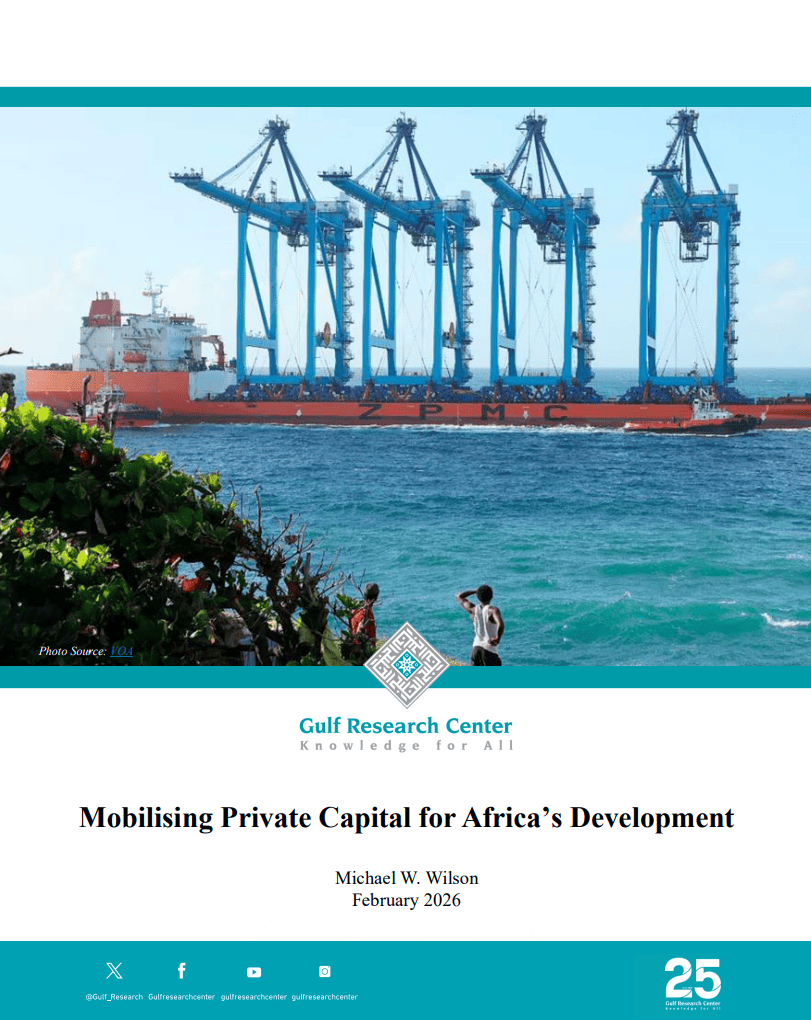
As fiscal constraints and conditional lending limit state-led development, the private sector is becoming indispensable for delivering infrastructure, energy, and industrial capacity at scale. Governments lack the capacity to deliver and increasingly rely on public-private partnerships to materialise national objectives. DP World is leading a 3 billion USD campaign to modernise and operate the Port of Banana in the Democratic Republic of the Congo (DRC) and the Port of Ndayane in Senegal.
DP World has broken ground on both projects and intends to complete them within five years, expanding trade volumes for the coastal countries. Senegal’s President Bassirou Faye and Felix Tsiheskedi, President of the DRC, consider infrastructure development among their respective countries’ core priorities, and have thus mobilised capital from the private sector to support the completion of these projects.
Nigeria, Africa's largest oil producer, has relied on imports of refined products because most of its crude is being exported, even as all of its state-owned refineries remain nonoperational despite 18 billion USD in maintenance spending, demonstrating the vulnerabilities of relying solely on the public sector to grow the economy. When Nigerian President Bola Tinbu removed oil subsidies, which were essential to low-income communities (at the IMF's encouragement), prices soared and led to hyperinflation, underscoring the harm that can be done to the economy when there is too much reliance on the public sector and certain development finance-driven reforms.
Meanwhile, Nigeria’s Dangote Petroleum Refinery, the largest oil refinery in Africa, has revitalised the country’s economy by introducing refined petroleum products to the market and lowering domestic oil prices. Since the 20 billion USD refinery opened, Nigerian gas has fallen from 1,500 naira (1.03 USD) per litre to 1,000 naira, demonstrating the benefits of using domestic oil and alleviating economic challenges. The Dangote refinery demonstrates how private sector investments deliver direct benefits through lower costs and improved supply.
Governments are increasingly turning to the private sector to drive growth; a trend also reflected in the African Development Bank’s efforts to mobilise more private capital across the continent. But while private investment can deliver tangible economic benefits, its mobilisation ultimately depends on the credibility of government guarantees. It therefore remains urgent to strengthen Africa’s investment climate through credible risk and insurance-sharing guarantees. African governments must create an enabling environment to attract private capital through tax incentives, streamlined business registration processes, special economic zones, and guarantees that protect private-sector interests. Failing to provide such assurances carries serious economic consequences.
Ghana exemplifies this clearly. Years of weak financial discipline led to the build-up of approximately USD 2.5 billion in arrears owed to private energy producers, undermining investor confidence and straining power generation. Consequently, Ghana exhausted its partial risk guarantee for gas supplies from the Offshore Cape Three Points field, which protected nearly USD 8 billion in private investments, thereby damaging the government's credibility with international partners. As part of a 1.3 billion USD payout to the energy sector, including 597 million USD to the World Bank, it restored this guarantee along with investor confidence.
Following these improvements, Italian energy company Eni and Dutch petroleum company Vitol have revived investment projects in Ghana, including signing a Memorandum of Intent (MOI) to target new oil and gas production. This case illustrates that private investments in Africa are constrained by the credibility of government guarantees, and building on such frameworks will be instrumental to mobilising the private sector for Africa’s development.
Meanwhile, political intervention and expropriation further compound investor risk across several African markets. In Burkina Faso and Mali, governments have seized control of, or forcibly increased their stakes in, gold mines owned by foreign entities such as Barrick Gold and Australia’s West African Resources. Such actions equally erode investor confidence, and the government must therefore guarantee protection for the private sector.
Such credibility and risk challenges have prompted regional development institutions to rethink their role in mobilising investment. Dr. Sidi Ould Tah, President of the African Development Bank, hosted Africa’s first Private Capital Mobilisation Day in December 2025, which raised 11 billion USD for the African Development Fund from members of the private sector, including private equity firms, insurers, export credit agencies, and sovereign wealth funds. This underscores that development financing in Africa is leaning more on the private sector, as public finance alone cannot meet Africa’s development needs at scale.
Furthermore, the AfDB is establishing a Private Sector Innovation Lab to create new financing instruments, partnership models, and risk-sharing mechanisms for African markets. These initiatives indicate that regional development institutions are also leaning on the private sector as the engine for growth and delivery in Africa’s economic transformation.
For the Gulf states, these concerns are important to consider as they are among the largest investors in the continent through government-affiliated private companies and sovereign wealth funds. Public-private partnerships are increasingly present in Gulf-African relations. Chad’s President Mahamat Idriss Deby Itno launched his 30 billion USD national development plan, “Connection 2030,” at the UAE-Chad Trade and Investment Forum, where it secured 20.5 billion USD in agreements and pledges. Over the next five years, private Emirati investments in Chad will focus on developing mining, infrastructure, agriculture, and energy projects.
Other countries, including Ghana, Senegal, and Congo, have called on Gulf stakeholders to invest in their respective countries. While African economies pivot towards the private sector, particular attention will be given to the Gulf states. For countries like Saudi Arabia and Qatar, which pursue risk-averse investment strategies, ensuring such guarantees will be critical for African countries hoping to mobilise Gulf capital.
Africa’s development challenge is no longer defined by a lack of ambition or projects, but by the ability to mobilise capital at scale under credible conditions. As public finance and development institutions reach their limits, private investment has emerged as the primary driver of infrastructure delivery, energy security, and industrial growth. However, the effectiveness of private capital depends on governments’ capacity to provide regulatory certainty, enforce contracts, and uphold risk-sharing guarantees. The experiences of Nigeria, Ghana, and other African economies demonstrate that where these conditions are met, private investment can deliver tangible economic benefits; where they are absent, capital retreats.