
Commentary & Analysis
Diplomatic Paralysis The Ongoing Session of the First Plenary Session of the Intergovernmental Science-Policy Panel on Chemicals, Waste, and Pollution
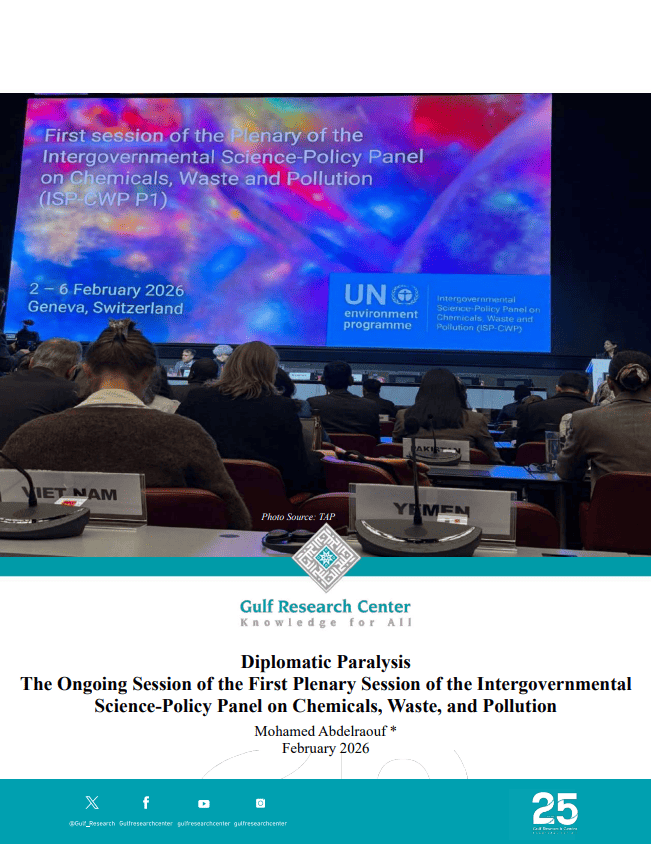
The first plenary session of the Intergovernmental Science-Policy Panel on Chemicals, Waste and Pollution (ISP-CWP P1), held in Geneva from February 2–6, 2026, concluded with what many participants described as “profound disappointment.” Despite its high-profile mission to complete the “trio” of global science-policy bodies alongside the IPCC (climate) and IPBES (biodiversity), the meeting adjourned without achieving any of its primary operational goals. The ISP-CWP was established in June 2025 to bridge the gap between scientific knowledge and decision-making regarding the global pollution crisis. Its mandate is to address the increase in chemical production since 1950, and the millions of annual deaths linked to chemical and pollution exposure. The Geneva meeting was intended to be the moment this new body became fully operational. The "minimum expectations" for the week included:
• Adopting the Panel’s Rules of Procedure (RoP)
• Electing a full desk and a chair
• Selecting a physical location for the secretariat
• Establishing a trust fund to support delegate participation
• Mandating intersessional work to begin substantive scientific assessments In the end, however, the meeting failed to reach consensus on the foundational documents, which in international diplomacy translates as a "disappointing outcome." At ISP-CWP P1, this failure was total: The meeting ended without even officially opening its session or adopting its own agenda because delegates could not agree on the rules that would govern their deliberations.
Procedural Paralysis
The week was dominated by "glacial" negotiations and procedural wrangling. Delegates spent hours debating the definition of observers—specifically the distinction between Indigenous Peoples and local communities—and whether plenary sessions should be held in private. Because the panel could not agree on its Rules of Procedure (RoP), it lacked the legal basis to take formal decisions on its budget, location, or next meeting dates.
By the close of the week, the list of unfinished business was extensive:
• No agreed agenda: The meeting never officially moved past procedural debates.
• No secretariat location: A decision on where the panel will be physically headquartered remains pending.
• No trust fund: The panel failed to “open a bank account,” leaving future participation for many delegates uncertain.
• No report: The plenary was unable to adopt a final report of its proceedings.
Russia insisted that no substantive work could begin—nor could the session be “officially” opened—until every single rule of procedure was agreed upon by consensus. This effectively gave a single nation "veto power" over the start of the meeting. By refusing to move past Rule 1 (the definition of the meeting itself) and Rule 43 (voting modalities), Russia and a few other contries ensured that the agenda remained unadopted for the entire week. This clashed directly with the EU and other nations, who argued for adopting the rules “provisionally” to allow work to begin— a common practice in UN bodies like the IPCC.
The "And/Or" Debate
A significant portion of the week’s delay was caused by a debate over the terminology of observers, a discussion in which the African Group played a central role. In this regard, there was a deep divide over whether to recognize “Indigenous Peoples AND local communities” or “Indigenous Peoples AND/OR local communities.”
Many African nations sought to ensure that "local communities" (which represent a vast portion of their rural populations) were given the same status and scientific input weight as "Indigenous Peoples." This was met with resistance from delegations (like Australia and parts of Scandinavia) who argued that “Indigenous Peoples” have distinct international legal rights that should not be diluted by grouping them with the broader term “local communities.”
The EU, Japan, and other developed nations’ primary goal was to move the ISPCWP into its scientific phase and push for the establishment of “Intersessional Work,” which would allow scientists to begin reviewing chemical pollution data while the diplomats fought over the rules.
The most upsetting outcome of these regional clashes was the marginalization of the scientists present. Hundreds of experts traveled to Geneva to offer data on microplastics and pesticide toxicity, only to spend five days watching diplomats argue over the placement of commas in a procedural document.
Despite the general failure, a few narrow successes were recorded:
• Election of Leadership: The Plenary successfully elected Osvaldo Álvarez Pérez (Chile) as Chair and filled approximately 80% of the bureau positions.
• Expanding Membership: Côte d’Ivoire and the United States joined during the week, bringing the panel’s total membership to 129 nations.
The elected leadership must now find a way to resolve the contentious RoP issues— such as voting modalities and observer participation—before the next gathering to avoid a repeat of the Geneva deadlock. In addition, establishing financial rules remains a priority, as the lack of a trust fund threatens the continued work of the panel and its ability to include voices from the Global South.
Led by the newly elected Chair, Osvaldo Álvarez Pérez, the Group of Latin America and Caribbean (GRULAC) region took a firm stand on the structural integrity of the panel, focusing on pushing for a bureau that reflects a fair geographic balance, ensuring that the Global South is not sidelined by the scientific infrastructure of the Global North. GRULAC were most vocal about establishing the trust fund.
The Wins and Losses for Gulf Cooperation Council (GCC) Countries
The GCC made its way into the partially filled bureau of ISP-CWP by electing Saudi Arabia as a bureau member. However, the failure of the ISP-CWP P1 meeting in Geneva has significant implications for their ongoing regulatory shifts and industrial strategies.
The disappointing outcomes for these nations can be categorized as follows:
1. Disruption of Regional Regulatory Alignment
The GCC is currently in the middle of a massive push toward chemical and waste synchronization. The ISP-CWP was intended to provide scientific consensus for these types of regulations. Without an operational global panel, GCC countries must continue relying on fragmented national or EU-based standards, potentially leading to higher compliance costs for their petrochemical industries.
2. Risks to the Petrochemical Industry
As major producers and exporters of chemicals, GCC nations require a stable, science-led global body to avoid arbitrary trade barriers. In addition, the "procedural lockage" in Geneva means there is still no global authority to provide clear, peerreviewed data on "forever chemicals" and microplastics
Ultimately, the meeting did not close; it was adjourned. The burden now shifts to the partially filled bureau to navigate the path forward, having been entrusted to consult with member states to identify a date and venue for a “resumed first session” (informally dubbed ISP-CWP P1.2). One should be thankful that, at the very least, the panel itself is still alive and that the next steps will soon be finalized, allowing for operational success in the near future.
* Dr. Mohamed Abdelraouf is the Director of the Environmental Security and Sustainability Research Program at the Gulf Research Center.