Commentary & Analysis
From Grassroots to Mega-Projects: Comparing Italy and Saudi Arabia’s Sports Diplomacy
In recent years, sport has emerged as one of the most effective instruments of contemporary soft power. The significance of sports is no longer isolated to major events or athletic achievements but encompasses complex ecosystems that impact public policies, institutional actors, industrial value chains, territories, social practices, and identity-based narratives. Within this framework, a comparison between Italy and Saudi Arabia provides an opportunity to observe two different models of sports diplomacy, reflecting fundamentally different, yet equally impactful, underlying ecosystems: one rooted in historical and territorial sedimentation, the other shaped by an accelerated strategy of systemic construction. It is precisely this difference that generates synergy, allowing the two systems to operate in a complementary way.
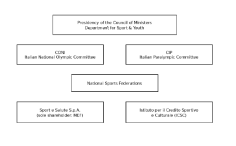
In Italy, the constitutional recognition of sport in 2023 was both a symbolic and an operational turning point. The inclusion of sports among the values protected by the constitution formally established a vision explicitly linking sports to well-being, education, and personal development. This framework finds concrete expression in a highly articulated institutional system. At the political and strategic level, responsibility for sport lies with the Minister for Sport and Youth, operating within the Presidency of the Council of Ministers, who exercises functions of policy direction and oversight within the national sports system. The Italian National Olympic Committee (CONI) serves as the apex of the national sports governance structure, coordinating sports federations and representing Italy within the Olympic Movement. The Italian Paralympic Committee operates in parallel, assuming growing importance also in terms of inclusive sports diplomacy. Sport e Salute, a public company fully owned by the Ministry of Economy and Finance, manages resources, facilities, and programmes aimed at promoting physical activity, acting as a bridge between public policy and the sporting world. This institutional landscape is further complemented by the Istituto per il Credito Sportivo e Culturale (ICSC), a unique institution in the international context: a public development bank with a dedicated mission to promote social cohesion, equity, inclusion, and sustainable growth through investments in sport and culture in Italy and abroad.
Territories, Excellence, and Global Visibility: The Italian Model
At the initiative of the Deputy Prime Minister and Minister of Foreign Affairs, Antonio Tajani, a new office within the Ministry of Foreign Affairs dedicated to “Sports Diplomacy” was established in January 2024. This structure is tasked with supporting international sports initiatives and activities to promote exports, the Made in Italy brand, and Italy’s global image through sports. Alongside this initiative, the Italian Day of Sport in the World was also introduced, designed to showcase defining and identity-based elements of Italian excellence through sport and its protagonists, including athletes and sports-related industries, while integrating cultural, commercial, and scientific dimensions.
At the end of 2023, the Italian sports system confirmed itself as a fully structured economic ecosystem, generating €119.6 billion in revenue and contributing 3.9% to the national GDP, up from 3.4% in 2022. The system includes approximately 115,000 sports clubs, more than 10,000 manufacturing companies, and employs over 400,000 people, highlighting sports’ role as a stable and systemic component of the Italian economy.
The ecosystem is articulated along the entire value chain, from upstream manufacturing activities to downstream services and broader social externalities. Upstream activities, which include the manufacturing of sporting goods and inputs necessary for sports, such as sportswear, equipment, and technical products, involve around 10,000 operators. In 2023, this segment generated approximately €23.1 billion in revenue, accounting for 19% of total sports revenues and contributing 0.51% to the GDP, while employing about 159,000 people.
At the core of the system are sports operators, encompassing sports and facility management companies, amateur and professional sports clubs, national federations, and public and private entities responsible for sports infrastructure. This segment represents the largest share of the ecosystem, with around 115,000 operators. In 2023, it generated €50 billion in revenue, equal to 42% of total sports revenue, and contributed 1.56% to the GDP, employing approximately 248,000 people.
Downstream activities include media, sports events, betting, broadcasting, publishing, and a wide range of related services such as transport, hospitality, and retail linked to sport. This segment generated €34.3 billion in revenue in 2023, representing 29% of total revenues and 1.25% of GDP.
Finally, the system produces significant positive externalities, reflecting the socio-economic value generated by sport beyond direct market transactions. These include improvements in health and well-being, safety, social inclusion, and educational outcomes in schools and workplaces. In 2023, these externalities were estimated at approximately €12.2 billion, accounting for 10% of total sports-related revenue and contributing 0.63% to the GDP (Italian Sport System Observatory, IFIS Bank).
The Manlio Masi Foundation estimated Italian exports of sporting goods at €4.7 billion in 2024, placing Italy fifth among global exporters, with a 3.8% share of the global market—higher than Italy’s overall share of world exports (2.9%). In 2024, Italian exports of sporting goods to Saudi Arabia specifically reached approximately €38 million, marking an increase of 20.2% compared to 2023. The Foundation further highlights that Saudi Arabia is among the countries with additional realizable potential for Italian sports exports, estimated at around €9–10 million, as well as a broader margin for further expansion, estimated at approximately €70 million.
Italy does not rely on a single sports hub, but rather on a constellation of districts and areas of excellence. The Motor Valley in Emilia-Romagna alone comprises over 16,500 companies and 90,000 employees across motorsports, advanced engineering, and international competitions. The Montebelluna district is a global leader in mountain and outdoor sports footwear. According to Confindustria ACMA, the cycling sector—including manufacturing, events, and tourism— generates annual revenues of €2.6 billion. These are complemented by yachting, winter sports, fencing, and disciplines such as volleyball, rowing, and athletics, among others, all of which contribute to a stable and internationally renowned reputation in the sports realm.
The Giro d’Italia is the most visible expression of this model. It is not merely a sporting event, but a platform for territorial diplomacy. With television coverage in more than 190 countries (A. Sardi et al.) and an estimated economic value of around €2 billion (Banca IFIS), it serves as a powerful narrative tool, showcasing landscapes, historic towns, gastronomy, and culture. It represents a form of soft power that emerges at the grassroots level and can be amplified by public institutions.
The Italian Olympic tradition represents one of the most enduring expressions of the country’s sports culture and soft power. It is rooted not in a single centre of excellence, but in a diffuse system of training, clubs, and territories, where elite performance is the cumulative result of local investment, community-based sport, and long-standing institutional frameworks. This model continues to translate into tangible results on the international stage. At the Paris 2024 Olympic Games, Italy secured 12 gold, 13 silver, and 15 bronze medals, for a total of 40 medals, ranking ninth overall in the medal table. Notably, 15 of these medals were secured by women, representing 37.5% of the total medal count. The outcome was even more striking at the Paris 2024 Paralympic Games, where Italy achieved 24 gold, 15 silver, and 32 bronze medals, totalling 71 medals and finishing sixth overall, with 31 medals won by women, accounting for approximately 43.7% of the total.
These figures underscore the structural role of female athletes within Italy’s high-performance sport system and the depth of an inclusive model connecting grassroots pathways to elite success.
Beyond participation and performance, women also play a significant role in the economic fabric surrounding sport. According to Unioncamere, enterprises led by women represent around 22% of all registered businesses in Italy, a figure that provides important context for understanding female entrepreneurship within sport-related sectors.
This same grassroots approach underpins the organisation of the Milano Cortina 2026 Winter Olympics, which opened on 6 February 2026 at San Siro Stadium in Milan and will close on 22 February at the Verona Arena. The Paralympic Games will follow, opening in Verona on 6 March and concluding on 15 March in Cortina d’Ampezzo. Milano–Cortina 2026 marks a structural innovation in Olympic hosting: It is the first Winter Olympics officially awarded to two cities, with competitions spread across 11 venues located in two regions—Lombardy and Veneto—and the Autonomous Provinces of Trento and Bolzano. This itinerant model reflects a deliberate strategic choice to embed the Games within a broad territorial framework rather than concentrating them in a single metropolitan hub.
From the outset, the Games have been conceived as a platform for territorial valorisation and longterm legacy, with an overall geographical footprint of approximately 33,000 square kilometres. This spatial dimension reinforces the Italian approach to sport as a vehicle for place-based promotion, linking alpine environments, urban centres, and cultural heritage within a unified narrative. According to an analysis by Banca IFIS, the economic impact of Milano–Cortina 2026 is estimated at approximately €5.3 billion, comprising €1.1 billion in direct spending, €1.2 billion in deferred expenditure, and an additional €3 billion in benefits related to infrastructure upgrades and territorial connectivity.
In addition, as the host country, Italy has played a proactive diplomatic role by presenting, on behalf of the Fondazione Milano Cortina 2026 and in close coordination with the International Olympic Committee, the traditional Olympic Truce Resolution at the United Nations, facilitating its adoption by the General Assembly. Through this initiative, Italy reaffirmed its longstanding commitment to promoting dialogue, cooperation, and peaceful coexistence among people through sports. The Olympic Truce represents one of the most meaningful elements of the Olympic legacy: It is a universal appeal for the suspension of hostilities and the pursuit of peace in the period surrounding the Olympic and Paralympic Games.
From a diplomatic perspective, the 2026 Resolution constitutes a notable success of multilateral engagement through sports. Unlike the precedent set during the Paris Games—when the resolution was put to a vote—the Italian-promoted resolution achieved broad consensus (165 cosponsorships) and was adopted by the General Assembly without the need for a vote, signalling Italy’s ability to leverage the Olympic framework not only as a sporting platform, but also as an effective instrument of international diplomacy and soft power. The inclusive dimension is one of the most significant aspects of contemporary sports diplomacy, highlighting how sport can function as a tool for recognition, visibility, and social participation. Italy holds a historic position as a pioneer in this regard, as the inaugural Rome 1960 Paralympic Games gave rise to the modern Paralympic movement.
2030 and the Strategic Use of Sport in Saudi Arabia
In the case of Saudi Arabia, sports diplomacy cannot be properly understood outside of the broader framework of Vision 2030. The Kingdom’s national transformation programme was launched in 2016, aiming to reduce dependence on oil, diversify the economy, and redefine the relationship between the state, society, and younger generations. Unlike the Italian model—where sport is the outcome of long-term territorial and social sedimentation—in Saudi Arabia, sport has been explicitly identified as a public policy instrument, deliberately used to foster economic, social, and reputational change. The Ministry of Sports defines the overall strategy, while the Public Investment Fund (PIF) serves as the primary financial engine. Through vehicles such as SURJ Sports Investments, the PIF operates across football, golf, esports, mixed martial arts, and major international events. Alongside it, the Saudi Olympic and Paralympic Committee, national federations, and the General Entertainment Authority contribute to building the broader ecosystem of the sports world.
Saudi Arabia employs sport as a public diplomacy tool through a layered and multi-channel model operating simultaneously at international, regional, and domestic levels. Externally, the Kingdom leverages high-visibility events, such as the 2034 FIFA World Cup, long-term hosting rights, and strategic investments across football, golf, boxing, motorsport, combat sports, and e-sports to position itself as a central actor in the global sports ecosystem. This outward projection is further reinforced through Saudi participation in international sports governance bodies, including representation within FIFA and IOC commissions, which enhances agenda-setting capacity and institutional visibility beyond event hosting.
Crucially, this international projection is complemented by a domestic foundation that strengthens credibility and coherence. Between 2015 and 2023, the share of Saudi citizens engaging regularly in physical activity increased from around 13% to nearly 50%. Multi-sport clubs grew from 9 in 2019 to 126 in 2024, while the number of sports federations has grown by 200%, reaching 98. From an economic perspective, the overall value of the Saudi sports market in 2024 was estimated at approximately USD 8.4 billion, with projections indicating potential growth to over USD 22 billion by 2030 (SportTechX report, in collaboration with MISA), reflecting the combined impact of infrastructure development, professional leagues, grassroots participation, and sports-related industries.
Within this framework, Riyadh has significantly improved its international reputation, and Saudi Arabia’s bid for the FIFA World Cup 2034 received a technical evaluation score of 419.8 points out of 500, the highest score awarded in the history of World Cup bidding processes. These outcomes indicate a strengthened capacity to attract partnerships, legitimacy, and global attention. At the domestic level—an often underestimated but diplomatically relevant dimension—the rapid expansion of participation, grassroots structures, and women’s sports, where participation has increased by nearly 150% since 2015, contributes to the sustainability of the model by aligning external projection with tangible social transformation.
At the same time, the consolidation of Saudi Arabia’s sports strategy has entered a new and more complex phase. The current approach has demonstrated remarkable effectiveness in terms of speed, scale, and capital mobilisation. Looking ahead, however, its long-term diplomatic, economic, and social impact will increasingly depend on the gradual strengthening of a deep and resilient sports ecosystem that complements flagship projects. This process involves reinforcing national federations, expanding youth academies, developing coaching and referee pathways, refining talent identification systems, and nurturing locally rooted competition structures, alongside the emergence of a sustainable grassroots sports economy.
Such an ecosystem typically evolves through the progressive growth of local clubs as economic actors, the development of small and medium-sized enterprises in sports services, equipment, and facility management, the professionalisation of domestic event organisers, and the consolidation of regional supply chains that support everyday sporting activities. These elements embed sports more firmly within the social and economic fabric, enhancing resilience over time. At this stage, Saudi Arabia has strategically relied on the recruitment of international expertise— elite athletes, experienced coaches, technical directors, event managers, and administrators—to accelerate learning curves and rapidly raise its global standing. This approach is both rational and effective in an early growth phase. A key medium- to long-term opportunity, however, lies in the gradual transition towards developing and retaining domestic human capital, enabling the system to increasingly generate its own athletes, professionals, and sporting industry leaders capable of operating autonomously and competitively on the international stage. The question is, when and how will the system evolve from being a net importer to a net exporter of sporting skills and expertise?
In this context, the issue of whether Saudi Arabia might eventually benefit from a more formalised sports diplomacy unit within its diplomatic apparatus should be understood not as a matter of sports policy, but of international promotion and narrative coherence. The Italian experience is instructive in this regard: Italy’s sports diplomacy office within the Ministry of Foreign Affairs does not design or regulate sports policy, nor does it intervene in governance. Its role is instead focused on the integrated promotion of the country’s image, economic excellence, and cultural identity through sports, supporting the international visibility of Italian sporting industries, events, territories, and know-how as part of a broader Made in Italy strategy.
Applied to the Saudi context, a similar function would not aim to centralise control or replace existing actors, but rather to amplify and translate an already rich ecosystem into a coherent soft power narrative. As Saudi Arabia’s sports sector continues to expand—both in economic value and social reach—the challenge increasingly shifts from investment and delivery to storytelling, coordination, and international positioning. A diplomatically embedded structure could help align sports-related initiatives with wider cultural, tourism, and economic outreach, leveraging embassies and international platforms as channels of visibility rather than instruments of policy.
The debate on “sportswashing” often accompanies discussions of Saudi Arabia’s high-profile investments in global sports. While it is undeniable that some initiatives contribute to international image-building, framing the Kingdom’s entire sports strategy solely through this lens risks oversimplifying a more complex reality. Sport in Saudi Arabia is increasingly embedded in domestic public policy and social transformation, rather than being limited to marquee events or elite athlete recruitment.
A central example is the Sport for All Federation (SFA), launched in 2018 under the Vision 2030 framework. As the government’s primary initiative to expand mass participation in physical activity, it targets all age groups and social segments, with objectives that include improving public health, fostering social interaction, and broadening access to sports through partnerships with the private sector. SFA recorded more than 295,000 participants in community-based sports events in 2023, reinforcing sports as an everyday social practice rather than an elite spectacle.
These policies reflect a broader understanding that long-term stability and prosperity cannot rely indefinitely on hydrocarbon revenues. With a predominantly young population, Saudi Arabia faces structural economic and social challenges that require investment in human capital, well-being, and social cohesion. In this context, sport functions not only as a tool of international visibility but also as a domestic social and economic investment aligned with wider reforms across education, labour markets, and gender inclusion.
A symbolic moment in this regard was the Italian Super Cup match held in Jeddah in 2018 between Juventus FC and AC Milan, which marked one of the first official openings to female attendance in stadiums, allowing women to watch an international sporting event in designated sections. Although limited in scope, this event carried both symbolic and tangible significance, as it paved the way for further liberalisations that supported inclusion processes without abrupt ruptures with local traditions.
Thus, reducing Saudi Arabia’s sports strategy to sportswashing alone risks overlooking its internal developmental dimension—and, indirectly, the role that sports can play in advancing inclusion, health, and participation. The real challenge for Saudi Arabia is not the organization of the big sports event itself, but the ability to embed sports within the social fabric, ensuring sustainability beyond public investment.
Complementarity, Cooperation, and Mutual Learning
It is precisely here that the complementarity between the two models becomes evident. Italy offers unique know-how in grassroots ecosystem building, education and training, federative governance, and the integration of sport with territories. Saudi Arabia brings financial capacity, strategic ambition, and organisational scale. Cooperation—ranging from cycling to technical training, from the exchange of expertise in event management to the design of territorial legacies and the organization of big events (such as the six editions of the Italian Super Cup hosted in Saudi Arabia) —can transform sports diplomacy from a tool of image-building into a space for mutual learning.
A further area of convergence between Italy and Saudi Arabia lies in opportunities for international cooperation through sport, particularly in third countries and across the African continent. In this context, sport can become a concrete instrument of development cooperation. A reference framework is provided by the Pescara Declaration of October 2024, adopted in the context of the Italian-led G7 Development process, which recognises sport as a lever for achieving the United Nations Sustainable Development Goals. From this perspective, Italian-Saudi cooperation focused on sports-based projects in Africa—from infrastructure development to education programmes centred on sports—would offer a tangible arena for translating shared principles of sustainability, development, and growth into measurable action on the ground. In addition, emerging operational instruments such as the Global Sport Impact Fund, a flexible and innovative initiative launched by the Finance in Common Coalition for Sustainable Development through Sport, are designed to mobilize public and private resources, thereby increasing sustainable, resilient, and high-impact investments in the sports sector worldwide.
Ultimately, sports in Italy and Saudi Arabia should be understood as two distinct systems whose interaction highlights how sports can operate as a universal language. Each brings specific experiences and strengths that can be mutually leveraged: Italy from Saudi Arabia’s capacity for strategic scale and rapid mobilisation, and Saudi Arabia from Italy’s long-standing integration of sport with territories, institutions, and social ecosystems. Together, they illustrate how sport can generate economic value, foster social cohesion, and enhance international influence across different cultural and strategic contexts.
* Giuseppe Palazzo is an Italian diplomat.