

Commentary & Analysis
Understanding China’s Stance on the Iran-Israel/U.S. Conflict
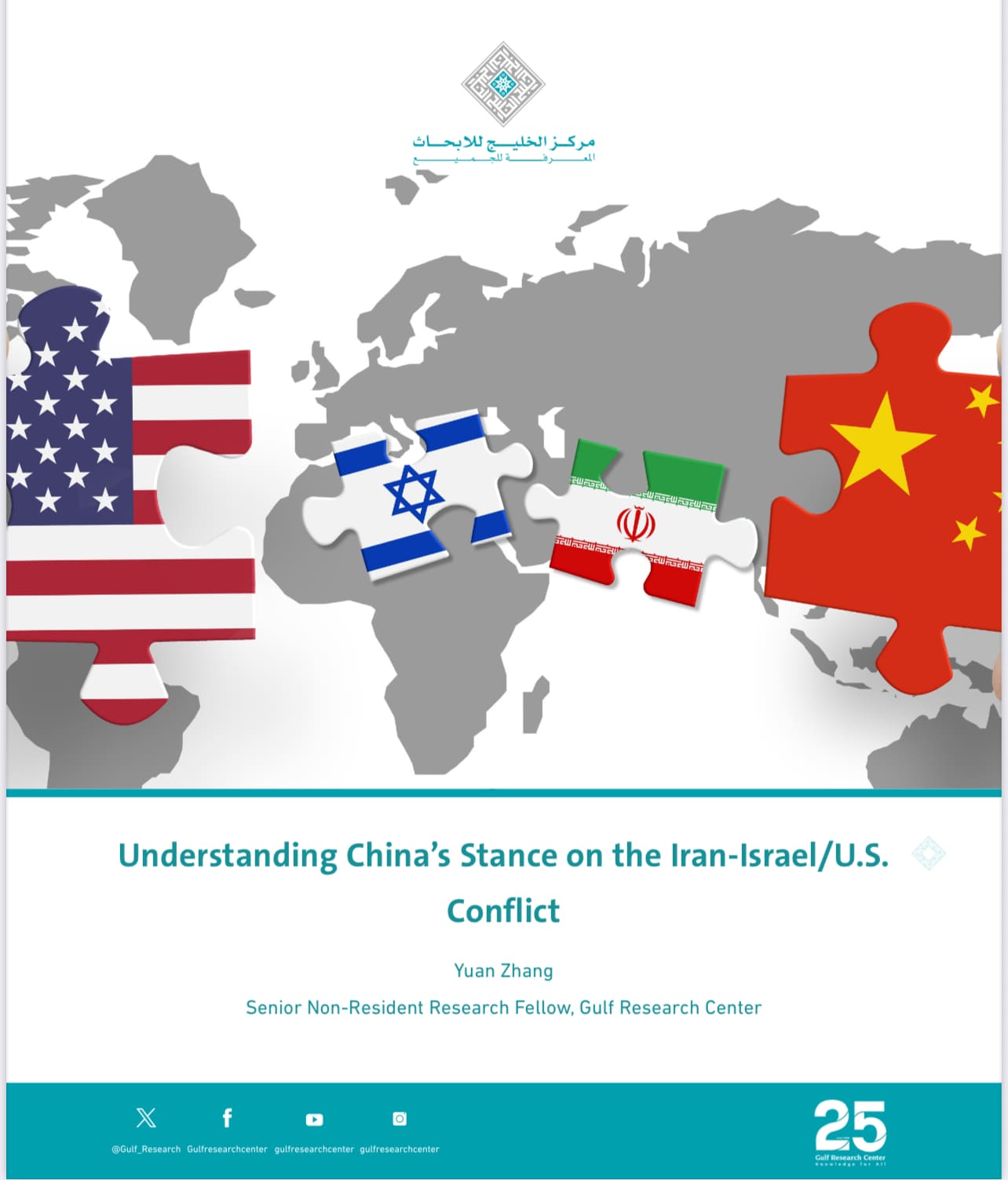
As the conflict between the United States, Israel, and Iran intensifies, growing attention has turned to China’s position. As one of the largest economic stakeholders in the Middle East, China is widely expected to play a more active role. Some analysts, particularly in the West, have anticipated stronger support from Beijing for Tehran given the expanding China–Iran partnership in recent decades. In practice, however, China has adopted a far more cautious posture. While Beijing has openly condemned the U.S. and Israeli strikes as “violations of international law” and called for immediate de-escalation, it has so far refrained from direct involvement in the conflict.
Diplomatic Positioning: China’s “Force for Peace” Narrative
China’s diplomatic messaging since the outbreak of the crisis reflects a familiar narrative in its foreign policy discourse. Following the February 28 strikes, particularly after reports of the death of Iran’s Supreme Leader, the Chinese Ministry of Foreign Affairs issued unusually strong criticism.1 Foreign Minister Wang Yi described the operations as a violation of sovereignty that “tramples on the UN Charter.”2 This framing serves multiple purposes. First, it allows Beijing to reinforce its broader critique of unilateral military action and what it characterizes as American destabilizing behavior in international politics. Second, the emphasis on sovereignty reflects China’s long-standing concern with the precedent of externally driven regime change. Reports surrounding the possible death of Iran’s Supreme Leader have intensified these concerns, as Beijing views the normalization of regime-change discourse as a dangerous precedent that could one day be applied elsewhere.
Beijing’s Core Interest: Energy Security
Behind these diplomatic statements lies a far more concrete concern: energy security. China is the world’s largest importer of oil and gas, and although its supply sources have diversified in recent years, the Gulf region remains a critical pillar of its energy system. Russia’s exports to China have already reached record levels, leaving limited room for further substitution. As a result, any disruption to Gulf energy flows carries immediate consequences for China’s economic stability. The Strait of Hormuz represents a particular vulnerability in this regard. A closure or prolonged disruption of the strait would directly threaten a large share of China’s maritime energy imports. Reports that Beijing has engaged Tehran regarding the continued passage of Chinese oil tankers through the strait underscore the urgency of this concern.3 For China, maintaining uninterrupted energy flows is therefore not simply a commercial issue but a core national interest.
Why Beijing is Not Washington
Given these stakes, Western analysts often ask why China does not provide more direct support to Iran.4 Yet this question frequently reflects a misunderstanding of the underlying logic of Chinese foreign policy. Many observers interpret China’s partnerships through the lens of Western alliance structures, assuming that strategic partners should behave like formal allies during crises. In reality, China has deliberately avoided building an alliance-based security architecture. With the possible exception of North Korea, Beijing does not maintain alliances in the American sense of the term.
China’s reluctance to provide “crisis rescue” support to partners is therefore not an anomaly but a consistent strategic pattern. Beijing prioritizes flexibility and autonomy over binding security commitments. It operates through what might be described as a “partner, not ally” model. China provides economic engagement, technological cooperation, and diplomatic backing, but avoids the high-risk obligations associated with formal security alliances. This pattern is visible across multiple regions. Even in neighbouring Myanmar, a country of significant strategic importance for China’s border stability, Beijing refrained from direct intervention when the civilian government collapsed during the military coup in 2021. For Beijing, stability and pragmatic engagement with whichever authority governs the territory have generally taken precedence over support for specific political actors.
China’s approach to the Gulf reflects the same logic. Rather than anchoring its regional policy in a single partnership, Beijing has cultivated simultaneous relationships with multiple competing actors. China maintains strategic cooperation with Iran while at the same time expanding economic and technological ties with the Arab GCC states. Until recently, it also sustained robust economic engagement with Israel. This multi-directional diplomacy reflects China’s broader position as the largest trading partner for more than 120 countries worldwide. In such a framework, strict alignment with a specific regional actor would undermine China’s wider economic interests.
China’s Possible Roles in the Crisis
Within these constraints, China’s role in the current crisis is likely to remain diplomatic and economic rather than military. The dispatch of Zhai Jun, special envoy of the Chinese government on the Middle East issue, to the region on March 5 signals Beijing’s intention to engage in crisis management.5 One immediate role China may play is that of a diplomatic intermediary. Direct communication channels between the U.S. and Iran have largely disappeared. Because Beijing maintains working relations with both governments, it may serve as a conduit for messages between the two sides, helping clarify red lines and reduce the risk of miscalculation that could trigger a wider regional war. China may also attempt to provide a platform for broader mediation. Building on its role in facilitating the 2023 Iran–Saudi rapprochement, Beijing seeks to present itself as a power capable of convening rival actors for dialogue.
Meanwhile, economic leverage represents China’s most tangible source of influence. Despite heavy sanctions, Iran remains highly dependent on Chinese demand for its oil exports, effectively making Beijing a buyer of last resort. This relationship provides China with limited leverage to encourage de-escalation. In a longer-term scenario, whether involving a frozen conflict or a negotiated settlement, China could also contribute to reconstruction through infrastructure investment and BRI–related projects.
China’s diplomatic influence is also visible within the United Nations. As a permanent member of the UN Security Council, Beijing can advocate ceasefires, humanitarian access, and de-escalation while framing opposition to the strikes within a broader critique of unilateral military action.
Limits of China’s Role
However, China’s ability to shape the conflict remains highly limited. Unlike the U.S. or regional states, China is not a participant in the conflict and therefore lacks the coercive leverage that often determines the outcome. While Beijing may propose pathways toward de-escalation, it cannot enforce them. Moreover, its explicit condemnation of U.S. and Israeli actions, combined with the broader tensions in U.S.–China relations, leads some policymakers in Washington and Tel Aviv to question its neutrality.
For these reasons, China’s involvement is likely to remain cautious and carefully calibrated. Beijing’s primary objective is not to reshape the regional balance of power but to prevent uncontrolled escalation, safeguard energy flows, and preserve its network of regional relationships. China’s strategy is therefore less about choosing sides than about preventing systemic disruption: the priority is not victory for any actor, but the preservation of regional stability and the uninterrupted flow of energy that underpins China’s economic security.
*Yuan Zhang Senior Non-Resident Research Fellow, Gulf Research Center