

Commentary & Analysis
The Northern Sea Route: A Viable Alternative?
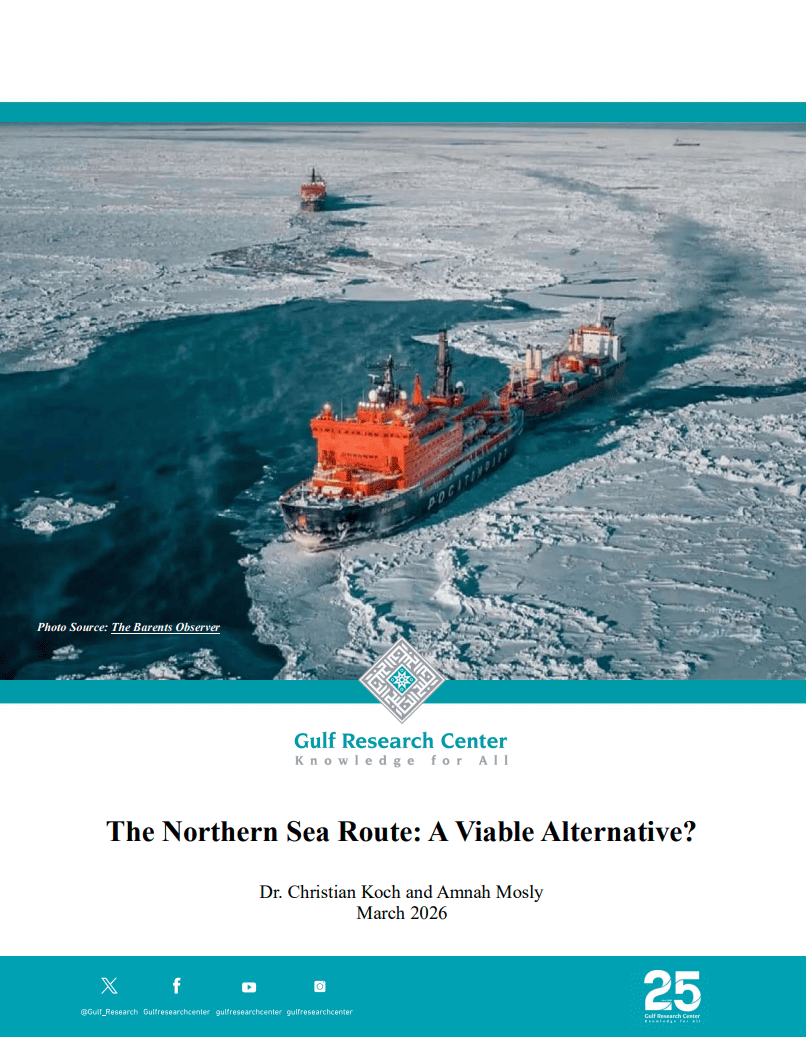
The global maritime landscape is currently experiencing shifts, primarily driven by geopolitical instabilities and evolving economic interests. The recent disruptions in the Red Sea, characterized by increased Houthi attacks and heightened piracy since Israel’s war in Gaza in October 2023, have underscored the vulnerabilities of traditional shipping lanes, particularly the Suez Canal. This has compelled some actors to seek alternative routes that offer greater security, efficiency, and costeffectiveness. Among the most prominent alternatives gaining traction is the Northern Sea Route (NSR), an Arctic maritime passage that offers a considerably shorter transit between Asia and Europe. While the Northern Sea Route presents a geographically shorter alternative, its widespread viability is currently constrained by a mix of geopolitical, logistical, and environmental factors.
The Northern Sea Route is a maritime passage that extends along the Russian Arctic coast from the Barents Sea in the west to the Bering Strait in the east. This route primarily traverses the territorial waters of Russia, making it a strategically significant waterway for Moscow. Geographically, the NSR offers a direct and considerably shorter maritime link between European and Asian markets compared to the traditional Suez Canal route. Historically, the concept of an Arctic shipping route dates back years, but its commercial viability has only recently gained prominence due to receding Arctic ice and Russia’s concerted efforts to develop the necessary infrastructure. Russia, being the largest Arctic nation, has heavily invested in modernizing its Arctic ports and expanding its fleet of icebreakers.
However, despite Russia’s ambitious projections, the current usage of the NSR for international transit remains relatively low. In 2023, the NSR handled approximately 36 million tonnes of cargo, with only 2.1 million tonnes (less than 6%) completing the full journey between Asia and Europe. This figure pales in comparison to the Suez Canal, which saw a record $9.4 billion in revenue in 2023 and handles approximately 12% of global trade and 30% of all container traffic. The limited full transit volume on the NSR underscores the significant gap between its potential and current operational reality, influenced by factors such as high costs, logistical complexities, and geopolitical considerations.
The allure of the Northern Sea Route as a viable alternative to traditional shipping lanes rises for several compelling reasons, primarily centered on efficiency, cost, and security. The most frequently cited advantage is the significant reduction in transit time and distance between Asian and European ports. Depending on the specific origin and destination, the NSR can shorten voyages by 10 to 15 days compared to the Suez Canal route. For instance, the journey from Rotterdam in the Netherlands to Yokohama in Japan via the NSR is approximately 30% shorter than through the Suez Canal. However, the distance advantage varies depending on the specific origin and destination, with routes like Rotterdam to Shanghai being only 8% shorter. This reduction in transit time translates directly into lower fuel consumption, faster delivery of goods, and potentially reduced inventory costs for businesses, offering a competitive edge in global supply chains.
Enhanced security and stability represent another significant driver for considering the NSR. The Red Sea, particularly the Bab-el-Mandeb Strait, and the Suez Canal have become flashpoints for geopolitical tensions, piracy, and recent attacks by the Houthis. These security threats necessitate costly rerouting, increased insurance premiums, and potential delays, undermining the reliability of the traditional route. In contrast, the NSR, largely under Russian control, has historically been free from such maritime security challenges. For shipping companies, the prospect of bypassing these volatile chokepoints offers a more predictable and secure passage, albeit with its own set of geopolitical considerations related to Russian dominance.
Despite its potential advantages, the Northern Sea Route faces several challenges and constraints that currently limit its viability as a mainstream alternative to the Red Sea. These hurdles span geopolitical, logistical, and environmental domains, creating a complex risk landscape for international shipping companies. Geopolitical risks are perhaps the most important barrier to the NSR’s widespread adoption. The route’s passage through Russia grants Moscow extensive regulatory control, a situation viewed with apprehension by many Western nations, particularly in the wake of the war in Ukraine and subsequent sanctions. This unilateral control allows Russia to dictate transit rules, fees for icebreaker escorts, and pilotage services, creating a dependency that many international actors are hesitant to embrace.
For European actors in particular, the war in Ukraine continues to dominate the strategic agenda and shapes perceptions of cooperation with Russia. In this context, it is unlikely that concerns over disruptions in the Red Sea will fundamentally alter Europe’s cautious approach toward the Northern Sea Route. While instability in the Red Sea has prompted temporary adjustments in global shipping patterns, the political and security implications of the Ukraine conflict remain far more consequential for European policymakers. As a result, engagement with Russian-controlled maritime corridors in the Arctic is likely to remain constrained by broader geopolitical considerations.
Furthermore, China’s growing interest in the NSR, framed within its “Polar Silk Road” initiative, adds another layer of geopolitical complexity. While Russia and China are expanding their cooperation to develop the route, this partnership is viewed by the West as a strategic maneuver to challenge existing maritime norms and establish a new sphere of influence in the Arctic.
From a logistical perspective, the NSR presents numerous operational hurdles. The need for specialized, ice-class vessels with reinforced hulls significantly increases shipbuilding costs. Although Russia is expanding its icebreaker fleet, consistent, year-round navigation remains a challenge, with the route being reliably open for only a few months in the summer (typically July to November). The vastness of the region and the scarcity of deep-water ports and repair facilities along the route further compound the logistical risks.
From a Gulf perspective, the emergence of the Northern Sea Route and other alternative trade corridors presents a complex interplay of strategic challenges and opportunities for diversification. The Gulf Cooperation Council (GCC) states are aware of the shifting global trade dynamics and are actively positioning themselves to safeguard their economic interests and enhance their strategic depth in the evolving maritime landscape.
The proposed India-Middle East-Europe Economic Corridor (IMEC) offers another significant alternative that resonates strongly with Gulf states, particularly Saudi Arabia and the UAE. Unlike the NSR, which largely bypasses the Middle East, IMEC is designed to integrate the region directly into a new trade artery connecting India, the Middle East, and Europe. This corridor, involving sea and land routes, is seen as a way to enhance regional connectivity, foster economic cooperation, and provide strategic depth for the participating Gulf nations. The IMEC project is also viewed as a counter-balance to China’s Belt and Road Initiative and Russia’s growing influence over the NSR, offering a multilateral, rules-based alternative that aligns with Western interests.
For the GCC countries, the strategic calculus involves balancing relations with global powers while ensuring the continued centrality of their own maritime infrastructure. While the NSR presents a potential challenge to the Suez Canal’s dominance, the Gulf states are unlikely to view it as a direct threat to their overall maritime influence. Moreover, despite growing global attention to the Northern Sea Route, direct engagement from the GCC states remains limited. Unlike Asian stakeholders, the GCC does not possess geographic proximity to the Arctic maritime domain. Nevertheless, a degree of indirect linkage exists through Russia, particularly in the context of broader GCC-Russia economic and energy cooperation.
In conclusion, while the NSR carries potential, its widespread adoption as a primary global shipping lane is currently constrained by a complexity of geopolitical, logistical, and environmental challenges. Russia’s dominant control, the need for specialized infrastructure, high operational costs, and the inherent risks to the fragile Arctic ecosystem collectively temper its immediate viability as a full-fledged replacement for the Suez Canal. Ultimately, the Northern Sea Route is likely to serve as a complementary route in the near to medium term, primarily during the summer months and for specific cargo types. The Red Sea and the Suez Canal will continue to be indispensable routes for global trade, necessitating sustained international cooperation to ensure their security and stability.
Dr. Christian Koch is the Executive Manager of the Gulf Research Center Foundation office in Brussels (GRCF-B) and the Director of Research of the GRC. Amnah Mosly is a Researcher at the Gulf Research Center (GRC).