

Commentary & Analysis
Strategic Importance of Gulf Energy Supply and Alternative Transport Routes
1. Situation Overview
As can be seen in the current conflict initiated by the United States and Israel on Iran on February 28, 2026, the security environment in the Middle East has become increasingly unstable. The rising military tensions have directly threatened the safety of energy transportation infrastructure and maritime shipping routes in the Gulf region, which plays a critical role in global energy supply. This applies in particular to the Strait of Hormuz which connects the Gulf to the Gulf of Oman, and through which roughly one-fifth of global seaborne oil trade passing through.
For East Asian economies. including Japan, the Strait of Hormuz represents the essential maritime route for importing crude oil from the Middle East. According to various reports, U.S. intelligence agencies have suggested that Iran may be preparing contingency plans involving the deployment of naval mines in the Strait of Hormuz. Iran is believed to possess approximately 2,000 to 6,000 naval mines, which, if deployed in the strait, could significantly restrict tanker navigation even further.
Recent incidents in the Gulf have also demonstrated the vulnerability of energy infrastructure, including attacks targeting oil facilities, pipelines, ports, and tankers. Under all of these circumstances, the security of the Strait of Hormuz represents a major strategic concern for East Asia’s energy-importing economies. Given that Japan remains heavily dependent on crude oil imports from the Gulf region, any disruption to maritime traffic in the strait has serious consequences for Japan’s energy supply stability. In response, it is imperative that Japan continues to strengthen its energy partnerships with Gulf suppliers while simultaneously enhancing broader energy security strategies that include diversifying transportation routes and improving the protection of energy transport infrastructure.
2. Japan’s Energy Dependence on the Gulf
Japan’s crude oil imports remain heavily concentrated in the Gulf region. Because Japan possesses limited domestic fossil fuel resources, it relies extensively on imported energy.
Approximately 90 percent of Japan’s crude oil imports originate from the Middle East, reflecting a very high degree of structural dependence on Gulf energy supplies.
Major suppliers include Saudi Arabia, the United Arab Emirates, and Qatar. These countries are among the world’s leading oil and gas producers and have served as long-standing strategic partners in ensuring Japan’s stable energy supply.
Saudi Arabia and the UAE play particularly central roles in supplying Japan with crude oil. Their importance extends beyond supply volumes to include long-term contracts, joint energy investments, and broader cooperation frameworks that support Japan’s energy security.
Moreover, energy relations between Japan and Gulf countries extend beyond simple resource trade. Cooperation increasingly encompasses upstream development, refining, and petrochemicals, as well as emerging sectors such as hydrogen and ammonia.
This multi-layered energy partnership not only contributes to Japan’s current energy supply stability but also supports long-term strategic energy transition cooperation. Maintaining and strengthening stable energy relations with Gulf producers thus remains an essential policy priority for Japan.
3. Alternative Export Routes
In the event that the Strait of Hormuz becomes restricted, several alternative export routes could partially mitigate supply disruptions.
Source: Author’s illustrative map based on publicly available data on Gulf export routes (Strait of Hormuz, East–West Pipeline, and Fujairah bypass).
Saudi Arabia – East-West Pipeline
Saudi Arabia operates the East–West Pipeline (Petroline), which transports crude oil from the Kingdom’s eastern oil fields to the Red Sea port of Yanbu. This infrastructure connects major oil production areas in eastern Saudi Arabia, including Abqaiq, to Yanbu on the Red Sea coast. The pipeline has an estimated capacity of approximately 5 million barrels per day.
Because crude oil can be shipped from Yanbu without passing through the Strait of Hormuz, the pipeline provides an important alternative export route if maritime traffic in the Gulf becomes disrupted.
As a result, the East–West Pipeline is a strategically important piece of infrastructure for maintaining Saudi Arabia’s export capacity during periods of regional instability. It also contributes to supply stability for major East Asian importers.
UAE – Abu Dhabi Crude Oil Pipeline
The UAE operates the Abu Dhabi Crude Oil Pipeline, which transports crude oil from inland oil fields in Abu Dhabi to the port of Fujairah on the Gulf of Oman.
This pipeline allows crude oil exports to bypass the Strait of Hormuz. Although its capacity is more limited than Saudi Arabia’s East–West Pipeline, it represents one of the few existing alternative export routes in the Gulf region. The strategic significance of this route lies not only in its transport capacity but also in its broader security considerations.
Following the 2020 normalization agreement between the UAE and Israel under the Abraham Accords, bilateral relations between the two countries expanded rapidly, including aviation agreements and direct flights. However, this relationship is widely understood to have strong security dimensions as well, particularly regarding shared concerns about Iran’s regional influence. Cooperation between the UAE and Israel may therefore also contribute to the protection of energy infrastructure and missile and drone defense systems in the Gulf region.
Nevertheless, if the Fujairah export terminal were to become severely disrupted due to attacks targeting Gulf energy infrastructure, one of the few routes bypassing the Strait of Hormuz could become effectively unusable—thereby increasing supply risks for East Asian energy importers.
Key Comparison: Yanbu vs. Fujairah
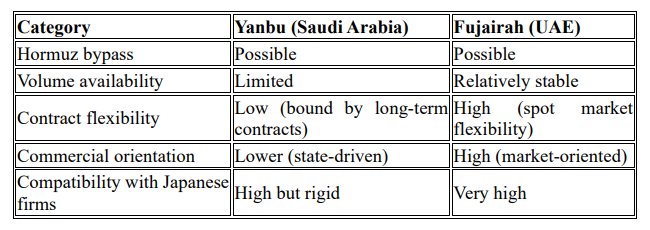
Figure 3: Comparison between Saudi Arabia and UAE alternative transport routes.
Source: Author
At the operational level, in my view, one of Japan’s largest crude oil importers largest crude oil importer with a high reliance on Saudi crude, is responding to current supply risks by seeking greater flexibility in lifting conditions with Saudi suppliers, exploring the expansion of spot procurement, and preparing for a potential drawdown of strategic reserves. Overall, this reflects a strategy centered on maintaining contract-based stability while implementing incremental adjustments.
4. Competition Dynamics Among East Asian Energy Importers
In the event of a major disruption in the Gulf region, competition among East Asia’s major energy-importing economies could intensify. Japan, China, South Korea, and Taiwan are all heavily dependent on Middle Eastern oil and LNG supplies. If regional instability escalates, these countries may increasingly compete to secure stable energy supplies.
Such competition could extend beyond long-term contracts and spot market purchases to include tanker availability, maritime insurance, port access, and the use of export routes that bypass the Strait of Hormuz. Export infrastructure located on the Red Sea or the Gulf of Oman could therefore gain increased strategic importance. Moreover, energy supply competition could also influence broader economic security policies and diplomatic strategies across the region.
If supply disruptions were prolonged, competition for energy resources could heighten economic and diplomatic tensions among East Asian economies. Japan must therefore pursue comprehensive energy security policies that combine strengthened partnerships with Gulf producers, diversified supply routes, and effective risk management strategies.
5. Policy Implications for Japan
Japan’s energy security remains structurally dependent on the Middle East, with approximately 90 percent of its crude oil imports originating from the region and the majority of these supplies transiting through the Strait of Hormuz. As a result, rising military tensions in the Gulf could directly affect Japan’s energy supply stability.
In this context, it is essential for Japan to strengthen its risk management strategies by ensuring the effective use of strategic petroleum reserves, while also enhancing measures to safeguard maritime shipping routes and energy transport infrastructure. Given its position as the world’s largest holder of spare oil production capacity, Saudi Arabia plays a particularly critical role in stabilizing global energy markets. Japan should therefore continue to reinforce government-level energy dialogue and maintain long-term supply arrangements with major Gulf producers.
The outcomes of Japan’s Prime Minister Sanae Takaichi’s recent visit to the United States further underscore the importance of aligning Japan’s energy security strategy with its broader alliance framework. Discussions with U.S. President Donald Trump reportedly emphasized the strategic importance of the Strait of Hormuz, the protection of critical maritime chokepoints, and the need for coordinated responses to potential supply disruptions arising from the ongoing regional conflict. This suggests that Japan’s energy policy may be increasingly shaped by a combination of alliance-based security considerations and efforts to diversify supply sources, including closer engagement with the United States.
At the same time, Japan’s historically balanced relationship with Iran remains a relevant factor in shaping its diplomatic approach. Japan has traditionally maintained stable channels of communication with Iran, even during its periods of heightened tension with Western countries. This diplomatic positioning may provide Japan with a degree of flexibility, enabling it to contribute to de-escalation efforts while maintaining alignment with its key allies. Leveraging this balance could enhance Japan’s role as a stabilizing actor in the region.
At the same time, recent developments have underscored the growing strategic importance of export routes that bypass the Strait of Hormuz. In particular, Saudi Arabia’s Yanbu export terminal on the Red Sea coast and the UAE’s Fujairah terminal on the Gulf of Oman provide important alternative pathways for oil exports. While these routes cannot fully replace shipments through the Strait of Hormuz, they serve as valuable complementary options during times of disruption. Japan should therefore deepen its energy cooperation with Gulf countries that possess such infrastructure, while also supporting international efforts to protect energy transport networks and related facilities.
Furthermore, in the event of further escalation, competition among major East Asian importers, including Japan, China, South Korea, and Taiwan, to secure stable energy supplies from Gulf producers is likely to intensify. Under such conditions, Saudi Arabia’s Red Sea export capacity could become particularly valuable. Japan should therefore pursue proactive diplomatic engagement with key suppliers to secure stable, predictable supply arrangements amid increasing regional competition.
Finally, strengthening international cooperation for maritime security will remain essential. Japan should continue to actively participate in international initiatives to protect critical sea lanes and ensure the safety of vessels involved in energy transportation. Major Gulf producers—particularly Saudi Arabia, the UAE, and Qatar, will remain indispensable partners in this regard, with Saudi Arabia continuing to play a central role in maintaining global oil market stability.
Conclusion
The current escalation of tensions in the Middle East underscores Japan’s continued vulnerability to geopolitical risks affecting energy security. Japan’s heavy dependence on Middle Eastern crude oil—and the fact that most of these supplies transit the Strait of Hormuz—means that regional instability could have significant consequences for Japan’s energy supply stability.
In response, Japan must continue strengthening its strategic energy partnerships with major Gulf producers such as Saudi Arabia, the UAE, and Qatar. At the same time, greater emphasis should be placed on diversifying transportation routes and exploring alternative export infrastructure that bypasses the Strait of Hormuz.
Enhancing international cooperation to protect maritime shipping routes and energy infrastructure, alongside flexible energy security policies that incorporate strategic reserves and evolving market conditions, will be essential to ensuring Japan’s stable energy supply in the years ahead. In addition, consideration may be given to diversifying supply sources beyond the Middle East, including the potential utilization of Alaskan crude oil as a supplementary option. However, such alternatives remain limited in scale and should be viewed as complementary rather than a substitute for Gulf energy supplies.
Noriko Suzuki is the Senior Advisor at the Gulf Research Center (GRC).