

Commentary & Analysis
How Latin America Is Responding to the US-Israel-Iran War
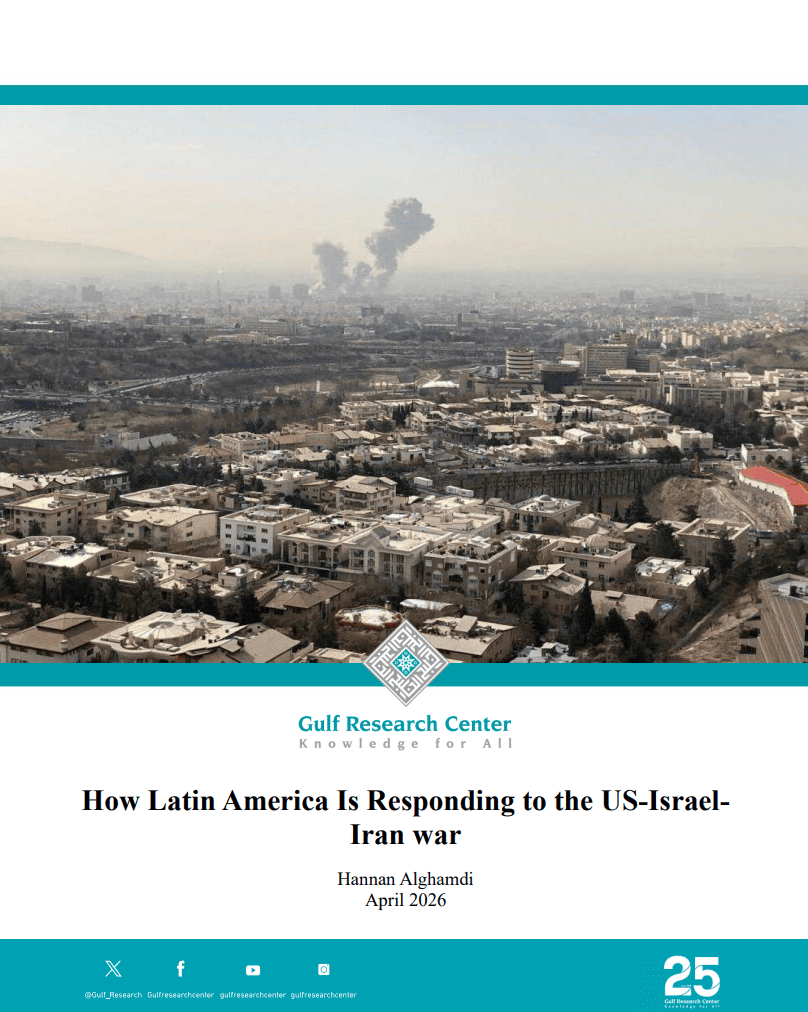
Latin American governments are watching the United States and Israel’s war against Iran from a great distance, but they are not neutral observers. Their reactions reveal familiar ideological divides, evolving ties with Tehran and Washington, and deep economic vulnerabilities that will shape politics at home in the months ahead.
The region’s responses fall into three broad camps. A small group has aligned clearly with Washington and Jerusalem, defining Iran as a direct security threat. A larger set of left or center left governments condemns the United States and Israel for violating Iranian sovereignty and calls for an immediate ceasefire. Most others are trying to stand in the middle, using the language of international law, non-proliferation, and diplomacy while scrambling to manage the economic shock from rising oil and fertilizer prices.
Fragmented Political Responses
On the left, several governments have framed the war as an illegal act of aggression. Cuba’s foreign ministry “condemns in the strongest terms” the strikes of February 28, calling them a violation of Iran’s sovereignty and of the United Nations Charter and demanding an immediate end to the attacks. Venezuela’s government expressed deep regret that military options were chosen while negotiations were under way and highlighted civilian casualties from strikes on non-military targets. Nicaragua has gone further by sending condolences for Ali Khamenei’s killing and presenting the war as another example of hegemonic domination through force.
Center left governments have used more measured language but still condemned the US and Israeli actions. Colombia’s President Gustavo Petro argued that President Trump “made a mistake” and reiterated that peace and life must be the foundations of international order and that nuclear weapons must be eliminated. Brazil’s foreign ministry condemned the attacks and expressed “grave concern” that they occurred amid negotiations, insisting that dialogue is the only viable path to peace, in line with its traditional stance in the region. Mexico’s foreign ministry has stressed the need to resolve disputes through dialogue and negotiation, consistent with its historic doctrine of non-intervention.
On the other side, Argentina under President Javier Milei has moved sharply against Iran. Buenos Aires has declared two entities within Iran’s military apparatus, including the Revolutionary Guard, to be terrorist organizations and has aligned itself explicitly with the United States and Israel. Paraguay has also signaled support for Washington and Israel and has condemned Iranian retaliatory attacks against US allied Gulf states. These positions reflect both ideological affinities with the United States and Israel and domestic histories shaped by the 1990s attacks on the Israeli embassy and the AMIA center in Buenos Aires.
In the middle sits a broad group including Chile, Ecuador, Panama and others, which have focused on condemning Iranian retaliatory strikes, expressing concern about escalation and calling for restraint from all parties. These governments are wary of endorsing a war many domestic constituencies view skeptically, but they are also reluctant to oppose Washington openly at a time when US strategic weight is rising.
Iran’s Shrinking but Persistent Footprint
The war has also laid bare how much Iran’s presence in Latin America has changed. During the first Pink Tide, Tehran used Hugo Chávez’s Venezuela as a gateway to build political, economic, and security links with a range of leftist governments, from Bolivia to Ecuador and Nicaragua. It opened embassies, sent naval patrols to regional ports, created the Iranian Spanish-language news channel HispanTV, and signed dozens of agreements covering energy, industry, and defense cooperation.
Today, those ties are far thinner. Analysts note that Iran still has embassies in 11 Latin American countries and retains close political relationships with Cuba and Nicaragua, but many of the broader “strategic” partnerships have dissolved. Bolivia and Ecuador have cooled relations as governments changed; Paraguay has shifted away from Tehran; and Venezuela’s status as Iran’s closest ally has become uncertain following the capture of its President, Nicolás Maduro, and the normalization of relations between Caracas and Washington.
Economically, the relationships are limited and highly concentrated. Iran does not appear among the top ten trade partners for any Latin American country. In 2022, Latin America exported about 4.9 billion dollars in goods to Iran, of which roughly 4.3 billion came from Brazil, mostly soybeans, corn, coffee, sugar, beef, and poultry. Imports from Iran are small and centered on fertilizers. Even there, Iran supplied only a small share of Brazil’s fertilizer needs, and its war related disruptions in the Strait of Hormuz mainly matter because they compound interruptions from other Gulf producers.
The picture that emerges is of a relationship that is still real but increasingly shallow. Iran has symbolic tools and some political allies, but it lacks the kind of deep, diversified links that would translate Latin American sympathy into hard leverage in a war with the United States and Israel. That helps explain why expressions of solidarity from Cuba, Nicaragua, and others have not been accompanied by significant material support.
Three Economic Shock Channels
Where the war truly bites Latin America is through the global economy. Analysts point to three main transmission channels: higher oil prices, lower global growth, and tighter financial conditions as investors flee to safety and the dollar strengthens.
The most immediate impact is through energy markets. Fighting in and around the Strait of Hormuz, together with Iranian strikes on refineries and oil fields in Gulf countries, has produced what the International Energy Agency calls the largest oil supply shock in history, with Brent prices up more than 50 percent since the conflict began. Latin American countries that export oil and gas, such as Brazil, Colombia, Ecuador, and Venezuela, benefit at first from stronger export revenues and better fiscal balances. Brazil’s offshore pre-salt fields, Guyana’s new production, and Colombia’s oil sector are all well positioned to capture some of this windfall, and the war may even increase investor interest in Latin American energy as buyers seek to diversify away from the volatile Gulf.
Yet the benefits are partial and uneven. Venezuela’s ability to capitalize is constrained by years of sanctions and underinvestment in its oil infrastructure. Ecuador’s gains are offset by the drag of a stronger dollar on its dollarized economy. Brazil and Argentina face higher fertilizer prices that cut into agricultural margins, since a large share of global fertilizer materials normally passes through the Strait of Hormuz.
For oil importers, the shock is unambiguously negative. Central America and the Caribbean, along with Chile and Peru, import most of their fuel and are exposed to higher transport, electricity, and food costs. Governments are already debating whether to use subsidies to shield consumers or allow prices to adjust fully, with both paths carrying political and fiscal risks.
The second channel runs through global demand. Sustained high energy prices slow growth in China, the United States, and Europe by pushing up inflation and forcing central banks to keep policy tighter for longer. That in turn dampens demand for Latin American exports. Brazil, Chile, and Peru rely heavily on Chinese demand for soy, iron ore, and copper and would feel a downturn in Chinese construction and manufacturing. Mexico and many parts of northern Latin America are deeply integrated with the US economy through manufacturing, tourism, and remittances. Europe is a secondary but still important market for agricultural and industrial goods from countries such as Brazil and Uruguay.
The third channel is financial. Major geopolitical conflicts tend to push investors toward safe assets such as US Treasuries, which strengthens the dollar, raises risk premiums on emerging market debt, and triggers portfolio outflows from Latin American equities and bonds. Regional currencies lose value, which further amplifies the local currency cost of imported fuel and food, while countries that depend on external financing, such as Argentina, face higher borrowing costs and more limited market access.
Domestic Politics Under Pressure
These economic effects have direct political implications. Higher fuel prices and currency depreciation translate quickly into higher transport and food costs, which hit low-income households hardest. The region has a history of mass protests triggered by fare hikes and fuel price adjustments, from Brazil and Chile to Bolivia. The Iran war therefore raises the risk of renewed social unrest in import dependent countries if governments mismanage subsidies or are seen as indifferent to the cost of living.
At the same time, windfall revenues for oil exporters can temporarily stabilize public finances and give incumbents more room to maneuver. However, reliance on volatile commodity income can also delay needed reforms and leave states more exposed when prices fall. Analysts warn that in countries such as Colombia and Ecuador, oil related fiscal relief will likely be saved rather than spent, so the growth boost will be modest even if the budget looks healthier.
Finally, the war alters the diplomatic balance in subtle ways. The United States has shown that it can conduct major operations in the Gulf while maintaining a strong posture in the Western Hemisphere, but the crisis inevitably absorbs attention and resources. That creates tactical breathing room for regimes like Cuba’s and for the new authorities in Venezuela, while also giving Washington an opportunity to pressure governments to clarify their alignment in a conflict that many societies would prefer to keep at arm’s length.
Latin America may be far from the Strait of Hormuz, but the war in Iran has brought its strategic dilemmas and economic weaknesses into sharp focus. Politically, the region is divided between open alignment with Washington, explicit condemnation of US and Israeli actions, and cautious legalist calls for restraint. Economically, almost every country faces some combination of higher inflation, fiscal stress, or external vulnerability, even as a few oil producers enjoy temporary gains. The challenge for Latin American leaders is to navigate this distant war in a way that protects their citizens from its costs without being pulled more deeply into a confrontation that is not of their making.
*Hannan Alghamdi is a Researcher at the Gulf Research Center (GRC)