Commentary & Analysis
From Dialogue to Delivery: Advancing GCC-EU Relations
Setting the Scene
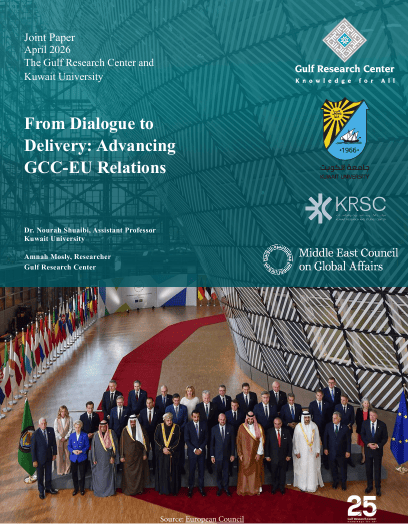
In January 2026, policymakers, diplomats, and experts convened at the United Nations House in Doha for a high-level seminar entitled “Gulf, Nordic, and Europe: The New Strategic Partnership for Human Capital and DigitalDriven Future Economies.” Co-organized by the Embassies of Finland and Sweden, the UNESCO Regional Office for the Gulf States and Yemen, and the Delegation of the European Union to the State of Qatar, the seminar represented an important step in the evolving trajectory of EU-Gulf relations.It reflected a growing consensus that human capital development, digital transformation, and future-oriented economic models are no longer secondary considerations, but core elements of long-term stability and competitiveness in both regions.
The discussions were built on the momentum generated by the Nordic-Gulf dialogue launched in Doha in December 2025. While reaffirming continuity in engagement, the seminar also signaled a gradual shift from dialogue alone to more structured, actionoriented cooperation. In a period marked by geopolitical uncertainty and economic transition, participants emphasized the value of partnerships capable of producing practical outcomes while remaining adaptable to shifting global dynamics.
The significance of the seminar was further underscored by the participation of four former European Union Commissioners who, during their 2019-2024 mandates, played a central role in shaping the EU’s Joint Communication on a “Strategic Partnership with the Gulf.” These included Ms. Margrethe Vestager, former Executive Vice-President for “A Europe Fit for the Digital Age”; Ms. Jutta Urpilainen, former Commissioner for International Partnerships; Ms. Kadri Simson, former Commissioner for Energy; and Ms. Ylva Johansson, former Commissioner for Home Affairs. Their joint presence in Doha served not only as a reflection on past policy choices but also as a forwardlooking statement.
In their collective remarks, the Commissioners reiterated that the EU’s 2022 proposal for a strategic partnership with the Gulf was conceived as a long-term commitment anchored in shared interests, including connectivity, human capital, digital transition, and diplomacy. They also underlined that 2026 should be regarded as a turning point, a year in which strategic intent must translate into more tangible and mutually beneficial outcomes. This forward-looking emphasis was framed against a wider reflection on the international context in which EU-GCC cooperation is unfolding.
Europe at a Geopolitical Crossroads
The discussions in Doha were framed by an assessment of a rapidly shifting international environment. The former Commissioners noted that the international system is undergoing accelerated change, driven by global instability and the impact of geopolitical shifts. The weakening of adherence to the rules-based international order has contributed to a more fragmented and openly multipolar landscape, raising difficult questions about the future of multilateral cooperation and the effectiveness of institutions such as the United Nations and the World Trade Organization.
Within this context, European strategic concerns are increasingly shaped by developments within and beyond the continent. The Russian aggression in Ukraine continues to carry farreaching security and economic implications, while the rise of China adds further complexity to the strategic equation. At the same time, political and strategic developments in the United States, and their wider global repercussions, remain a central concern in European capitals. Although the transatlantic partnership remains intact, uncertainty about future policy directions in Washington has intensified debates in Europe over resilience, burden-sharing, and long-term predictability. The escalation of tensions surrounding the U.S.-Israel-Iran war of 2026 is another example of the growing uncertainty, further illustrating the degree to which geopolitical volatility continues to test the resilience of existing international norms and institutions. In this context, many participants acknowledged that the international order as previously understood has largely receded, making it imperative to focus on shaping what comes next.
In response, the former Commissioners emphasized the EU’s clear commitment to defending and adapting the principles of a rules-based international order to mitigate the risks of fragmentation and instability. This approach is accompanied by growing calls for meaningful reform of international institutions, including the United Nations Security Council, to enhance their legitimacy and effectiveness. At the same time, developments since the seminar have underscored the challenges surrounding this objective, particularly in light of differing transatlantic positions on the U.S.- Israel-Iran war, including the reluctance of several EU member states to endorse a conflict widely viewed as a violation of international law.
At the same time, the European Union is reassessing its own strategic posture. For decades, European integration was primarily inward-looking, centered on consolidating the single market and strengthening institutional cohesion. While these foundations remain essential, the emphasis is shifting outward. External engagement is set to define the next phase of European policy, reflecting growing expectations that the EU must assume greater responsibility on the global stage. This evolution is closely linked to the pursuit of strategic autonomy. Investments in defense capabilities, critical technologies, and energy diversification are intended to reduce vulnerabilities while maintaining openness and cooperation.
In this environment, strengthening partnerships beyond traditional transatlantic frameworks has become a strategic priority. Engagement with middle powers and regional organizations, including the Gulf Cooperation Council (GCC), is increasingly viewed as integral to advancing shared interests in economic diversification, climate policy, digital governance, and conflict prevention. In this sense, Europe’s geopolitical crossroads is not only a moment of uncertainty but also an opportunity to build more diversified, resilient, and forward-looking partnerships.
The Gulf Region in Europe’s Strategic Calculus
Against the backdrop of Europe’s evolving strategic posture, the Gulf region is increasingly viewed as an important partner in navigating a fragmented and multipolar international environment. While cooperation between the two regions has historically centered on energy relations and trade, discussions in Doha reflected a broader reassessment underway within European policy circles, recognizing the Gulf’s expanding diplomatic, economic, and technological role in shaping regional and global dynamics.
This evolving perception also reflects a broader recalibration within European external relations. As global power competition intensifies, partnerships with regions capable of exercising strategic autonomy without rigid bloc alignment have gained renewed importance. Gulf states increasingly embody this characteristic, maintaining diversified relations with major powers including the United States, China, and emerging economies. While this multidirectional diplomacy creates opportunities for cooperation with Europe, it also introduces a degree of strategic asymmetry, as European policymakers must engage partners whose foreign policy priorities are not exclusively anchored in Western institutional frameworks. Managing this complexity will require flexible cooperation models that accommodate differing threat perceptions and strategic horizons.
In recent years, the Gulf states have adopted more proactive international roles, positioning themselves as conveners of dialogue and facilitators of diplomatic engagement across a range of geopolitical contexts. This capacity to maintain open channels with diverse actors has gained particular relevance at a time when traditional mechanisms of multilateral cooperation face growing political constraints. Participants noted that such engagement complements European priorities related to conflict prevention, mediation and stability promotion, creating opportunities for closer coordination between European and Gulf institutions in areas extending beyond conventional security cooperation.
Connectivity is another emerging theme central to linking European and Gulf strategic interests. The EU’s Global Gateway initiative was frequently referenced as a framework capable of translating shared ambitions into practical cooperation across infrastructure, education, health, and digital transformation. Rather than functioning solely as an investment instrument, the initiative can be a platform through which interregional partnerships could be structured around long-term sustainability and mutual economic diversification goals. Aligning such efforts with national development strategies across the Gulf is essential for ensuring durable outcomes and shared ownership.
Discussions further acknowledged that connectivity initiatives increasingly operate within a competitive geopolitical landscape. Infrastructure, digital standards, and investment frameworks have become instruments through which influence and regulatory norms are projected internationally. For the European Union, cooperation with Gulf partners therefore represents not only an economic opportunity but also a means of shaping emerging governance standards in areas such as digital regulation, sustainable finance, and technological interoperability. Ensuring that connectivity initiatives remain inclusive and economically viable, while avoiding perceptions of strategic exclusivity, will remain a key challenge moving forward.
Within this broader connectivity agenda, the India-Middle East-Europe Economic Corridor (IMEC) was highlighted as an initiative with the potential to reinforce economic interdependence across regions while strengthening supply-chain resilience. Participants emphasized that the corridor’s significance extends beyond physical infrastructure, encompassing regulatory cooperation, technological exchange, and the creation of new economic linkages connecting Europe, the Gulf, and Asia. Its success, however, will depend on sustained political coordination and the ability of participating actors to maintain momentum amid evolving regional dynamics.
Energy cooperation continues to serve as a stabilizing foundation of EU-GCC relations, yet discussions underscored how its character is gradually evolving. Europe’s efforts to diversify energy sources in response to recent geopolitical disruptions have reinforced the Gulf’s importance as a reliable partner in ensuring market stability. At the same time, Gulf investments in renewable energy and emerging technologies, including hydrogen and large-scale solar development, reflect increasing convergence with European climate and sustainability objectives. This shift points toward a future partnership defined not only by energy security but also by shared participation in the global energy transition.
At the same time, the transition toward new energy models introduces structural uncertainties into the partnership. While Europe seeks accelerated decarbonization, Gulf economies continue to balance energy transition objectives with the enduring fiscal importance of hydrocarbons. Aligning timelines, investment expectations, and regulatory frameworks will therefore require sustained dialogue to ensure that cooperation in emerging energy sectors complements, rather than disrupts, existing economic interdependencies. This can also be witnessed in the contentious debate between the two sides on the Corporate Sustainability Due Diligence Directive put forward by the European Commission.
Beyond economic and energy considerations, the long-term importance of human capital and societal linkages has been a topic of importance. Educational exchange, research collaboration, and youth engagement were identified as essential pillars for sustaining cooperation across generations. Expanding participation in programs such as Erasmus+ and Horizon Europe, alongside the growing presence of international academic institutions in the Gulf, was seen as strengthening institutional familiarity and fostering innovation ecosystems capable of supporting future-oriented economies in both regions.
Taken together, these discussions suggest that EU-GCC relations are entering a phase characterized by broader strategic alignment, in which diplomacy, connectivity, education, and technological cooperation increasingly complement traditional economic ties. In this context, the Gulf’s role in Europe’s strategic calculus is expanding from that of a sectoral partner toward that of a multidimensional collaborator in addressing shared global challenges.
More broadly, participants implicitly highlighted a structural challenge facing EUGCC relations: While political willingness for cooperation is high, institutional mechanisms capable of sustaining long-term coordination remain comparatively underdeveloped. Unlike other regional partnerships, EU-GCC engagement has historically relied on episodic dialogue rather than deeply embedded policy frameworks. Bridging this implementation gap may ultimately determine whether the current momentum translates into durable strategic alignment.
Policy Recommendations
A recurring theme throughout the discussions was the recognition that previous phases of EU-GCC engagement have often generated ambitious frameworks without equivalent implementation mechanisms. Addressing this gap requires not only new initiatives but also greater coordination among institutions, clearer prioritization of achievable projects, and sustained political attention beyond moments of geopolitical urgency. The next phase of EU-GCC engagement will depend on the ability to translate strategic convergence into sustained and practical cooperation. Moving from dialogue to delivery requires mechanisms capable of maintaining continuity while adapting to evolving regional priorities.
A top priority lies in strengthening institutional frameworks for cooperation. Establishing regular dialogue platforms beyond the higher political level and focused on education, digital transformation, and peacebuilding could help ensure that engagement extends beyond periodic high-level meetings toward structured policy coordination. Such mechanisms would support knowledge exchange while enabling the monitoring of joint initiatives over time.
Second, greater alignment between European initiatives and Gulf development strategies could enhance the effectiveness of connectivity efforts. Coordinated project identification under frameworks such as the Global Gateway may facilitate partnerships that reflect shared economic diversification goals while promoting long-term sustainability and local ownership.
Third, expanding collaboration in digital transformation and skills development offers a practical avenue for deepening cooperation. Joint initiatives in digital governance, innovation ecosystems, and workforce training could contribute to building resilient knowledge economies while drawing on complementary European and Gulf strengths, including Nordic experience in digitalization and Gulf investments in emerging technologies.
Fourth, prioritizing the importance of peopleto-people engagement as a foundation for durable partnership. Increasing academic mobility, research collaboration, and youth dialogue initiatives would help cultivate mutual understanding and institutional familiarity, reinforcing political cooperation through societal connections. This would include an agreement on visa liberalization for all GCC citizens to enter the EU.
Strengthening societal and institutional linkages may also serve a broader strategic purpose. In an increasingly transactional international environment, sustained interaction among academic institutions, policymakers, and younger generations contributes to building policy familiarity and strategic trust, reducing misperceptions that can otherwise limit cooperation during periods of geopolitical tension.
Finally, energy cooperation could increasingly integrate transition-oriented priorities alongside traditional supply considerations. Collaborative efforts in renewable energy development, hydrogen value chains, and sustainable finance frameworks may provide opportunities to align Europe’s climate objectives with Gulf economic transformation strategies, supporting shared long-term resilience.
Ultimately, the effectiveness of future cooperation will depend less on the creation of new strategic concepts than on the capacity of both regions to operationalize existing commitments. Incremental but consistent implementation may prove more consequential than ambitious frameworks lacking institutional follow-through.
Collectively, these measures would contribute to consolidating EU-GCC relations as a forward-looking partnership capable of delivering tangible outcomes while responding flexibly to a rapidly changing international environment.
Conclusion
As 2026 unfolds, EU-GCC relations stand at a critical juncture. The Doha seminar underscored that both regions recognize the strategic value of closer alignment in a period marked by geopolitical flux, economic transformation, and technological disruption. Yet recognition alone is insufficient. The strengthening of the partnership will depend on the ability to convert political will into measurable progress across connectivity, energy transition, digital governance, education, and peacebuilding. If effectively implemented, the Gulf-European partnership can transcend its traditional foundations in trade and energy, evolving into a multidimensional framework grounded in resilience, shared standards, and longterm societal linkages. In doing so, it has the potential not only to strengthen interregional ties, but also to contribute meaningfully to a more cooperative and stable international order at a time when such models of pragmatic multilateralism are urgently needed.
Dr. Nourah Shuaibi, Assistant Professor Kuwait University
Amnah Mosly, Researcher Gulf Research Center