Commentary & Analysis
Adaptive Partnerships in Times of Uncertainty: EUGCC Security in a Post-2024 Global Order
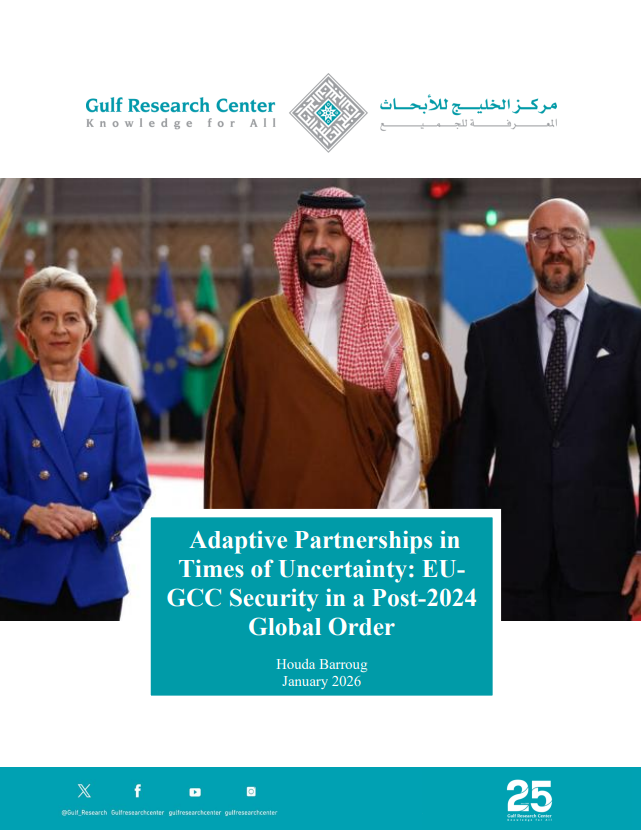
Introduction The re-election of Donald Trump in 2024 represents a significant moment in the global governance landscape, ushering in a period of increased uncertainty and recalibration for international alliances and institutions. Trump's re-election was fueled by broad economic unhappiness among American voters, particularly fears about inflation and financial security as well as discontent about multilateralism and free-loading allies. This domestic setting has important institutional and structural consequences for international order. As promised, Trump's "America First" strategy did change U.S. collaboration.
Trump's return has been testing conventional alliances and disrupting existing security frameworks globally. In Europe, NATO cohesion and EU unity are encountering renewed but unprecedented challenges as the United States expects increased burden-sharing and signals a more conditional approach to security guarantees. This is in line with the Trump’ 2025 National Security Strategy and prioritization of transactional alliances, along with the explicit connection of commitments to allied contributions. This transition is pushing the EU to intensify its pursuit of strategic autonomy, particularly as the conflict in Ukraine and other regional crises are consistently highlighting the dangers of overreliance on American leadership.
For the broader MENA region, Trump's reelection adds instability to an increasingly fractured security framework that lacks effective multilateral structures. While the MAGA movement questions the extent of American support for Israel, the Trump administration itself is still likely to sustain close alignments with Tel Aviv. Yet, Trump’s occasional receptiveness to a revised nuclear deal with Iran also offers potential flexibility and potential paradigm change. Concurrently, recent executive orders signed with Qatar and Saudi Arabia signal shared strategic stances on regional security and pragmatic bilateral engagement. Nevertheless, the U.S.’ shifting and ambiguous priorities inhibit progress toward more permanent, long-term security arrangements, forcing Gulf governments to continue hedging methods with other powers.
While the GCC countries enjoyed a rather positive relationship with Trump during his first term, the current regional and global circumstances (Gulf countries' evolving priorities, wars on Ukraine and Gaza, and the rising relevance of China and non-state actors) are testing rapprochement between Arab states and Israel, despite the ongoing Israel’s war on Gaza. However, with proven efficiency of joint US-Israeli efforts on weakening Iran, GCC states still regard American security guarantees as irreplaceable.
By putting Israel at the core of achieving security and disarmament in Gaza, Trump supports an Israeli-led strategy that ignores broader Arab or Palestinian agency. This policy strengthens Israel's status as the major enforcer of U.S policies in the region, restricting America's direct security engagement while delegating important choices and actions to Tel Aviv. To counter this, GCC states are pushing for their visions on security to Washington, urging clarification on competing regional visions: Gulf-led conflict resolution and economic development, continued Israeli military dominance and increasing volatility, and Iranian-backed threats to stability. The potential outcome would be the eventual continued prioritization of Israeli interests, combined with aligned Gulf transactional interests, while still sidelining their diplomatic vision. This perpetuates tensions without necessarily leading to rapture.
Trump's foreign policy repercussions are also materializing in the security, economic, and technology domains. Broad U.S. tariffs and protectionist trade measures have already disrupted global supply chains, forcing Europe and key Asian economies to seek alternative cooperation to counter American protectionism. For the EU, the initial agreement of a 15% base tariff on EU goods entering the US market has been characterized as a humiliating deal for Europe. This disruption of the global economic landscape is accompanied by an unprecedented technological decoupling, with the United States tightening controls on critical minerals and technologies.
Amid these trends, the situation is as follows: the EU’s ongoing crisis-mode, absence of effective leadership, and withdrawal syndrome raise concerns about eventual institutional paralysis; as for the GCC, it must act swiftly and seek diversification in alliance. China is set to capitalize on the divisions among Western partners and gaps created amidst the U.S.’s shift, growing its influence and presenting itself as a stable alternative in trade and climate leadership.
The evolving multipolar order is therefore challenging the strength of existing alliances and necessitates structural and institutional adaptation by both the EU and the Gulf states. This should, however, not imply unmitigated doom for the EU and Gulf states. Contrary to the prevalent narratives, while Trump’s reelection exacerbates the longstanding gap between U.S. leadership and allied autonomy, forcing both the EU and GCC to seek new adaptive strategies and increased multilateral cooperation, this new landscape offers opportunities for both blocs to reimagine a much-needed comprehensive partnership in post-2024 global order landscape.
Historical Contexts: U.S.-EU and U.S.-GCC Security Landscapes
The U.S.-EU and U.S.-GCC security architectural landscapes are fundamentally different, with distinct historical trajectories, geopolitical settings, and strategic imperatives.
The Institutional Foundations of U.S.-EU Security Partnership
Trump’s first presidency marked the first, legitimate doubts on the future of the U.S.-EU partnership. A catalyst for anxiety and unprecedented uncertainty, Trump’s first administration called into question the future of transatlantic partnership and multilateralism, NATO, and European relative power and security. Although the beginning of the century revealed both the limits and resilience of the U.S.-EU partnership, primarily with the Iraq War and the 2008 financial crisis exposing strategic differences, the presence of shared threats (notably Russia, rising Islamism, and proxy regional wars) restored common interests in deterrence and transatlantic cooperation.
The core characteristic of the U.S.-EU security alliance, long viewed as the cornerstone of European stability and central pillar of global order, was the deep institutionalization and shared normative objectives. For decades, Europe has leaned on the U.S. for security and liberal democratic values, with NATO functioning as the primary tool for deterrence and defense against potential Russian aggression, and, basically, the overall chaos on the European periphery. Besides a strong military alliance, the U.S.-EU security alliance was also characterized by close economic interdependence and multilateral participation in global institutions. For most of the last century, the U.S. has been serving as the EU's security insurance, and the European bloc focused on its normative power and leverage while complementing the US with civilian security efforts and some level of internal defense integration.
As such, Trump’s first mandate represented the first real stress test as its rhetorical challenges and posture served as a reality check for the global community, sparking strategic and emotional recalibration efforts for EU both on the multilateral and domestic levels. The NATO alliance came under tremendous strain, with French President Emmanuel Macron memorably dubbing it "brain dead" due to an apparent absence of U.S. engagement and commitment. This assessment heightened European concerns about the viability of the transatlantic security guarantee, emphasizing the EU's need to develop autonomous military capabilities. However, tensions with the United States and within NATO hampered EU's efforts, as many member states remained strongly reliant on NATO and were wary of duplicating or undermining the alliance.
On the bloc level, the EU tried to accelerate initiatives for defense capacity building and strategic autonomy, which culminated in the Permanent Structured Cooperation on security and defence, also known as PESCO. It hosts 26 of the 27 EU member states and offers a platform to jointly plan, develop, and invest in capability development and enhance operational readiness. Another example is the EU Defence Industry Transformation Roadmap, proposing a 2030 plan to modernize Europe's defense sector by connecting defense and deep-tech ecosystems while ensuring swift, adaptable, and cost-effective capability delivery. Nevertheless, and despite the ambitious aspiration of similar initiatives, the EU’s struggle with internal unity and effectiveness continues to undermine various initiatives aimed at addressing the bloc’s critical need for enhanced defense mechanisms. Despite its clear message, the warnings from Trump's first term weren't fully heeded. Instead, during the Biden presidency, the need to strengthen Europe's strategic independence was quickly set aside, based on the belief that transatlantic relations were returning to normal. The Biden administration restored more conventional diplomatic channels and patterns, sparking hopes of recovery of the transatlantic relationship between the U.S. and EU. This has been the case in the sense that the EU seemed to choose to follow once again the U.S. leadership on the global stage, and preoccupied with the Russian aggression around the corner, the bloc seemed content with upholding the call for normative rules of the world system.
It is true that the future of American reliability remained a concern for Brussels, and the consensus on reinforcing European defense capabilities and spending grew substantially, but the measures taken were more rhetorical and never materialized. Trump's re-election as president has heightened these concerns, making the unreliability of American guarantees the central issue of Europe's current strategic debates.
Transactional Pragmatism: The Character of the U.S.-GCC Security Relationship
In contrast, the U.S.-GCC security collaboration has typically relied on transactional pragmatism rather than formalized alliance or profound normative congruence. Since the end of World War II and continuing through the Cold War, the United States has built Gulf relationships principally to ensure the ongoing flow of oil and to safeguard regional security against Soviet (then Iranian) aggression.
The premise was simple: U.S. defense guarantees, backed up by a major network of military bases and arms sales, would defend discrete, strategically vital monarchies, whose cooperation supported U.S. global energy and geostrategic goals. This partnership was founded on regime security and mutual advantage, with the United States acting as an external balancer and the GCC members assuring access to its abundant oil reserves and offering investment opportunities and basing rights.
Over time, the fundamental asymmetry and flexibility of this structure created a framework in which power and security were highly personalized, bilateral, and reflective of the shifting waves of regional and global politics. The essence of the partnership was adaptation: while the U.S. operated to safeguard its strategic interests in the region, primarily by responding to regional security threats to the Gulf, the latter continued to alter their foreign and domestic policies to ensure regime survival and alignment with the U.S. Despite periodic disagreements over issues such as differing approaches to regional crisis management and oil pricing, the partnership nurtured both parties' common objectives in security and economic stability. This lasting asymmetry also indicated that, despite periodic frictions and expanding diversification attempts, GCC leaders continue to regard the United States as the sole external player with both the capacity and a credible commitment to underwrite their security. As a result, alternative partnerships with other potential major powers are presented as hedges rather than replacements for the US security guarantee.
The partnership's stability has been founded on the United States maintaining absolute and relative, hard and soft power and technological edge, as well as functioning as principal security manager in a fragile regional order. The transactional aspect of the cooperation is apparent in the Gulf's approach to hedging; GCC governments pursue other partnerships, but these measures were never intended to supplement the US umbrella. As such, the U.S.- GCC partnership framework is best understood as one of mutual utility.
However, over the years, the GCC states have increasingly questioned the reliability of the U.S. security promise. Opposition to the 2003 Iraq invasion highlighted fears about a U.S. policy that could assist Iran. The Arab Spring heightened concerns as the United States distanced itself from traditional allies such as Egypt's Mubarak, sparking fears of a similar desertion. The 2015 JCPOA nuclear deal with Iran, which was negotiated without GCC participation, eroded relations even further, especially after President Obama highlighted that the GCC had to shoulder responsibility for the security of its neighbors. Under President Trump, the U.S.'s failure to respond to strikes on important Saudi oil infrastructure in 2019 and the attack on Doha in 2025 by Israel fueled the perception of a diminished U.S. commitment, strengthening the GCC's interest in diversifying its security ties.
As such, one of the direct results of the increased uncertainty of the U.S. security commitment is the adoption by the GCC states of a diversification strategy that allows the bloc to handle increased volatility without weakening the heart of its security connections with the United States
Two Models of Dependence: Institutional Resilience versus Transactional Flexibility
The U.S.-EU and U.S.-GCC security approaches reveal profound structural and strategic differences. The U.S.-EU partnership is defined by its institutionalization, mutual normative ideals, and collective security mechanisms, which operate based on shared threat perception and a consistent—though occasionally challenged—adherence to a rules based order. While transactional phases still occasionally characterized the partnership, particularly during the first Trump administration, Europe's response has traditionally centered on following U.S. leadership to benefit from the severance package.
In contrast, the U.S.-GCC cooperation is primarily pragmatic and transactional, with significant flexibility but little predictability or normative substance. The United States serves as a guarantor of regime survival rather than an upholder of shared democratic norms. This encourages Gulf monarchies to engage in adaptive hedging, allowing for quick rapprochement with other great powers as needed while maintaining the United States as the primary strategic anchor. Unlike the EU, the Gulf does not want shared sovereignty or integration; instead, it prioritizes sovereignty preservation, freedom of maneuver, and leveraging US strength for local advantage.
Finally, while both partnerships are based on the United States' long-standing military and technological dominance, their foundations are fundamentally different. For the EU, the institutional normative foundation is eroding, so its response to alliance instability includes attempts at institutional strengthening, economic resilience, and a gradual shift toward autonomy within a global order. The GCC sees the U.S.’s role as a security guarantor as increasingly undermined, so the bloc is responding to volatility through diversification, ad hoc diplomacy with an emphasis on rulesbased order, and maximizing leverage in an ever-changing global arena.
The U.S.-EU partnership has been strong because of its ability to evolve through institutional consensus and strategic adaptation; the U.S.-GCC dynamic has been resilient because of its ability to withstand deep regional and global shocks while remaining opportunistic and adaptive. Both approaches reflect diverse political and security cultures in their respective areas.
The EU’s Response to Changing Security Commitments: Toward Strategic Autonomy?
The start of Trump's second term upended longheld assumptions and propelled the EU into a pressing phase of strategic adaptation. Unlike previous U.S. administrations, which operated within the parameters of alliance solidarity, Trump's increased threats and public questioning of American commitments represent a fundamental source of anxiety that called for structural changing on the EU level. For example, EU member countries agreed to increase their defense expenditure by 5%, as Trump continued its diplomatic pressure, public warnings, and overall mistrust about NATO commitments, though the policy does not align with the domestic momentum and priorities, raising skepticism at home. Indeed, EU countries proved innovative in interpreting this increase and what it would entail in policies, but the issue remains in the surrender to American demands.
The consequence has been a crisis of trust among European leaders, who know that relying on the United States' defense guarantee is no longer a given. Whereas previous reforms, compounded by worries about Trump's ambiguous position on Russia and concerns in Brussels that Washington could possibly make agreements at the continent’s expense, the current setting has forced the bloc to accelerate defense integration, significantly increase budgets, and investigate the integration of military-industrial assets as a strategic necessity in lieu of diplomatic compliance.
This reconfiguration is defined by two distinct but interlinked processes. On the one hand, the EU actively seeks operative autonomy, particularly setting conditions in which coalitions of member and non-member states could respond independently of NATO or the United States when fundamental European interests are at stake. This vision is operationalized through platforms such as the PESCO, the European Defense Fund (EDF,) and large-scale, national military collaborations to jointly develop next-generation missile systems, tanks, and fighter aircraft as well as standardizing equipment and logistics chains. While these programs represent considerable political and structural investments, their practical footprint remains uneven: large projects have long lead times, divergent national agendas, and a continued reliance on US enablers for defense capabilities. Most importantly, there still exists a level of wishful thinking on the EU side that matters will return to their usual course.
This attempted transition has further highlighted the EU's ongoing structural limits. There is a continual mismatch between rhetoric and reality, as considerable gaps in capabilities, intelligence, and political unity exist despite increased defense spending and signs of greater resolve for autonomous action. The potential of ad hoc coalitions failing to cohere, or of regulatory and financial frictions impeding rapid force mobilization, is daily reality of the EU and its institutions.
Domestically, increased support for national sovereignty and the growth of a more radical extreme right add to the pressure, calling into question Europe's strategic direction. This is exacerbated by the significant financial costs and inescapable trade-offs required for increased defense autonomy, raising questions about the willingness and effectiveness of governments in shouldering the political risks and of European societies in absorbing the burden. The domino effect of Trump’s policies thus targets also the domestic scenes of each EU member state, transforming both the domestic and regional security doctrines, internal politics, and approach to and extent of global engagement.
The above has so far led to a shifting and unpredictable strategy based on the acknowledgment that Europe's security cannot be based on near-automatic, if not guaranteed, American protection, particularly considering the U.S. administration's readiness to tie NATO's security guarantees to defense spending thresholds and its increasing preference for bilateral over multilateral arrangements. At its core, this is an attempt to depart from mere rhetoric and toward substantive and structural improvements. The approval of the ReArm Europe project, as well as policies such as Readiness 2030, thus represent a larger structural effort to boost defense industrial capability, standardize procurement, and protect crucial supply chains—aims to enable Europe to act independently if U.S. support falters.
The EU has also stepped-up efforts to build its own viable deterrence and defense strategy. France has renewed the debate about expanding its nuclear deterrent program over European territory to make up for U.S. unpredictability, emphasizing both the need and intra-EU divisions on nuclear policy security. The 2018 European Intervention Initiative EI2 led by France, demonstrates a flexible coalition targeted at fast joint deployment capabilities outside of NATO structures, exhibiting a more autonomous European defense posture. Furthermore, NATO's Readiness 2030 objectives have been embraced alongside complementing EU initiatives to increase force interoperability and rapid response, indicating a shift away from rhetorical autonomy and toward concrete military readiness. These initiatives come amid growing concerns about Russia's aggression and hybrid threats, necessitating new operating paradigms that do not rely entirely on American support.
In addition to nuclear and military capabilities, the EU is increasing collective defense negotiations through the PESCO framework, promoting increased defense cooperation and military resource sharing. While agreement on nuclear cooperation is tenuous due to national sovereignty concerns, many member nations agree on increasing conventional deterrence by investing in cooperative intelligence, surveillance, and reconnaissance ISR assets and strengthening cyber defense measures. The strategic autonomy drive thus includes both greater preparedness for traditional conflict scenarios and forward-leaning deterrent signaling—as an adaptive response to U.S. priorities shifting toward bilateralism and transactional partnerships.
The Ukrainian war has exposed the EU’s insufficient and fragmented defense procurement and pushed the bloc to increase industrial and procurement cooperation. The "ReArm Europe" initiative, adopted in 2024, is a historic program that allocates pooled financing to rebuild weapons stockpiles, improve ammunition manufacturing, and secure crucial supply chains, addressing pressing capacity gaps independent of the United States. In addition, the EuropeanDefence Fund EDF has increased investment for cooperative development of strategic platforms such as the Future Combat AirSystem FCAS and Eurodrone, demonstrating progress toward interoperable, pan-European military capabilities.
Another key component is the identification of supply chain vulnerabilities, particularly in semiconductors and rare earth materials required for defense systems. The EU is taking steps to diversify supply sources and prioritize domestic or allied production whenever possible. This industrial effort is consistent with broader EU goals, such as the Global Gateway, which aims to protect essential infrastructure and technology supply lines that support defense and security.
Trump's second mandate has also been a catalyst for further European technical innovation objectives, reflecting an urgent necessity to minimize technological reliance on the U.S. and China in key dual-use and defense industries. The European Innovation Council and Horizon Europe program have greatly increased R&D funding for next-generation military and dual-use technologies. For example, the European Defence Agency is leading initiatives on combat drones and secure satellite communications as part of a larger push for operational sovereignty in developing fighting domains.
Cybersecurity, as an essential component of technological autonomy, has received targeted investment through the EU Cybersecurity Act, the formation of the EU Cyber Defence Policy Network, and cross-border cyber resilience exercises. These measures improve the bloc's ability to identify, withstand, and respond to cyberattacks, an area where reliance on US infrastructure was previously prevalent. Additionally, the Digital Europe Program promotes the research and development of AIenhanced surveillance and threat detection methods to assist member nations in safeguarding key infrastructure.
Finally, the EU has been shifting toward more issue-specific, flexible, and occasionally transatlantic-external alliances, reflecting strategic autonomy objectives as well as a pragmatic embrace of geopolitical realities. In addition to the EI2, Med7, the Friends ofCoalition, and the new, though informal, Hanseatic League are examples of diverse coalitions focusing on security, migration, and fiscal policy demonstrating the EU's adaptive political innovation in pursuing common interests beyond rigid institutional boundaries.
The EU is also seeking and strengthening multilateral collaboration with allied democracies such as the UK, India, Japan, and South Korea through joint strategic dialogues, naval exercises, and technology partnerships, primarily in the Indo-Pacific region, demonstrating a diversification of security cooperation beyond Washington. This initiative has also included unconventional allies such as the GCC, with the 2022 Strategic Partnershipdocument, and 2025 Ocean Partnership with China.
All of the above transitional initiatives are not without challenges: achieving consensus among 27 EU member states, reconciling different strategic cultures, and identifying credible deterrence measures all impede the EU's route to genuine strategic autonomy. Despite greater funding and coordination, fragmentation exists due to differences in state agendas, military market sizes, and domestic industry interests, posing a challenge in achieving a totally unified European defense industrial base. Moreover, challenges persist in reducing bureaucratic delays in technology adoption and standardizing technology standards across member states, which continues to impede Europe's full technical liberty.
In parallel, the adjustment in Washington's stance has indeed fueled the EU's drive for deeper collaboration. European officials are strengthening relationships, both within and beyond the framework of the bloc. The EU is also reconsidering its economic-security nexus, aiming to protect important industry and technology sectors from geopolitical shocks while remaining committed to a rules-based system. Nevertheless, Europe's answer remains an attempt to be both outward-looking and internally transformed, leveraging external links for resilience and creativity while also gaining the ability to act independently. That being said, this transformation is tedious and involves many actors, which will certainly slowdown the process and impede quick and sustainable results.
GCC Strategic Autonomy and Diversification
Transactional Security and Pragmatic Hedging: The GCC’s Strategic Adaptation
Trump’s first term provided initial reassurance to most GCC capitals, as his policies were seen as a favorable alternative to Obama-era ones, primarily the Joint Comprehensive Plan of Action JCPOA, Arab Spring, or Red Line in Syria. While Trump’s withdrawal from the nuclear deal and his maximum pressure campaign in Iran received positive reception across the Gulf, his lack of response to the 2019 attacks on Saudi oil facilities re-ignited the doubts on the sustainability of Washington as a security guarantor. One direct result was the Saudi-Ian rapprochement, facilitated by China with Riyadh deliberately not choosing the U.S. as playing such a role in this regard. While Washington remained a crucial security guarantor, GCC members gradually expanded their economic and military alliances, aware that the US approach was becoming even more unpredictable and transactional at its core.
During Trump's first term, Gulf states further aligned with major global economic powers other than the United States, particularly China. This shift, however, has been gradual, predating Trump’s first term. The GCC has been driven by the long-standing need and desire to diversify its economic and energy partnerships, seeking out robust Asian markets. China's increasing energy needs and its strategic interest in a stable Gulf region have made it an active collaborator, transforming the relationship into a mutually beneficial economic and geopolitical safeguard.
The Belt and Road Initiative (BRI) was deemed strongly aligned with Saudi Arabia's Vision 2030 and other GCC economic diversification goals. China has made significant contributions to non-oil industries such as infrastructure, technology upgrading, clean energy, and finance throughout the Gulf, firmly embedding itself in the region's economic development while counterbalancing Western dominance. This economic diversification hinted at Trump's more politically savvy strategy, which would become the core of his second term.
Trump’s second mandate and its revitalized "America First" policy sharpened the GCC trends significantly, accelerating the bloc’s investment in risk diversification and diplomatic agility. On the one hand, the United States maintains its vital military footprint and defense industry ties, serving as an important external balance against threats from Iran and transnational terrorism. As Washington grew more specific about the prerequisites for military and diplomatic cooperation, notably significant costs and associated political conditions, GCC states pragmatically increased their hedging arsenal. The $142 billion SaudiU.S. defense accord in 2025 was contingent not only on next-generation missile defense, cybersecurity, and fighter jets upgrades, but it also required Saudi investment in joint technology partnerships with key U.S. defense industries, as well as an agreement on regional diplomatic agendas including reconciliation with Israel.
While joint exercises, expanded intelligence sharing, and sophisticated arms agreements remain mainstays of the partnership, the transactional nature of these ties has grown significantly. The United States is more forthcoming about the terms and charges of its guarantees, more explicit in conditioning security cooperation to diplomatic or economic quid pro quos, and less concerned by the rhetoric of shared principles or ideals. In the meantime, however, the GCC states also increased their partnerships with China, extended weapon procurement from nonWestern suppliers, and explored closer ties with India and Japan, all carefully calibrated to ensure regime security without directly provoking the U.S.
Hedging thus became a more systematic institutional tactic. GCC states continue to form diverse ties, relying on diplomatic agility to balance regional rivalry and global competition. Strategic autonomy considerations influenced their cooperation with Moscow on armaments and political discussion, with Beijing on essential infrastructure and technology, and with the United States on defense and counterterrorism. This multifront approach seeks to safeguard the Gulf from the risks of U.S. foreign policy volatility while maintaining U.S. military protection if necessary. The GCC's hedging demonstrates a pragmatic recalibration in a more multipolar world in which no single power can guarantee absolute stability.
Institutionalizing Risk Management in the GCC
Institutionally, the GCC is shifting towards a more active, assertive geopolitical player, mediating regional conflicts, organizing summits, and enabling discourse on issues ranging from Palestine statehood to Yemen and direct U.S.-Iran dialogue. Despite the recent significant business agreements between the U.S. and GCC, which indicated a new dualtrack strategy that combines strong security ties with deeper economic integration, Gulf officials remain skeptical about the viability of U.S. commitments. This has prompted the GCC to institutionalize risk management through strengthening its own security structures, acquiring critical technologies, and bolstering energy and cyber resilience. The ultimate goal is a security framework that is pragmatic, diverse, and always braced against the potential of U.S. disengagement or shifting goals.
The GCC strives to create a comprehensive and robust security system that anticipates emerging threats and lowers reliance on external players. This vision is realized through a number of concrete projects that reflect realistic risk management and regional sovereignty. The GCC Joint Military Command is improving inter-member states operational coordination for better collective defense capabilities, focusing on interoperability and fast deployment to react more effectively to regional scenarios. This includes investing in critical technologies such as secure communication networks, unmanned aerial vehicles and missile defense systems, as outlined in the GCC's 2024 Regional Security Vision—a historic public articulation of the bloc's security goals.
In parallel, cybersecurity has emerged as a key area of collaboration. The GCC Ministerial Committee for Cybersecurity oversees policy harmonization, collaborative exercises, and information-sharing procedures aimed at protecting critical digital infrastructures from increasingly advanced cyber-attacks. Member states have passed stricter data protection and cybercrime laws that are consistent with international norms, as well as continued workforce development to satisfy the growing demand for cybersecurity skills. Furthermore, energy resilience is a major pillar, with measures to protect critical infrastructure and diversify energy sources built into engagement structures with partners like the EU.
Therefore, the GCC's response is more than ever active as the bloc promotes itself as a regional mediator and global participant. By seizing on great-power competition and presenting itself as a leading hub for global capital and reliable energy partners, the GCC has reframed its external dependency as a source of leverage in a fragile global system. This adaptive stance also utilizes soft power, as the Gulf is becoming more prominent in global diplomacy.
From Necessity to Opportunity: The Emerging EU-GCC Security Partnership Between Ambition and Pragmatism
Both blocs lack capacity building, particularly in the gaps that exist and will arise amidst American shift in policy. The fundamental difference between their approaches is the relative balance of institutionalism and adaptability. The EU's response to American retreat is inherently ambitious, based on security, industrial, and regulatory integration, and aims to transform weakness into collective strength through coalition-building and reforms. Its issue is slow consensus formation and the difficulties of aligning varied interests across big, sometimes fragmented democracies. In contrast, the GCC thrives on opportunistic adaptation, leveraging relative power, strategic geography, and agile diplomacy to navigate between superpowers. It promotes regime security and agility, handling unpredictability through diversification and hedging rather than establishing deep or enforceable transnational commitments.
At the same time, the EU's capacity for economic and diplomatic leverage, normative diplomacy, and technological innovation, combined with the Gulf's strategic geographic location, regional influence, and financial resources, open up possibilities for a new model of security partnership—one that goes beyond traditional defense partnership to include broader crisis management, reconstruction, and diplomatic negotiation.
Security Historical Marginalization in the EUGCC Relations
The pursuit of stronger EU-GCC defense cooperation can best be viewed as a strategic reconfiguration by two sets of players navigating a global system in which dependence on U.S. security guarantees is deemed less dependable, or desirable. Rather than an equal partnership or a convergence of views, the focus of present EU-GCC defense interaction is to be heavily influenced by mutual concerns—about regional instability, the demise of U.S. hegemony, and the growth of rival power brokers. Historically, EU-GCC security cooperation has been limited, with economic and political relations taking precedence over security, which was characterized mostly by ad hoc bilateral accords and minimal structured participation.
The EU's engagement with the Gulf has typically focused on political conversation, trade partnerships, and energy trade, with defense cooperation primarily limited to counterterrorism and nonproliferation negotiations. Institutional measures, such as the 2008 EU-GCC cooperation pact, prioritized economic and regulatory collaboration above hard security issues. The Gulf's primary military and security connection remained based on bilateral ties with the United States and NATO institutions, creating an environment in which EU security objectives faced structural and normative limits. Although occasional discussions on marine security and counterterrorism occurred prior to 2022, their extent and impact were limited.
Because of this security marginalization, and despite its geographic proximity and interconnected security issues, the EU-GCC security relationship had a restricted vision and functionality. The lack of a unified security framework, combined with divergent political tempos and institutional customs, harmed the region's ability to respond coherently to crises.
Recent Geopolitical Shifts Demand Deeper Security Engagement
In the context of shifting alignments, the contrast between ambition and pragmatism would be key to a renewed effort to structure EU-GCC security cooperation. Both blocs acknowledge the confluence of threats, including destabilization of nearby regions (Red Sea, the shared neighborhood, the levant, and the Horn of Africa), the weaponization of migration and energy, and terrorism. However, their priorities are distinct. Engagement with the GCC serves as a safeguard against regional, strategic irrelevance for the EU, allowing it to maintain influence, demonstrate competence, and mitigate spillovers from crisis zones in the broader Middle East.
Since 2022, the EU has taken concerted actions toward greater engagement, spurred by changed US policy and the breakdown of unipolarity. The first EU-GCC summit in October 2024 was a watershed moment, demonstrating increased political will and paving the way for future high-level encounters and broader talks. The creation of the EU Directorate-General for the Middle East and North Africa (DG MENA) in early 2025 increased the region's significance on the EU agenda, indicating that deeper political and security ties with the Gulf are critical to European strategic autonomy. This consolidation of institutions is an important first step to help move beyond rhetoric and toward pragmatic security coordination.
Concurrently, rival power competition and security fragmentation increase the region's unpredictability. The weaponization of energy supply disruptions and migration needs multifaceted measures that combine crisis management, maritime security, and technological collaboration. The EU's strategic investments in maritime surveillance and developing technology potentially establish it as a significant participant in Gulf security, supplementing but not replacing historic U.S. duties. The bottom line is that the emerging strategic calculus in both capitals is based on pragmatic hedging and collaboration, driven by common vulnerabilities and divergent geopolitical realities.
Balancing Ambitions Despite Divergent Priorities and Persistent Structural Challenges
Partnership with the EU provides the GCC international legitimacy, which is critical for the bloc’s greater goals of becoming regional and global negotiators and economic powerhouses. Nonetheless, cooperation poses significant challenges, as the historical dearth of institutional structure and occasional misalignment in political tempos continues to prevent the formation of a coherent, strategic bloc-to-bloc defense alignment. For example, internal EU disagreements regarding security ambition result in policymaking fragmentation—from advocates of a geopolitical Europe to proponents of diplomatic multilateralism. The GCC, while it is increasingly united in its response to dangers such as Iranian regional expansionism, remains diverse: Saudi Arabia and the UAE lead defense engagement, while Kuwait and Oman favor neutrality.
Institutional standards also diverge significantly. The EU's decision-making process, which requires agreement, legal frameworks, and long-term preparation, contrasts with the GCC's state-centric, quick executive procedures. Bilateralism dominates bloc-to-bloc security cooperation, resulting in a fragmented architecture with no strategic coherence. While the existing framework allows for rapid tactical improvements, it risks impeding total bloc-level, long-term resilience and security cooperation. Moreover, military cooperation is largely bilateral, governed by sovereignty concerns and practical considerations. Furthermore, many GCC nations still see the EU as a complementary actor, providing diplomatic channels and niche security assistance, rather than an alternative security supplier. This mismatch reveals a dynamic in which the EU-GCC collaboration is cautious, incremental, and pragmatic, balancing ambition with inherent limitations. These differences hamper interoperability and collaborative operational planning. To move beyond these limitations, a shared language for security governance, threat perception, and strategic institutional culture needs to be developed, one built on patience and constant communication to fully assume its security actor role, which is frequently presented normatively and in contrast with NATO's hard security focus, limiting its impact on military issues in the Gulf. Bureaucratic consensus methods hinder EU decision-making, in contrast to the Gulf's fast state-centric answers. Divergent threat assessments and political tempos encourage cautious, often incremental progress. Trust deficiencies and practical interoperability concerns persist between organizations and nations. These structural and cultural impediments impede the partnership's progress, making real bloc-to-bloc security alignment a daunting task.
Addressing these restrictions requires employing practical complementarities. The EU and GCC should, and can, develop a framework that reconciles the EU's normative and technological capabilities with the GCC's geopolitical flexibility.
Key facilitating measures include harmonizing interoperability norms, increasing collaborative training and intelligence exchange, and improving crisis response capabilities through modular, flexible cooperation structures that uphold bilateral prerogatives. Strategic Partnership Agreements, negotiated alongside FTAs, provide incremental avenues for building trust and institutionalizing security coordination. Importantly, adopting a pragmatic hybrid strategy, which combines bilateral agility with progressive multilateral consolidation, can promote greater trust and operational harmony.
Such calibrated measures offer to promote EUGCC security cooperation by gradually addressing institutional, cultural, and strategic gaps. This gradual trajectory is consistent with geopolitical realities and mutual interests, paving the way for the EU to emerge as a more significant security actor in the Gulf beside NATO and traditional partners.
Such measured efforts aim to strengthen EUGCC security cooperation by gradually filling institutional, cultural, and strategic gaps. This gradual trend aligns with geopolitical realities and mutual interests, allowing the EU to emerge as a more prominent security actor in the Gulf alongside NATO and traditional partners. In this regard, recent measures already point in this direction. The EU-GCC Structured Security Dialogue beginning in January 2024 establishes regular high-level exchanges on maritime security, counterterrorism, cyber defense, hybrid threats, and disaster management. These forums represent a significant shift from periodic talks to strategic collaboration frameworks.
Operationally, EU naval deployments such as ASPIDES in the Red Sea have improved maritime security, in line with GCC aims for protecting important trading lanes from terrorism and piracy. The designation of an EU Special Representative for the Gulf and the enlargement of EU delegations in the region demonstrate a growing diplomatic commitment. Some member states, such as France and UAE, are pursuing bilateral Strategic Partnership Agreements that include security provisions to support broader regional conversations. Cooperation also extends to combating non-state armed groups and improving intelligence sharing, with joint working groups looking into crisis management capabilities and asymmetric threats.
Despite their embryonic status, these institutional improvements create initial frameworks for greater collaboration. The EUGCC collaboration is becoming more defined by technical exchanges, practical cooperation, and policy convergence in priority security fields, bringing it closer to a structured partnership capable of responding to regional concerns.
Adaptive Security and Development: Reimagining Partnership and Future Trajectories in EU-GCC Relations
The emerging collaboration between the EU and the GCC, if materialized, could display great potential as a platform for resolving some of the most significant crises in their shared geopolitical environment. The partnership directly addresses the strategic pressures triggered by Trump's second term: both blocs are driven to pursue pragmatic relationships that may maintain their geopolitical relevance and expand influence without American intervention. Against this backdrop, three concrete scenarios stand out as areas where EUGCC cooperation is both critical and realistically achievable: Gaza and Syria as regional threats, and increased partnership with Asian players as a global file that speaks to both blocs’ shared interests beyond the shared neighborhood.
Bridging Diplomatic Divides: Navigating Reconstruction and Reconciliation in Gaza
The prospect of genuine Arab peace with Israel represents a watershed moment in Middle Eastern geopolitics, with far-reaching ramifications for regional security and reconstruction efforts. Recently, Arab states have revived their peace talks, conditional on progress toward a Palestinian state, with a focus on ceasing hostilities and expanding political discussion. These advances have the potential to break the long-standing impasse that has fueled instability, particularly in Gaza. The growing alignment of EU and GCC interests in Gaza's stabilization and development indicates a pragmatic recognition that neither entity can effectively solve these challenges individually. The EU's involvement in humanitarian aid, rule of law frameworks, and economic rebuilding supplements the Gulf's diplomatic leverage and financial resources, laying out the groundwork for a unified reconstruction strategy.
However, the complexities reside in the political and security factors that influence any such undertaking. Although Arab states collectively reject proposals for mass displacement, the implementation of reconstruction efforts is dependent on navigating the fractured local governance landscape, particularly the status of Hamas and other militant groups. Furthermore, attaining long-term peace necessitates a careful balance between promoting Palestinian selfdetermination, addressing Israeli security concerns, and managing the Arab League's competing goals. The EU and GCC's possible joint participation must therefore be strategic and coordinated to prevent increasing regional tensions and competing interests while also furthering rebuilding and political normalization efforts.
Strategically, merging EU-GCC efforts in Gaza provides broader lessons for the future of regional government as global alignments evolve. It represents a shift toward multi-actor diplomacy that cuts beyond conventional Westphalian lines, combining the EU's normative authority and economic strength with the GCC's strategic and financial influence. This type of alliance could serve as a model for an inclusive approach to conflict resolution and state building, in which political reconciliation is inextricably linked to security assurance and economic rehabilitation. Such a structure might also serve as a model for dealing with other flashpoints in the shared neighborhood. In this regard, Trump's reelection serves as a stimulant for EU-GCC collaboration in Gaza, as both sides mobilize combined assets to handle instability that can no longer be delegated to the U.S. as a regional security provider.
While the EU (with France) and GCC (with Saudi Arabia) have positioned the Global Alliance for the Implementation of the TwoState Solution as the core framework, anchored in thematic working groups and broadly aligned priorities, Trump’s recent 20-point Gaza peace plan poses a significant challenge to these efforts. Though presented as a comprehensive plan of action, Trump's proposal shifts the center of postwar governance from a truly international, collaborative alliance to a primarily U.S.-driven apparatus, most notably the "Board of Peace," which is chaired personally by Trump and includes only a few selected international figures.
This plan, designed with little substantial EU or Arab engagement, is an attempt to shift decision-making power out of the established Global Alliance framework. Its functional premise gives Israel significant discretion over standards, timeframes, and milestones for withdrawal, centralizes an ambiguous International Stabilization Force in security modifications, and conditions potential consideration of Palestinian self-rule on vague reform frameworks. Most importantly, it fails to consider and eventually institutionalize actual Palestinian agency, potentially weakening the Global Alliance's inclusive, locally accountable, and international structure.
For both blocs, these new implications are problematic. The plan's emphasis on conditional standards, external technocratic leadership, and international regulation would compromise Palestinian ownership while avoiding essential questions of sovereignty, responsibility, and prospects of two-state solution. There are growing concerns among the EU, Gulf states, and numerous NGOs that the mechanism maintains a form of neocolonial governance and undermines the established momentum developed by the French and Saudi co-chaired 2025 High Level conference, which focuses more closely on institutional reform and building within a rule-based international framework. Moving forward, the EU and the GCC face a dual imperative:
1 the necessity to engage pragmatically with the unpredictable realities of US leadership throughout the ongoing discussion, implementation, and the international stabilization phases;
2 vigorous defense of the Global Alliance's founding principles of Palestinian agency, inclusive regional partnership, and multilateralism.
Without cohesive advocacy and strategic alignment, the Global Alliance’s legacy risks being overshadowed, with Gaza’s rehabilitation becoming just another top-down, externally administrated experiment lacking post-conflict reconstruction and effective conflict resolution. Balancing Norms and Pragmatism: Pathways to Stability and Joint Approaches to Syria’s Crisis The long-running crisis in Syria remains one of the most difficult and destabilizing concerns in the EU and GCC's agendas. Both blocs share a common goal of stabilizing Syria to prevent further regional spillover, suppress extremist revival, and facilitate a political transition that promotes inclusive government. However, their approaches to Syria's rehabilitation differ in emphasis and strategy, reflecting broader standards, political limitations, and security concerns. Analytical engagement with possible EU-GCC synergies in Syria must therefore bridge these gaps to form a coherent relationship with substantial influence.
The European Union's Syria reconstruction program is based on conditions linked to political progress and human rights standards. The EU maintains a fundamental position of "no reconstruction without political transition," which includes calls for constitutional reform, inclusive governance that includes ethnic and religious minorities, and accountability for wartime atrocities. This strategy is consistent with the EU's normative commitment to international law, as well as its emphasis on long-term institutional development in addition to humanitarian assistance. Although the EU has provided significant financing for humanitarian relief and early recovery, there is still a strong political barrier to working with the present Syrian administration beyond narrow humanitarian channels. Nonetheless, recent moves, like the partial lifting of sanctions in sectors such as electricity and transportation, point to a careful recalibration aimed at meeting the Syrian people's immediate needs while rewarding reforms.
In contrast, the GCC's stance is more urgent and pragmatic, focusing on regional security imperatives and geopolitical considerations. The GCC states emphasize mitigating concerns from Iranian influence, extremist groups, and the continuation of unresolved refugee flows. The GCC has signaled a willingness to play a more active part in reconstruction operations, viewing economic investment as a means of expanding influence and stabilizing Syria in accordance with Gulf strategic goals. In line with the EU's normative framework, the GCC promotes inclusive state-building but is more open to direct contact with the Assad administration, reflecting geopolitical realities on the ground. Gulf strategy continues to emphasize coordination with regional entities such as Turkey, Jordan, and Lebanon, as well as alignment with broader international diplomatic initiatives.
These varied but complementary approaches indicate opportunities for collaboration. There is significant potential for the EU and GCC to align diplomatic messaging, share intelligence on militant actors, coordinate humanitarian logistics, and co-finance infrastructure projects that promote both stability and economic rebirth. Joint efforts might focus on improving governance capacity, ensuring that reconstruction funds are used transparently, and controlling humanitarian access in contested areas. Importantly, a joint EU-GCC approach might utilize the EU's normative influence and the GCC's regional leverage to put pressure on a long-term ceasefire, promote political inclusion, and create conditions conducive to economic recovery.
However, achieving these synergies will necessitate overcoming considerable barriers, such as differing perspectives on engaging with the Assad regime, worries about legitimizing authoritarianism, and competition for leadership in international forums. If handled carefully and pragmatically, cooperation in Syria could serve as a watershed moment for the broader EU-GCC strategic partnership, demonstrating the practical value of their combined diplomatic, political, and financial capital in addressing one of the Middle East's most intractable crises—thereby reinforcing the thesis that resilient partnership in the face of shared complexity is the foundation of future regional governance.
Multipolar Security Architecture: Integrating Asia into EU-GCC Dynamics
The ongoing efforts at strategic diversification of the Gulf security landscape convey a clear message: without effective materialization of the EU-GCC cooperation, the GCC will seek alternative partnerships to protect its regional and global interests. This reactive posture demonstrates the Gulf's intention to avoid relying on dubious external commitments and to claim agency in shaping its regional security architecture. As a result, the GCC's partnerships with key Asian countries, particularly China and South Korea, are not only supplementary, but potentially primary routes, indicating a realistic and proactive attitude to multipolarity in regional security dynamics.
a: China’s Rising Security Profile in the Gulf: Implications for EU-GCC Partnership
China's growing involvement as a security and strategic partner in the Gulf region represents a fundamental shift in the Southeast AsianMiddle Eastern geopolitical environment with potential to challenge existing American and Western frameworks. China's strategy in the Gulf is complex, encompassing infrastructure development, technology cooperation, and political engagement, establishing itself as a comprehensive security and development partner. The 2025 GCC-ASEAN Summit in Kuala Lumpur exemplifies this broader endeavor, demonstrating.
China's strategic influence operates at multiple levels that are crucial to EU-GCC partnership. China is integrating itself into critical areas of Gulf security infrastructure by investing extensively in Gulf port facilities, telecommunications networks, and nuclear energy, notably cooperative partnerships to develop peaceful nuclear technologies. This infrastructure-driven security cooperation differs from the emphasis on formal military alliances and defense pledges by the U.S.; instead, it provides Gulf states with technology alternatives and strategic diversification to lessen their dependence on Western powers. This reality requires the EU to recalibrate its own Gulf partnership: incorporating China's regional presence into a multipolar security paradigm while maintaining European normative and security norms.
Furthermore, China's security cooperation includes diplomatic mediation and conflict resolution roles, where it uses its political capital to promote regional stability efforts that complement Gulf goals. This establishes China as a credible actor in managing intra-regional conflicts, at times agreeing with GCC goals to contain Iranian and non-state militant influences. However, the EU must balance collaboration with China as a developmental and strategic partner against the tensions caused by opposing political models and geopolitical competitiveness. In a complex, multipolar environment, effective EU-GCC collaboration will require deft diplomatic balance to positively harness China's engagement while maintaining alliance cohesion and shared principles.
b: South Korea’s Defense Diplomacy: Expanding Gulf Options within EUGCC Framework
South Korea's "Korea, hereafter" emergence as a prominent arms supplier to the Gulf is an important component of the region's expanding policy of diversifying military procurement and defense cooperation. In contrast with China's broader infrastructure and diplomatic role, Korea specializes in modern military technology, with a particular emphasis on hightech equipment such as missile defense, armored vehicles, and naval platforms. The Gulf states have taken advantage of Korea's competitive pricing, technological expertise, and relatively mild political conditions to complement their Western suppliers and grow their defense industrial bases.
Korea's arms shipments to the Gulf are significant not only for their volume, but also for the complete character of the transactions, which frequently include training, maintenance, and technology transfers that allow recipient countries to develop indigenous capabilities. This is consistent with GCC goals to increase strategic autonomy and reflects a similar objective within EU-GCC cooperation frameworks to strengthen local defense companies and improve interoperability. Korea's military technology appeals to Gulf governments for more than just economic reasons; it provides a politically neutral cooperation that allows for greater freedom of maneuver in a region characterized by fluctuating alliances and contentious alignments.
In the framework of EU-GCC strategic cooperation, Korea's expanding position necessitates cautious integration within a diverse security environment. The EU's goal is to align defense standards and regulatory frameworks across a complicated supply chain that includes Western, Asian, and Gulf actors. Coordinated programs fostering joint training, standard-setting, and industry cooperation could optimize the benefits of diversification while limiting concerns including supply chain fragmentation and competitive arms races.
Conclusion
The changes that are altering security relations between the EU and the GCC reflect broader shifts in the international order because of renewed American withdrawal and increased multipolar complexity. Long-standing connections based on US leadership are being rebalanced as both regions adjust to increased uncertainty and the need to form more autonomous and diverse alliances. In this developing mosaic, the EU seeks strategic autonomy based on institutional innovation and normative commitments, while the Gulf employs pragmatic diversification and diplomatic agility to ensure regime security and regional influence.
Throughout this landscape, the rising EU-GCC cooperation exemplifies a delicate balancing act—one that navigates both shared interests in regional stability, conflict resolution, and resilience-building, as well as persisting disparities in political culture, strategic orientation, and operational tempo. Joint efforts in maritime security, counterterrorism, and crisis response suggest the possibility of a more comprehensive safety framework, even as deeper cooperation faces entrenched divides and external pressures.
Looking ahead, extending collaboration on reconstruction and political normalization, notably in Gaza and Syria, combines security, development, and diplomacy in ways that could serve as a stabilizing regional example in the face of persistent turbulence. Meanwhile, the addition of Asian allies such as China and South Korea adds complexity and potential, emphasizing the significance of adaptable, inclusive approaches to security governance that can accommodate opposing influences and developing technology.
Finally, the emerging EU-GCC alliance serves as a microcosm of modern global governance issues, in which resilience is dependent on the ability to balance tradition and innovation, values and pragmatism, regional aspirations and global realities. Its future influence may depend on maintaining this delicate synthesis amidst the uncertainty that characterizes the current international environment.
*Houda Barroug is a Researcher at the Gulf Research Center