Publications List
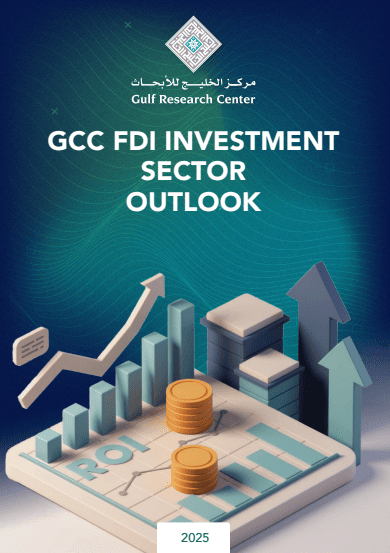
GCC Foreign Direct Investment (FDI) Outlook
- Gulf Research Center
FDI is playing a major role in the economic transformation of the Gulf Cooperation Council (GCC) countries. As the region moves away from their traditional dependence on oil, FDI has become an essential tool for creating jobs, bringing in new technologies, supporting private sector growth, and building strong international business relationships. GCC governments see FDI as a key part of their long-term economic plans and have made significant efforts in recent years to attract global investors....
FDI is playing a major role in the economic transformation of the Gulf Cooperation Council (GCC) countries. As the region moves away from their traditional dependence on oil, FDI has become an essential tool for creating jobs, bringing in new technologies, supporting private sector growth, and building strong international business relationships. GCC governments see FDI as a key part of their long-term economic plans and have made significant efforts in recent years to attract global investors. National strategies such as Saudi Vision 2030, UAE Vision 2050, Qatar National Vision 2030, and similar plans in Kuwait, Oman, and Bahrain place a strong focus on economic diversification. These visions aim to reduce reliance on oil revenues and encourage investment in sectors like tourism, healthcare, renewable energy, logistics, manufacturing, financial services, and technology. Over the past few years, FDI flows into the GCC have shown a positive trend, especially following the global slowdown caused by the COVID-19 pandemic. The region has shown resilience and a strong recovery, supported by proactive reforms and investor-friendly policies. Both Saudi Arabia and the UAE have emerged as the leading investment destinations in the region. According to the United Nations Conference on Trade and Development (UNCTAD) World Investment Report 2025, in 2024, the UAE attracted a record USD 45.6 billion in FDI inflows, approximately 49% year-on-year increase from USD 30.7 billion in 2023. This placed the UAE as the 10th largest FDI destination globally, accounting for approximately 37% of all FDI into the Middle East. Additionally, the UAE ranked second worldwide for the number of newly announced greenfield FDI projects in 2024, with 1,369 projects totaling USD 14.5 billion.
Other Publications